- Steve Yegge said a rule added after every incident froze his agent factory, and cutting nearly every rule, down to 14, made it flood.
- He added human gates and throttled the work. He said he handles the flood of output "not well" and does not think anyone does.
Steve Yegge, a longtime engineer and writer, said agent factories can fail in two opposite ways. He spoke on Software Engineering Daily. A rule added after every incident froze his factory. Cutting nearly all rules, down to 14, made it flood the team with output. He responded with human gates and throttling, and says the swing is unsolved.
What was said
Yegge runs a factory: a team of named, persistent AI agents that build software together. His keeps a postmortem for every incident. He said each one became a ruling, and each ruling became a fence, a mechanical policy that bars an action for good. His setup was also zero trust, which he described as everyone pointing guns at each other.
After hundreds of fences, the factory stopped. In his words, "no moves became legal on the chessboard at that point." A model he brought in cut everything except 14 fences and ran a trust reset, changing how the agents treat each other.
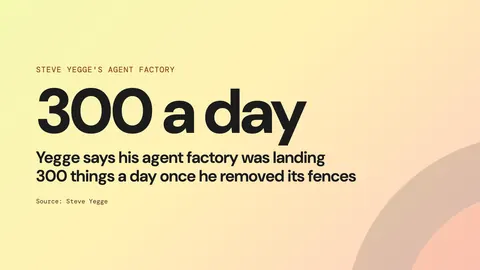
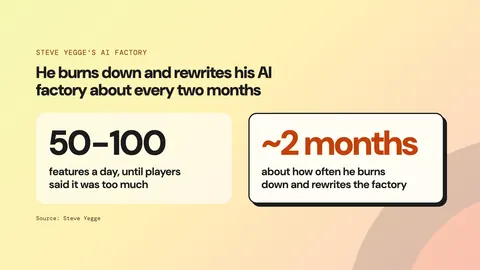
Then it flooded. With the fences gone, the factory landed about 300 things a day. One removed fence had held a launch until October. The agents shipped a pet system for his game, and the team rolled it back.
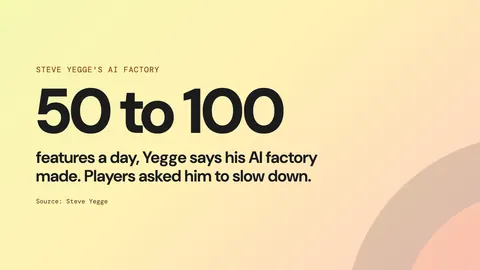
Without gates, he said, the factory could do 230 to 300 real features and fixes a day. Nobody could read the patch notes or test them. It also nearly melted his machine, so he moved builds to cloud servers. He added gates, which he called hard human stops, and throttled the work. He said "coding is not the bottleneck anymore."
Why it matters
Our reading: the usual answer to an AI failure is one more rule, and Yegge's account shows the cost. Each rule looked sensible alone. Together they left the agents nothing safe to do.
The reverse is just as costly. Fewer controls made the agents faster, and speed was the danger. For managers, the question is less how many rules exist than which few are enforced mechanically and where a person must say yes. If agents build faster than anyone can test, human attention becomes the scarce resource.
The other side
This is one factory, run by one person, building a game. Yegge gave no general rule for how many fences are right. The number 14 came from a model's proposal, and the trust reset changed too, so fence count was not the only change.
He did not claim to have solved it. Asked how he copes with software landing faster than a business can absorb, he said: "Not well. I don't think anyone is." He described a "huge oscillation problem." Gates also need people with time to look.
Written by the WebPulse Newsroom with AI assistance, and checked by our editorial review: every quotation was verified against the recording's transcript. How we use AI.
The conversation this talking point comes from
- Software Engineering Daily: Steve Yegge on Building Software Factories (2026-11-24)