- Kyle Zeng of OpenAI said his team reported 948 Linux flaws, not 1,100 exploits, because 948 patches were enough to address them.
- Our reading is that a bug count says little about security work; what counts is how many fixes maintainers can review and accept.
Kyle Zeng, a cyber researcher at OpenAI, said his team counts Linux kernel flaws by the patches needed to fix them. Its patch pipeline aims for the fewest patches, to save maintainer time. The figures come from OpenAI's own team, on OpenAI's own podcast episode Investigating Linux Vulnerabilities with GPT-6 Cyber, with host Clint Gibler.
What was said
Zeng's team used GPT-6 Cyber to confirm 948 Linux kernel flaws. He called them LPEs, short for local privilege escalation. These let a user with limited access take full control, known as root. He called the figure "kind of like an insane number".
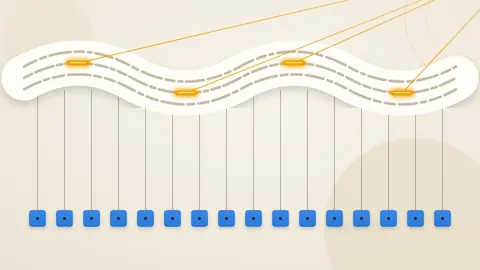
The counting is the key detail. Zeng said three variants of one code pattern used to count as three vulnerabilities. Now one patch can cover all three. The team found more than 1,100 exploits but reported 948 vulnerabilities, because 948 patches were enough to address them. He said this means "the number of bugs is not equal to the number of patches."
The pipeline does variant analysis. That means it looks for other flaws built on the same pattern, so one patch can address several. A speaker on the show described patching at a shared code path, which several flaws pass through. One change there is less to review than a fix for each flaw. Zeng said "The focus here is saving maintainer time."
These are candidate patches for human review. Zeng said a lot of the patches sent have been merged, not all of them. Before sending a patch, his team also has the model attack its own fix. A person then reviews it, and the team checks that the issue is not already patched upstream or under public discussion.
Why it matters
Our reading: if AI finds flaws faster than people can review fixes, reviewer time becomes the scarce resource. Zeng did not say this. It is our inference from his focus on maintainers.
Zeng said that duplicate reports only add to maintainers' burden. A bug count alone does not show how much review work a vendor creates.
So a buyer or manager could ask three things. How does the vendor count findings: by bug or by patch? How much review work does each fix create for the people who own the code? Do those people accept the patches?
The other side
The approach has limits. Fixing a shared code path with one patch can cause a performance regression. Some maintainers prefer several patches at the source of each flaw. The episode called when and where to patch an open research question.
Zeng did not claim the patches are flawless. His team's attack testing found issues in both AI-written and human-written patches. He hoped to reach a stage where maintainers can merge them with confidence.
He also said the team found the easier bugs. He believes deeper flaws remain, and that finding them may need a better model or a smarter pipeline. This is one vendor's account of one run.
Written by the WebPulse Newsroom with AI assistance, and checked by our editorial review: every quotation was verified against the recording's transcript. How we use AI.
The conversation this talking point comes from
- OpenAI: Investigating Linux Vulnerabilities with GPT-6 Cyber (2026-11-23)