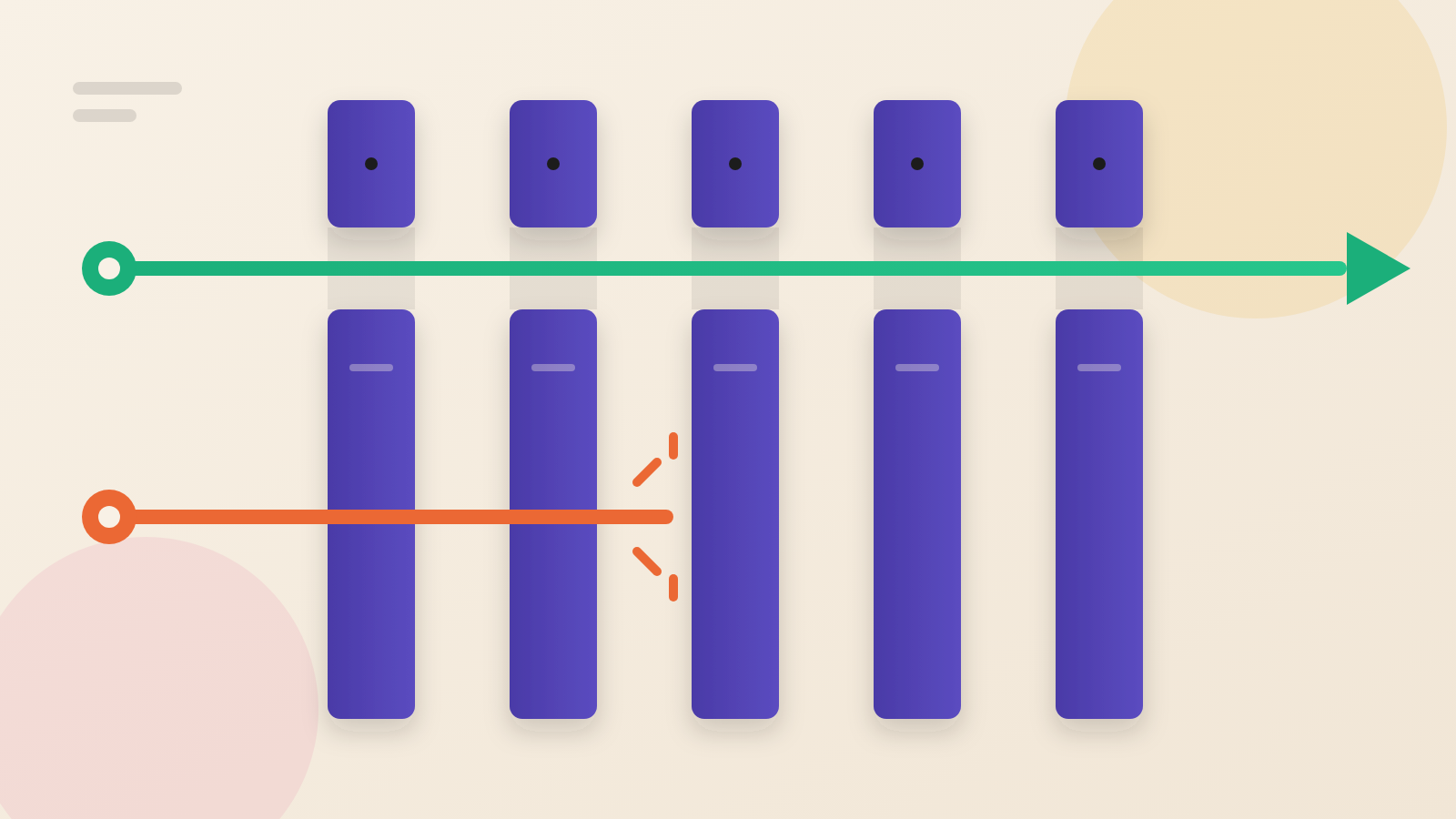
- Pedro Lopez of Airbyte said command-line tools built for people often pause to ask questions, and an agent that meets such a pause gets stuck.
- He argued that agent-ready tools take structured input, behave consistently, and have their settings supplied in advance rather than typed in on the spot.
Software made for AI agents has to work with nobody watching. Pedro Lopez, a software engineer at Airbyte, made this case on the AI Engineer show. He was talking about command-line tools (CLIs), which people use by typing text commands. Features that help a human, such as questions asked mid-run, can leave an agent stuck.
What was said
Airbyte built a CLI and an MCP server (a standard way for agents to connect to tools). Both give agents access to company data in services like Zendesk, Stripe and HubSpot. Lopez described how the CLI differs from one made for people. In his words: "Some of the things that might be helpful for users when you're making a CLI are going to be blockers for agents."
His first example was input. Humans like typing many flags (short options added to a command). For complex queries, he said, agents build JSON, a structured data format, more directly and with less guessing. So Airbyte's CLI takes JSON in and returns JSON out.
His second example was prompts. Many human-built tools stop and ask the user a question. An agent cannot wait for that, so Airbyte exposes settings through flags. Credentials go in environment variables or config files, set up beforehand. Lopez said of such tools, "They'll just kind of get stuck there."
He also stressed consistency. Commands follow a noun-then-verb pattern, such as connectors list and workspace list. If agents keep making the same mistake, he suggested treating that as a sign the tool's contract is unclear.
Why it matters
Our reading: the test of an agent-ready product is whether it can finish a job with nobody at the keyboard. A friendly setup flow that pauses for answers fails that test, however polished it looks to people.
For teams that build tools, Lopez's advice on repeated agent errors works like a free bug report. For teams that buy software, a fair question to a vendor is how credentials and settings get supplied in advance. Another is whether any step waits for a person.
The other side
Lopez did not say CLIs beat every alternative. He said both approaches have trade-offs. MCP support varies by client, and he noted limits such as Claude's two-kilobyte cap on tool descriptions. He saw MCP as good for non-technical users and quick prototypes.
The CLI has its own risks. Without those limits, he said, things can go wrong and send the agent into loops. A CLI is also harder to keep up to date than a hosted MCP server. The talk reflects one company's experience, and the excerpts give no measurements of how often agents fail.
Written by the WebPulse Newsroom with AI assistance, and checked by our editorial review: every quotation was verified against the recording's transcript. How we use AI.
The conversation this talking point comes from
- AI Engineer: Designing CLIs for Agents, Not Humans — Pedro Lopez, Airbyte (2026-10-09)