- Matt Pocock argued that the gap between what people mean and what agents build stays open however smart the model gets, so humans must manage scope.
- In his own practice, he said, maxed-out effort when exploring code and very large contexts worsen decisions and cost tokens. He called his context limit an instinct.
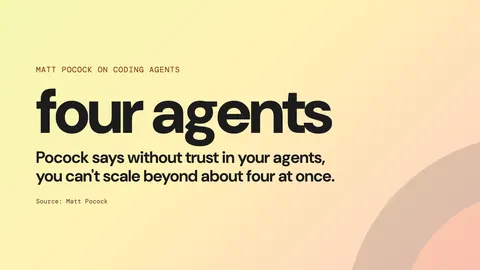
Matt Pocock, creator of Total TypeScript, made this point on the NetworkChuck show. The gap between what a person means and what an AI coding agent builds will not close as models get smarter, he argued. Unrequested features and out-of-scope work stay a risk that people must manage. In his own practice, he added, maxed-out effort and very large contexts make results worse and cost more.
What was said
Pocock compared an agent to a developer you hire and drop into a project with no memory. Most people just prompt it, he said, and underestimate the communication gap. His fix is to make the agent quiz him before it builds anything.
He admitted he slips too. Even as a long-time teacher, he said, he gets complacent, and the agent builds something out of scope. A speaker on the show described a feature in a new tool that he never asked for. Pocock said of the gap: "that's not going to go away if the model gets smarter".
He also described a smart zone and a dumb zone in a context window. That is the text an agent holds in mind at once. As tokens pile up, he said, the model makes worse decisions. He gets nervous around 150,000 tokens, though Opus offers a million.
Many people also set the effort level too high, he said. That setting tells the model how hard to work. To explore code, an agent only needs to read the right files. He runs Opus 5.5 on medium. His summary: "instead of waiting for the next model to fix all your problems, why not just fix all your problems?"
Why it matters
Our reading: the weak link is the person's instruction, not the model. Agents make that weakness faster and cheaper to act on. A vague request now quickly becomes finished work.
Pocock said he reviews closely when a change is hard to reverse and could do wide damage.
Three questions follow for a budget signer. Who checks agent output against what was intended? Which changes are hard to undo, and who must review them? What does token spend buy, if maximum settings can make results worse?
The other side
Pocock gave no measurements. The 150,000-token mark is his instinct, and he said models are getting better at long contexts. He conceded that higher effort can help for web research, performance testing or debugging.
On trust, he said he assumes agents will get things wrong. He noted he is not working on a medical or finance application. He also said he would burn a lot of tokens on verification to reach the point of trusting agents. The unrequested feature the show's speaker found was one he half liked, so not every surprise does harm.
Written by the WebPulse Newsroom with AI assistance, and checked by our editorial review: every quotation was verified against the recording's transcript. How we use AI.
The conversation this talking point comes from
- NetworkChuck: How to Actually Code with AI (ft. Matt Pocock) (2026-11-20)