- Tencent open-sourced Hy Memory 2.0, which gives AI agents chat, working and code memory. Its benchmark results are self-reported.
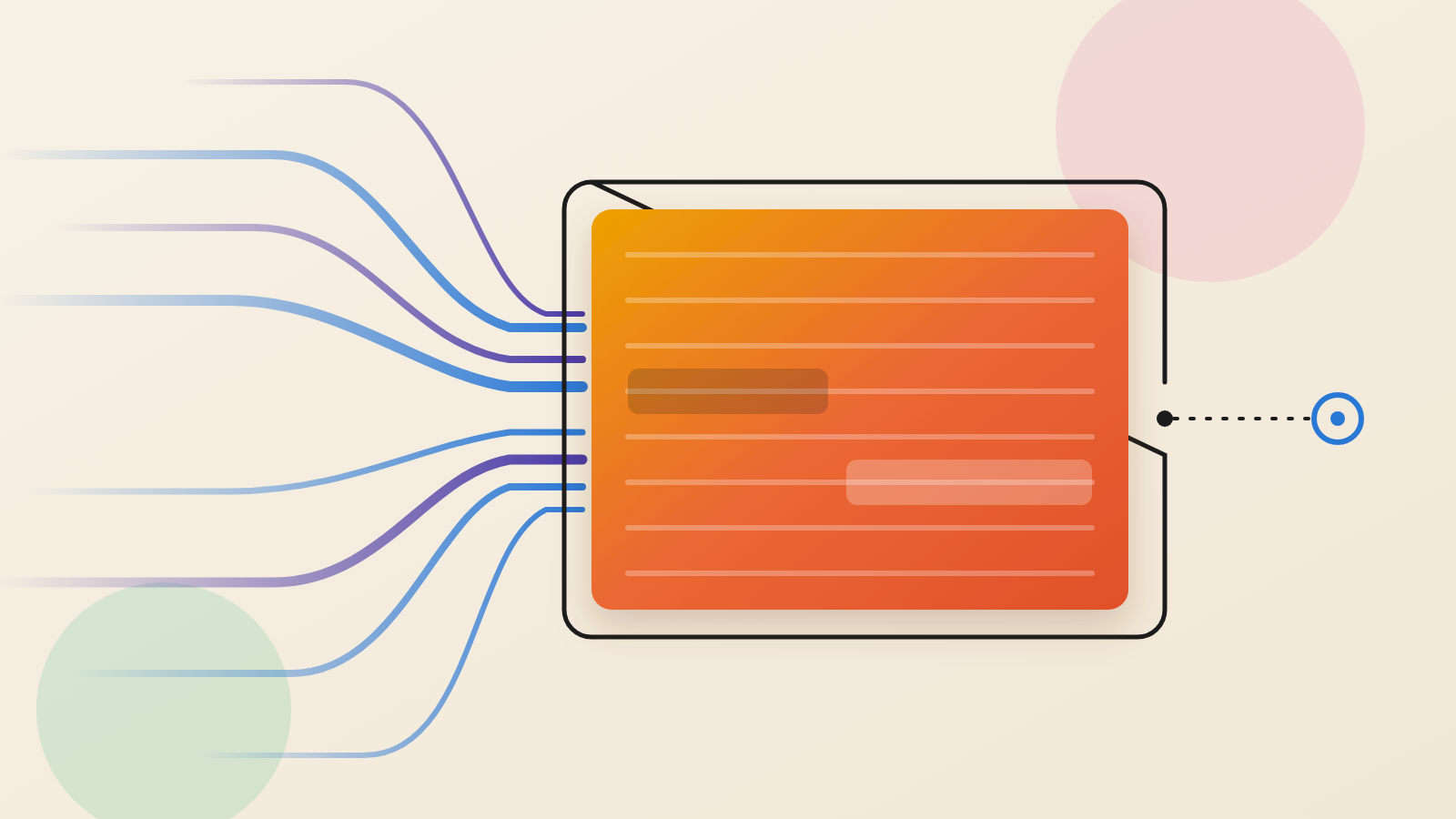
- Its MemHub app imports past sessions from connected AI tools into one local memory store, which turns scattered chat history into a single record.
- Leaders should ask who can read that store, what it holds and how entries are deleted before teams adopt it.
An AI agent that remembers is an agent that keeps records. The obvious question is what memory lets the agent do. The budget question is what it lets the organisation hold.
Tencent Hunyuan has released version 2.0 of Hy Memory, a memory framework for AI agents, Pandaily reported on October 17. Tencent open-sourced all three layers: a dedicated memory model, the framework and a local app called MemHub. They can be used separately or together. The licence file states Apache 2.0.
What the framework does
Agents usually start each session with little knowledge of the last one. Hy Memory tries to fix that. It stores, updates and evolves three kinds of memory: chat, working and code. The developer package is listed on PyPI under the name hy-memory, at version 2.0.2.
Version 2.0 adds two of those three: working memory and code memory. Think of them as a running file on each job. The file holds what the job aims to achieve, what has been settled, partial outputs and lessons worth reusing. Each lesson is stored with the conditions under which it applies.
When an agent returns to a long job, the system identifies the job first. Only then does it pull the relevant earlier decisions, the experience that still holds and the past work. For conversations, the update bundles loose facts into events that carry a time, a place and the people involved. Duplicates are merged and conflicts settled before the model receives any context.
What the numbers do and do not show
On four benchmarks, Tencent says its framework ranks ahead of open-source rivals such as Mem0, MemOS and EverOS. On LoCoMo, it reports 72.6% accuracy for chat memory. Each question used 39.3% fewer tokens. Tokens are the units AI providers bill by, so fewer of them per question means lower cost.
On CodeMemoryBench, Tencent says code memory answered 64.2% of questions correctly and resolved 35.6% of tasks. It reached 28.3% task resolution on SWE-ContextBench. Working memory averaged 55.31% on MemoryArena travel and shopping tasks.
These are Tencent's own figures. The Pandaily report cites no independent replication. Buyers should treat them as a starting point for testing on their own work.
The model layer, Hy-Memory-30B-A3B, is a mixture-of-experts model. That means only about 3 billion of its parameters are active at any moment. Tencent's technical report ran its comparison on just a fixed fifth of the benchmark material. There the model scores a macro average of 55.49, against 54.62 for Claude Opus 5 and 53.64 for DeepSeek V4.1 Flash. The gap is small and the sample is partial.
The part that changes the risk picture
MemHub is the app layer. It is local-first: the memory lives on the user's own computer. Users can run it from a terminal or through a Mac application. After a user grants access to linked tools, MemHub pulls their earlier sessions into one local store. It then keeps adding new sessions as they happen. Tencent says ten AI tools can feed it today. Cursor and Codex are among those it names.
Here is the shift. Today, a developer's prompts, decisions and lessons sit in separate tools, each with its own history. A memory layer gathers them into one searchable place. That is the point of the product, and it is useful.
It also means one store now holds the working history of a person's AI use. In our view, that makes it something to govern like any other record of company work. The local-first design keeps the store on the user's machine. The Pandaily report does not say how the store is protected, who else can read it or how entries are deleted.
This is not a flaw reported in the product. It is a question the release raises, and it applies to any tool that pools history.
What leaders and teams should ask
First, find out whether anyone on your teams already uses agent memory tools, and which of the connected tools they link. Memory spreads the way browser extensions did: one developer at a time.
Second, ask what a memory store would contain in your setting. Task decisions and code lessons can carry customer details, internal design choices or credentials pasted into a session.
Third, ask how entries are corrected or removed. A memory that merges duplicates and resolves conflicts also decides which version of a fact survives. Someone should be able to audit that choice.
Fourth, test the claims. Run the framework against your own tasks before trusting benchmark results that Tencent reports about itself.
A tool that remembers everything your team told it is only as safe as the rules around the memory. Decide those rules before the first session is imported.
Produced by the WebPulse Newsroom with AI assistance from the original reporting credited below, and checked against that source by our editorial review. How we use AI.
Original reporting: Pandaily.