- Diogo Almeida argued AI should be a fourth building block inside software, expanding what it can express by far more than the 33% that adding one to three suggests.
- He called the blue LED comparison an analogy and said the results are impossible to predict.
Diogo Almeida, cofounder of TypeSafe AI, argued that software has barely changed in a decade. He spoke at CODE Summit 2026, in a conversation with host Jev on the AI Engineer show. His point: AI should sit inside software's logic, not beside it.
What was said
Almeida said software has stayed essentially the same for a decade, apart from being cheaper to write. He asked: "Isn't it weird that the best we can do in software is having a chatbot to the side". He said the field spends too much on coding agents and too little on the inner loop, the core of a program where decisions get made.
He used the blue LED as an analogy. Red and green LEDs served indicators and clocks. Adding blue gave far more than the 50% more uses that going from two colours to three might suggest: white light, displays, a revolution in lighting.
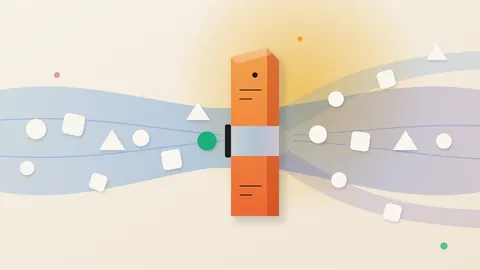
Software, he said, was built from three basic logic gates: simple tests such as greater than, less than and equal. He claimed machine-native intelligence is a fourth, semantic gate. He asked: "What if we can program with common sense, with intention, with human understanding?" The gain, he said, would be far bigger than a 33% rise in what software can express. That 33% is simply one extra gate on top of three.
Why it matters
Our reading: the shift is from writing rules as syntax to writing them as intent, and it trades certainty for coverage. A regex, a rigid text pattern, tests only the shape of an input. It will pass an address that is well formed but plainly fake. A check stated as "a real-looking address" and judged by a model at run time might reject that address. It might also reject an odd but real one, or answer differently on a second try.
Almeida described unreliable automation as Einstein 95% of the time and Mr. Bean 5% of the time. If you cannot tell which is which, he asked, how can you automate anything? So reliability decides whether this gate is usable. Builders and buyers should ask three things. Where is a wrong verdict tolerable? What does each check cost, given he said this needs cheap, smart and fast pushed hard? Who audits the verdicts?
The other side
Almeida offered no measured result in these excerpts. He said he does not really know how things outside computer science work, so the LED story is an analogy, not proof. He also said the full range of what this makes possible is impossible to predict.
He spoke about software in general. He did not address the web or machines as its readers. How anyone would prove a semantic check reliable was left open.
Written by the WebPulse Newsroom with AI assistance, and checked by our editorial review: every quotation was verified against the recording's transcript. How we use AI.
The conversation this talking point comes from
- AI Engineer: I love you so jevving much — Diogo Almeida, TypeSafe AI (2026-11-15)