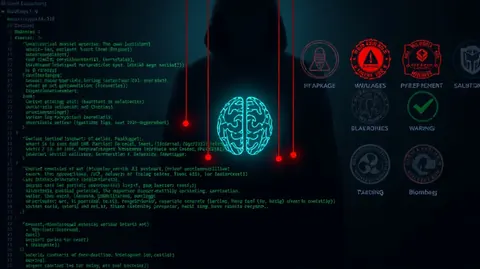
- Google's Threat Intelligence Group says it found a framework called exploit_agent, built to turn software patches into exploits with no human involved.
- Google did not name a specific flaw, count victims or report a measured patch-to-exploit time, so this is one disclosure, not a trend.
- Leaders should measure how long patches take to reach their internet-facing software, including plugins, and watch for exploitation as well as flaws.
A patch is also a description of the flaw
Every security fix tells a story. When a vendor ships a patch, the change in the code shows where the weakness was. Reading that change takes skill and time. Google's Threat Intelligence Group now says it has found a framework that does the reading by machine.
What Google found
Google disclosed the finding on Monday. Researchers found the framework on an exposed staging server, next to stolen victim data and post-compromise scripts. Its configuration calls it exploit_agent.
According to Google, the framework connects to several frontier and local large language models (LLMs). It is set up to compare code before and after a patch, flag likely vulnerabilities, draft exploits and run them. No human has to approve any step.
Google's claim is a first: it has not previously seen attackers hand the whole job, from finding a weakness to exploiting it, to LLM frameworks with nobody supervising. Its older reports covered tools that automated only part of that work. The latest report also describes AI frameworks called CAIRN and PentAGI used in live intrusions. What sets exploit_agent apart, Google says, is that it was designed specifically to turn patches into exploits.
What the report does not say
The limits matter here. Google did not identify a specific vulnerability the framework exploited. It gave no victim count and no measured time from patch to exploit. The report also does not establish that this framework caused the compromises whose data sat on the same server.
Google does not attribute the framework to any group or country. The operator's configuration file has Russian-language comments that call the tool a pilot. They tell the operator to type LLM API keys straight into the file. Google reads the victim records on the server as a sign that the operator was looking at French websites in media, entertainment and education.
Google also published a snippet of the framework's code. In it, the tool inspects the access-control logic of the Spectra WordPress plugin, version 2.19.25. Google did not tie that snippet to a successful exploit.
This is one server and one disclosure. It is a data point, not evidence of a trend.
How the mechanism works
Here is a simplified, four-step picture of what Google describes. First, the framework compares the old and new versions of a program. Second, it uses a model to work out which weakness the change addressed. Third, it drafts code meant to trigger that flaw. Fourth, it runs that code without a human approving it.
Merritt Baer, a former deputy CISO at AWS and now an adviser to Upwind and G2i, sees the technique as old drudgery, automated. In her words, attackers "didn't invent a new kind of bug." The tedious part was reading the patch, finding what it fixed and writing the exploit. Her point is about labor: she says a skilled person might spend days on that, and now an agent does it while its operator sleeps.
What this shows about patching
The usual picture of patching is a race between the vendor's fix and the attacker's discovery. This disclosure suggests a different picture. The fix itself becomes the attacker's input. The sooner a patch is public, the sooner it can be read, and a machine reads without tiring.
Google has not reported how well exploit_agent works. The design still shows where attackers are investing effort: the slow, skilled step between a patch release and a working exploit. For an organisation, the gap between a vendor's release and its own install is the part it controls.
Questions for your team
Start with exposure. Ask for a current list of software that faces the internet, including plugins and extensions that a vendor does not manage for you. The Spectra snippet in Google's report is a reminder that plugins are code someone must own.
Then ask for a number: how many days pass between a vendor's patch and your installation of it? If nobody can answer, that is the first finding.
Finally, ask how the team would notice an exploit in progress. Baer says defenders should watch for exploitation, not only for vulnerabilities. Her wider point is that the response needs no exotic tools: know what you expose, and patch faster than you did last year.
A published patch has always told the world something. The change Google describes is who, or what, is doing the reading.
Produced by the WebPulse Newsroom with AI assistance from the original reporting credited below, and checked against that source by our editorial review. How we use AI.
Original reporting: VentureBeat.