- Microsoft released Microsoft-Decision-1, a small model that scores choices for software and AI agents instead of writing text. Microsoft says it is about 35 times faster than GPT-6 Sol.
- Cheap checks make it affordable to judge every agent step. The judge then becomes part of your controls, and every figure so far comes from Microsoft's own testing.
- Test the model on your own data, including reworded inputs, and define a path to a person for low-confidence scores.
Most talk about AI agents focuses on what they write. Microsoft's latest release points at something quieter: what they decide. Before an agent acts, something must judge whether to continue, retry, stop or hand off to a person. That judgment is becoming its own product. The control it gives you is only as good as the judge.
What Microsoft released
Microsoft announced Microsoft-Decision-1, which Help Net Security reported on October 12. It is available in Microsoft Foundry, its Azure platform for building AI applications. It is also available through OpenRouter, a service that gives access to many models through one account.
Microsoft calls it a decision-scoring model. It does not write paragraphs like a chatbot. It returns structured answers that software can act on at once. Microsoft lists its jobs as routing, classification, prioritization, verification and workflow control.
How it works
An application gives the model a situation, a question and a fixed list of answers. The model returns a probability for each answer, in a single pass. Apps can ask yes/no or pick-one questions, or ask for a score on a scale. The model can also grade AI answers and agent actions against a written rubric.
Microsoft built it by post-training Qwen3.5-9B, an existing model with 9 billion parameters. Microsoft says later versions will sit on other foundations, naming its own MAI models and OpenAI's.
Help Net Security notes what the model will not do. It is not meant for free-form writing, chat, translation or summaries. It is a gate, not a writer.
Why speed and price change the design
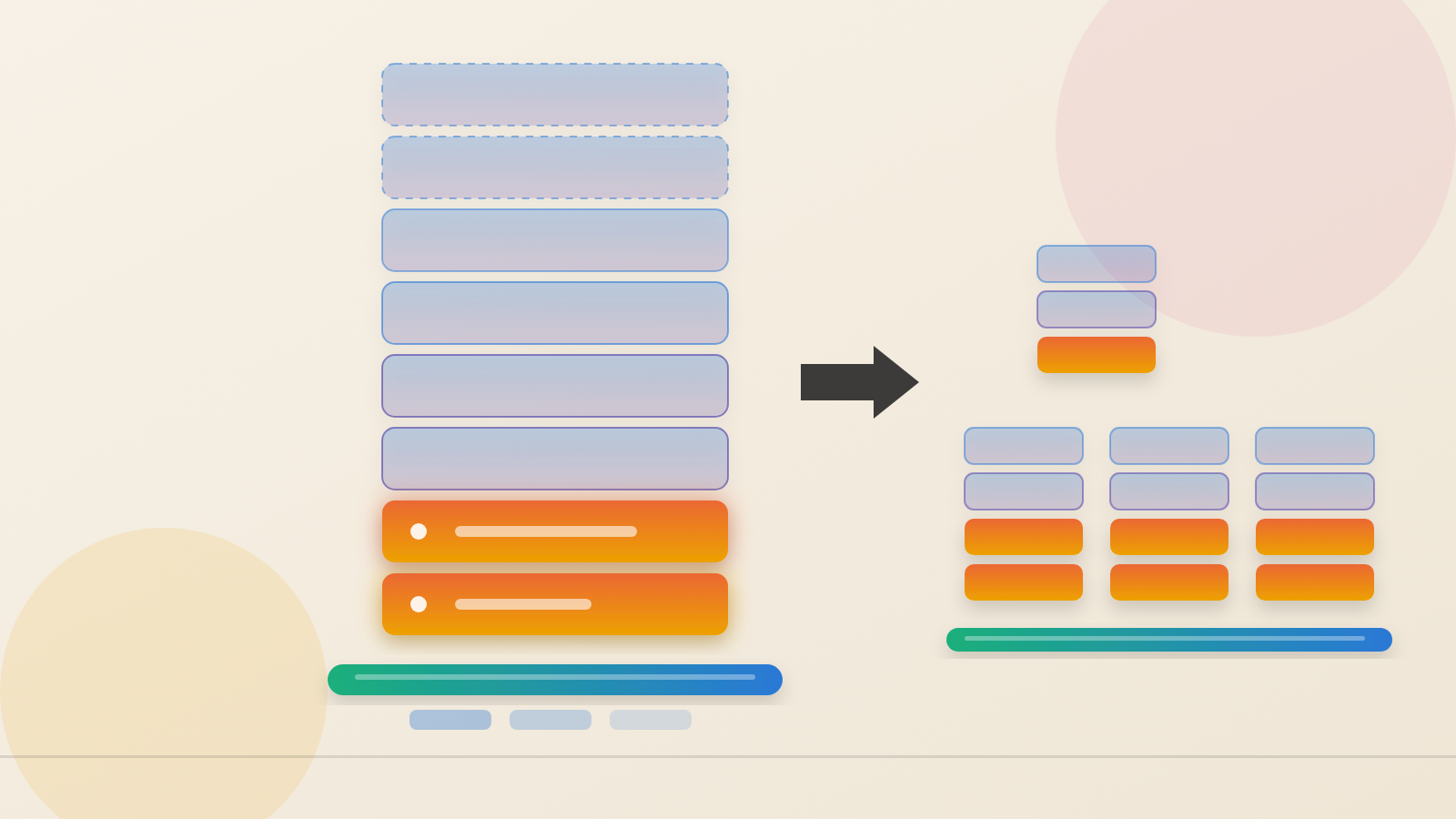
Delays stack up. Microsoft gives an example: 20 decisions in a row, each 100 milliseconds slower, make the whole job two seconds slower. When checks are slow and costly, teams check less often.
Price removes that excuse. Microsoft charges $0.042 per million input tokens, and output tokens are free. Its Xbox Research team sorted more than 10,000 pieces of player feedback into themes set by researchers. Microsoft says quality was competitive with GPT-6 Sol, at over 14 times the speed and 200 times lower cost.
The idea: the judge becomes the control
When checking is cheap, you can afford to check every step. The model that writes and the model that approves can become separate purchases. Think of hospital triage. A fast, narrow assessment decides who sees the expensive specialist.
Here is the risk. A small model that decides which agent actions go ahead is now part of your security and quality controls. Its mistakes will not look like wrong text. They will look like an action that was allowed, or a task sent to the wrong team.
Microsoft's own use cases show the stakes. One is incident response routing, which sorts an incident by type and urgency. Another is safety and security screening, which decides whether to allow, block or escalate a request. A routing error in the first case would plausibly leave an on-call engineer working from whatever the system surfaced. That is our inference, not something Microsoft states.
What Microsoft says about reliability
Microsoft compared models on 36 benchmarks with nearly 150,000 questions, kept blind from training. It reports the highest accuracy in that comparison. For speed, its tests put the model 2.5 times ahead of H2O-Lightning-4B v1.1, the next-fastest model.
To test stability, Microsoft rewrote the same request eight ways and checked whether the answer changed. On average it changed in 1.3% of cases. Microsoft reports no changes when option wording was reworded, or when options were reversed or shuffled.
For safety, Microsoft ran 5,250 requests through 11 benchmarks. They covered harmful content, jailbreak attempts and prompt injection, which means hidden instructions that hijack a model. Microsoft says the model refused harmful behavior and stayed useful. The write-up gives no single figure for that result.
What the evidence does not settle
Every number here is Microsoft's, from its own benchmarks and internal teams. This announcement includes no independent testing. The results also depend on which models Microsoft chose to compare and how it measured them.
Calibration deserves the closest look. It means stated confidence matches reality. Microsoft says a 90% score should be right about nine times in ten. Apps can use that number to proceed, wait or call for review. Help Net Security says Microsoft tells developers to test the model and their cut-off scores on cases like their own. Take that advice literally.
Questions to put to your team
First, which decisions in our agents are made by a large model today? Which could be a fixed-answer check? Ask for the list.
Second, where would a wrong yes or no cause harm? Those are the places for human review, whatever the confidence score says.
Third, who tests the judge on our own data? Ask for accuracy and calibration results on real cases, including reworded and reordered inputs.
Fourth, what happens when the score is low? Define the path to a person before the first deployment.
Cheap decisions will make agents faster. They will also move trust from the model that talks to the model that approves. Audit the approver as carefully as the agent.
Produced by the WebPulse Newsroom with AI assistance from the original reporting credited below, and checked against that source by our editorial review. How we use AI.
Original reporting: Microsoft.