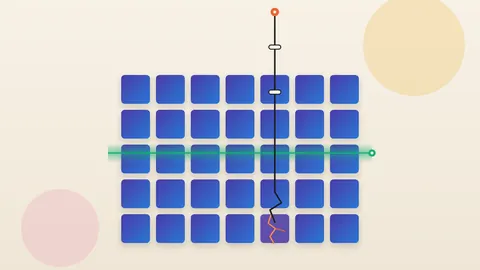
- Researchers said that, using Rowhammer bit flips, they took over a GPU. They then used one value NVIDIA's Linux driver did not properly check to reach root.
- Their main fix is to treat the GPU as untrusted and sanitize everything it sends to the CPU. They said hardware defenses are needed long term.
Researchers at Black Hat USA 2026 argued that host software trusts the GPU too much. In their GPUBreach demo, Rowhammer bit flips took over a GPU. Then one value that NVIDIA's Linux driver did not properly check gave them root. The transcript does not name the presenters.
What was said
Rowhammer flips bits by hammering neighbouring memory. The presenters said earlier GPU work saw it as low impact, mainly degrading machine learning accuracy. Their talk opened with a model-runner system that was up to date and clean in an OpenVAS scan.
The demo started as an ordinary user program, user ID 1010. Rowhammer first gave it control of the GPU's page tables. A flag there, the aperture bit, can point an entry at host memory.
The IOMMU, a protection in modern systems, limits what a device can reach. But the host still sets aside a region where the NVIDIA kernel driver swaps messages with the GPU. Each message has a count field. The presenters said the driver does not properly sanitize it.
Changing the count from 16 to 17 made the driver copy extra data. That gave a four-byte write to an address they chose. They aimed it at a process's user ID and set it to 0, which means root on Linux. Their lesson: "CPU driver is not safe from a malicious GPU."
Why it matters
Our reading: the IOMMU guards the front door, but the driver reads a shared region with kernel privilege and believes it. The presenters said sanitizing what the GPU sends "alone kills our CPU side exploits." That points to a trust assumption, not an exotic flaw. The operating system treats the GPU like a trusted peer.
For buyers, that suggests three questions. Has the vendor fixed the driver? The talk did not say. Who can run code on your GPU hosts, as in shared or cloud setups? Is ECC, error-correcting memory, switched on, and do you know its limits?
The talk framed the earlier impact as lost model accuracy and opened with a model-runner scenario. It did not claim that AI servers are specifically exposed.
The other side
Root needed the Rowhammer step first. The presenters said ECC, NVIDIA's recommended mitigation, is not on every GPU and costs memory performance and capacity. They also said ECC has long been shown not to be a foolproof defense against Rowhammer.
They called a hardware defense inside the DRAM the real long-term fix, which buyers cannot switch on today. They told NVIDIA in November 2025, then major cloud providers, who are implementing their own mitigations. The talk said NVIDIA may update its security notice, not that the driver is patched.
Written by the WebPulse Newsroom with AI assistance, and checked by our editorial review: every quotation was verified against the recording's transcript. How we use AI.
The conversation this talking point comes from
- Black Hat: Black Hat USA 2026 | GPUBreach: Privilege Escalation Attacks on GPUs Using Rowhammer (2026-11-19)