- arXiv now limits researchers to two submissions a month and three active at once, because a flood of low-quality, AI-written papers is overwhelming its volunteer moderators, per 404 Media.
- Producing a document now costs little, while checking it still takes human time. Honest submitters bear the delay.
- Leaders should find which intake queues depend on human reviewers and ask what limits the volume reaching them.
Many systems that accept open submissions rest on a quiet assumption. Writing something takes enough effort that the volume stays manageable. AI is weakening that assumption. The preprint site arXiv has just shown what happens when it gives way.
arXiv is an open-access repository where researchers post papers before formal publication. It has announced a rate limit, according to a 404 Media report published October 5. A researcher can now submit two papers per calendar month and have three active submissions at once. The blog post announcing the change describes a volunteer moderation team that cannot keep pace with low-quality, AI-written papers landing in its inbox.
Where the queue breaks
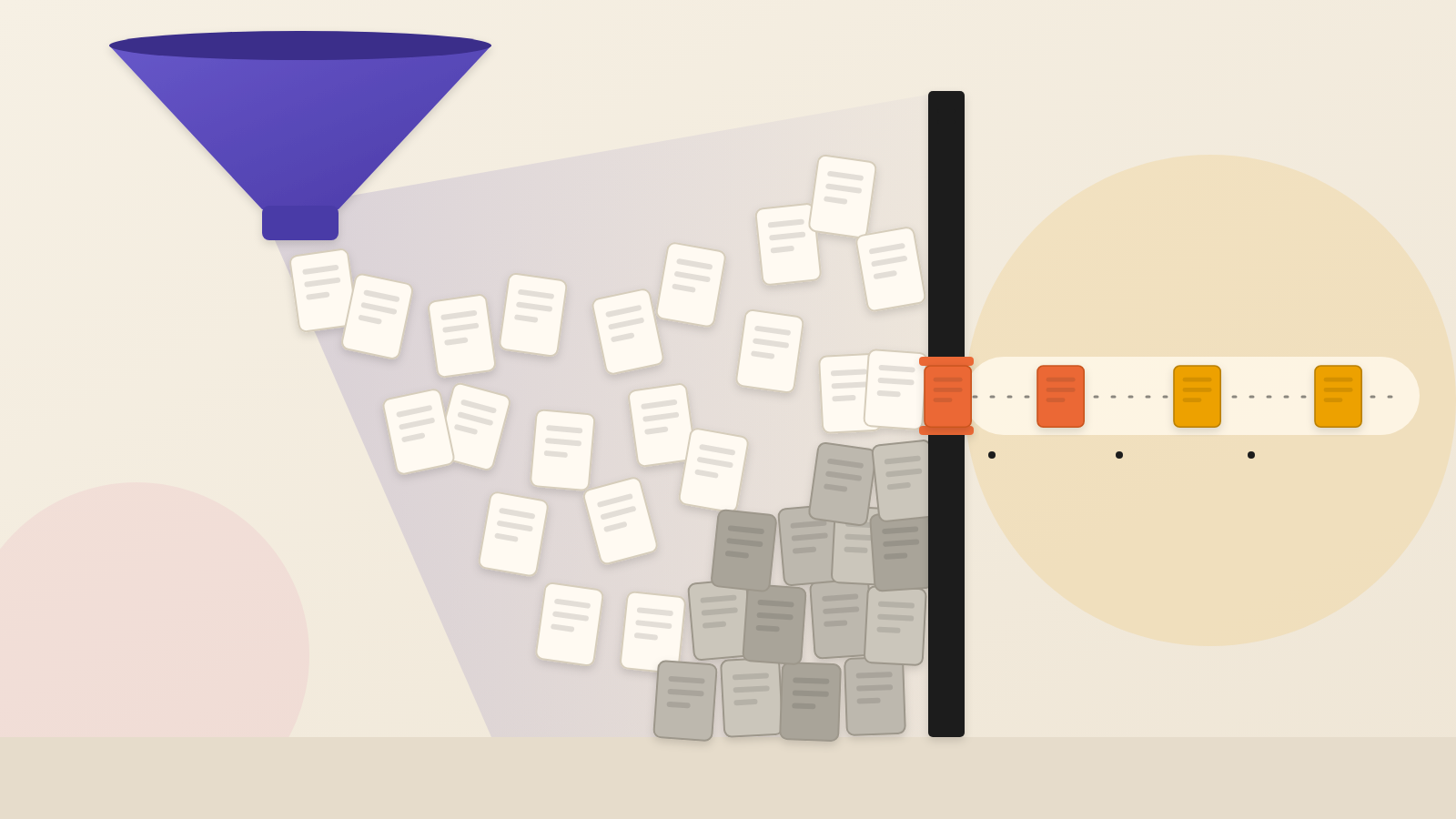
The mechanism is simple. Volunteer moderators are the core of arXiv's screening. They check that submissions meet its standards of scholarly interest. Their time is fixed, but the number of submissions is not.
Take September as a yardstick. arXiv received 40,363 submissions in September 2026. That is about double the 20,569 of September 2024, and roughly four times the 9,869 of September 2016. In computer science alone, volume has sextupled in two years, according to arXiv.
The cost does not fall evenly. Thomas Dietterich, chair of arXiv's editorial advisory council, said a "relatively small proportion of authors" are submitting many low-quality papers. They consume a "disproportionate fraction" of moderator time. Quality papers from other authors can wait "days or weeks".
One caveat matters. arXiv permits AI as a research tool if the use is disclosed. Researchers use language models to parse large datasets, write code and design parts of experiments. The problem arXiv describes is narrower. It reports more thin papers of narrow scope, more papers split from one study, and a marked rise in dense, AI-written papers.
Four controls in under a year
The rate limit is the latest step in a sequence. Rate limiting already existed, but each moderator applied it at their own discretion. The new policy makes it uniform. According to 404 Media, the earlier steps were:
A little under a year ago, computer science stopped taking review articles and position papers. arXiv blamed low-effort text from large language models. In January, new authors began needing an endorsement from an existing author. Before that, an academic email address was enough. By May, arXiv had announced a one-year ban from the site for researchers who submitted AI-generated junk.
Each step targets a different weakness: content type, identity, consequences and now volume. This is our reading of the sequence, not arXiv's description of it. arXiv has now stacked four controls, and no single filter appears to have been enough. Email spam fighters stack filters in much the same way.
The idea behind the numbers
The lesson here is that AI moves the scarce resource. Producing text is no longer the hard part. Judging it is. That judgment is often done by people who are unpaid, as at arXiv, or simply busy.
The harm also lands on the wrong people. The sender who floods the queue pays almost nothing. The honest author in the same queue waits longer. A rate limit is a blunt answer, but it puts a price on volume again.
What leaders should ask
This story is about academic publishing, but the pattern is wider. The source does not say other industries face the same surge. It does show how an open intake queue behaves when generation gets cheap. Leaders can ask their own teams four questions.
Which of our intake channels depend on a person reading each item? Think of support tickets, vendor questionnaires, job applications and outside reports. How many items arrive per sender, and is there any cap? Do we know what share of reviewer time goes to the heaviest few senders? What happens to legitimate senders when the queue backs up?
If no one can answer, the queue has no defence beyond its reviewers' patience. arXiv has now stacked four controls on its own queue.
When producing is free, the reader's time is what needs protecting.
Produced by the WebPulse Newsroom with AI assistance from the original reporting credited below, and checked against that source by our editorial review. How we use AI.
Original reporting: 404 Media.