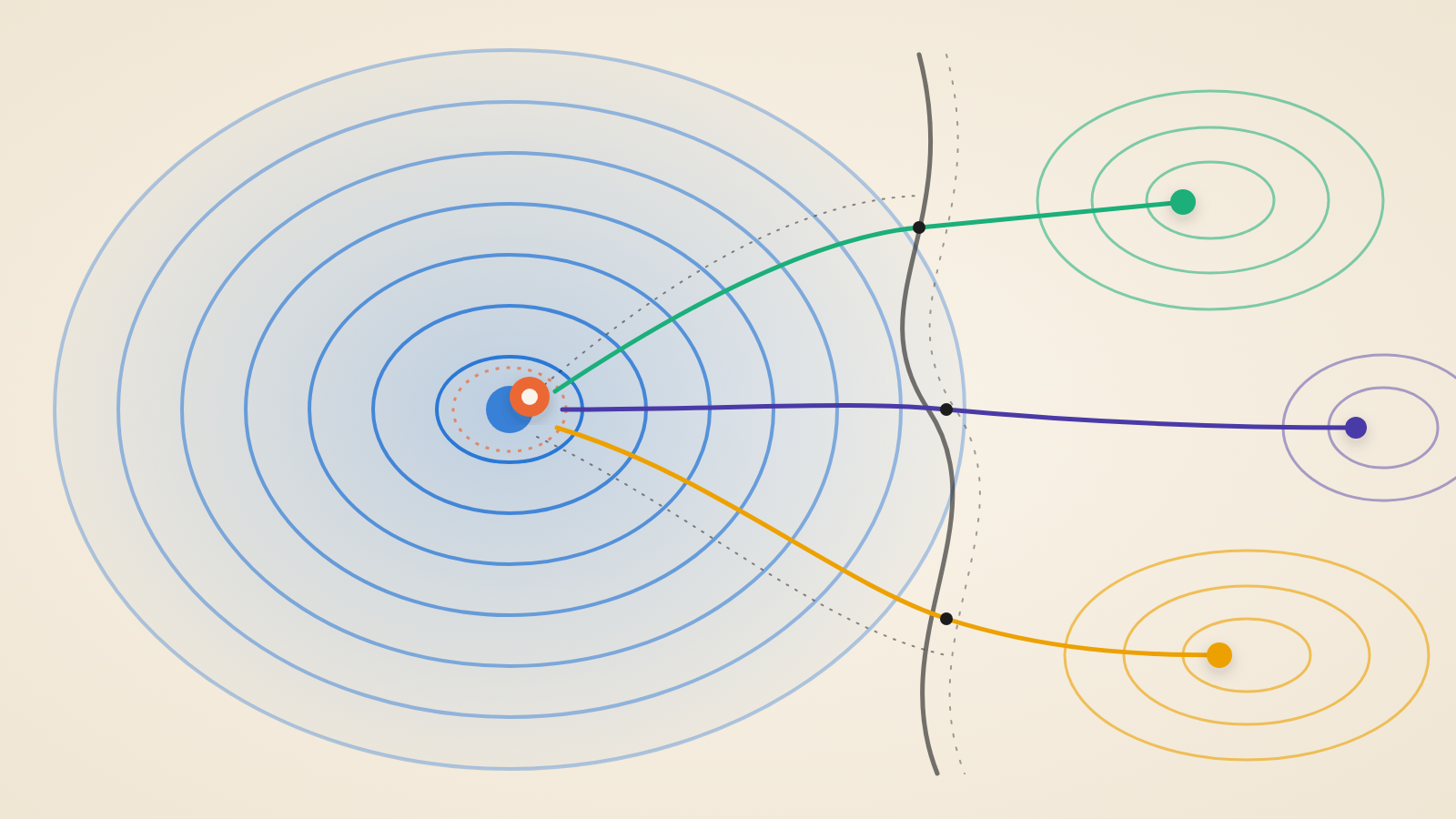
- Microsoft says it will scale its Azure Maia chips to multi-gigawatt deployments from 2027 and make Maia the primary inference system for its products.
- The efficiency figures are Microsoft's own: an expected 40% gain for Maia 300 and up to 1.7x for Maia 200, both against unnamed GPU systems.
- Buyers should ask which workloads run on Maia, how efficiency reaches pricing, and whether their AI tools stay portable.
A chip pitch framed in watts, not models
For two years, the AI story for executives was about models. Which one is smartest, and which vendor has it? Microsoft's latest announcement points somewhere less glamorous. It measures success in tokens per megawatt, meaning how much AI output a unit of power buys. A token is a small chunk of text that a model reads or writes.
Microsoft's announcement commits to Maia deployments on the scale of several gigawatts, beginning in 2027. It also says Maia will become the primary inference system for its products and services. Inference means running a finished model to answer a request. Training builds the model. Inference is what every Copilot user triggers all day.
The lesson here is that AI may be turning into a utility business. A utility is judged by output per unit of energy. Microsoft's own wording hints at this, though it does not say power is the limit on AI. It also stresses that customers will keep a choice of models, describing its platform as "model diverse." The chip is a means of serving them, not a replacement for that choice.
What Microsoft says it built
Microsoft describes Maia 300 as its third-generation chip. It is the successor to Maia 200, which The Verge notes was announced only in January. Maia 200 already serves production work, including Microsoft Copilot. Microsoft says GitHub Copilot and Microsoft Foundry will follow by the end of the year.
Maia 300 production deployments begin in 2027. Microsoft says it is designed for long-context reasoning, fast conversational replies and long multi-step agent tasks.
Both figures come from Microsoft. Microsoft reports gains of "up to 1.7x" for Maia 200 in its own built-in features. That is a ceiling, not an average, and no independent test is cited. The 40% figure is an expectation for a chip not yet in production. Neither names the GPU system used for comparison.
How the chip tries to save power
Microsoft argues that moving data, not raw calculation, is increasingly the bottleneck inside large inference systems. A chip can sit idle waiting for numbers to arrive from memory. Maia 300 is built to keep data close to where it is used and cut those trips.
Several design choices follow from that. Microsoft rates each chip at 950 watts. Within that budget, eight stacks of HBM4, a fast memory placed beside the processor, can move up to 18.0 terabytes of data per second. The chip also supports lower-precision number formats, including MXFP4. These shrink the memory needed to hold a conversation's history, known as the KV-cache. Microsoft says this allows larger context windows in the same power envelope.
The design also splits the chip into separate pieces for compute, memory control and input/output. The compute pieces use TSMC's N2P manufacturing process. Microsoft says this improves efficiency, scalability and cost.
Who feels this, and what to ask
Most people will never see the chip. They will see an AI feature in Teams respond faster, or a coding assistant handle a longer task. Microsoft says the same hardware will support Dragon Copilot, which it says will reduce clinicians' administrative burden. That is a stated goal, not a measured result.
Microsoft AI CEO Mustafa Suleyman said, as quoted by The Verge, that at Microsoft's scale it needs "a platform that we own, and that we co-design with our models." For buyers, that is a signal about where the vendor's incentives sit. The efficiency gain belongs first to Microsoft. Whether it reaches your invoice is a separate question.
The Verge reads the announcement as a step toward relying mainly on in-house chips rather than Nvidia and AMD. Microsoft's own wording is narrower. It says Maia will be the primary inference system. It also describes a model-diverse platform. These are not the same claim.
Teams that buy Microsoft AI services should put four questions to their account contacts:
First, which of our workloads run on Maia today, and in which regions? Microsoft says Maia 200 is deploying across the United States, Europe and Australia. Second, will efficiency gains show up in per-seat or per-token pricing, or only in Microsoft's margins? Third, how portable are our AI workflows if we move models or clouds? Fourth, what independent benchmark backs the comparison with GPU systems?
The chip will not decide whether your AI projects pay off. But it may shape what each answer costs to produce. Those who sign for AI should start reading the power math behind the model, because Microsoft has framed its own chip strategy around it.
Produced by the WebPulse Newsroom with AI assistance from the original reporting credited below, and checked against that source by our editorial review. How we use AI.
Original reporting: Microsoft.