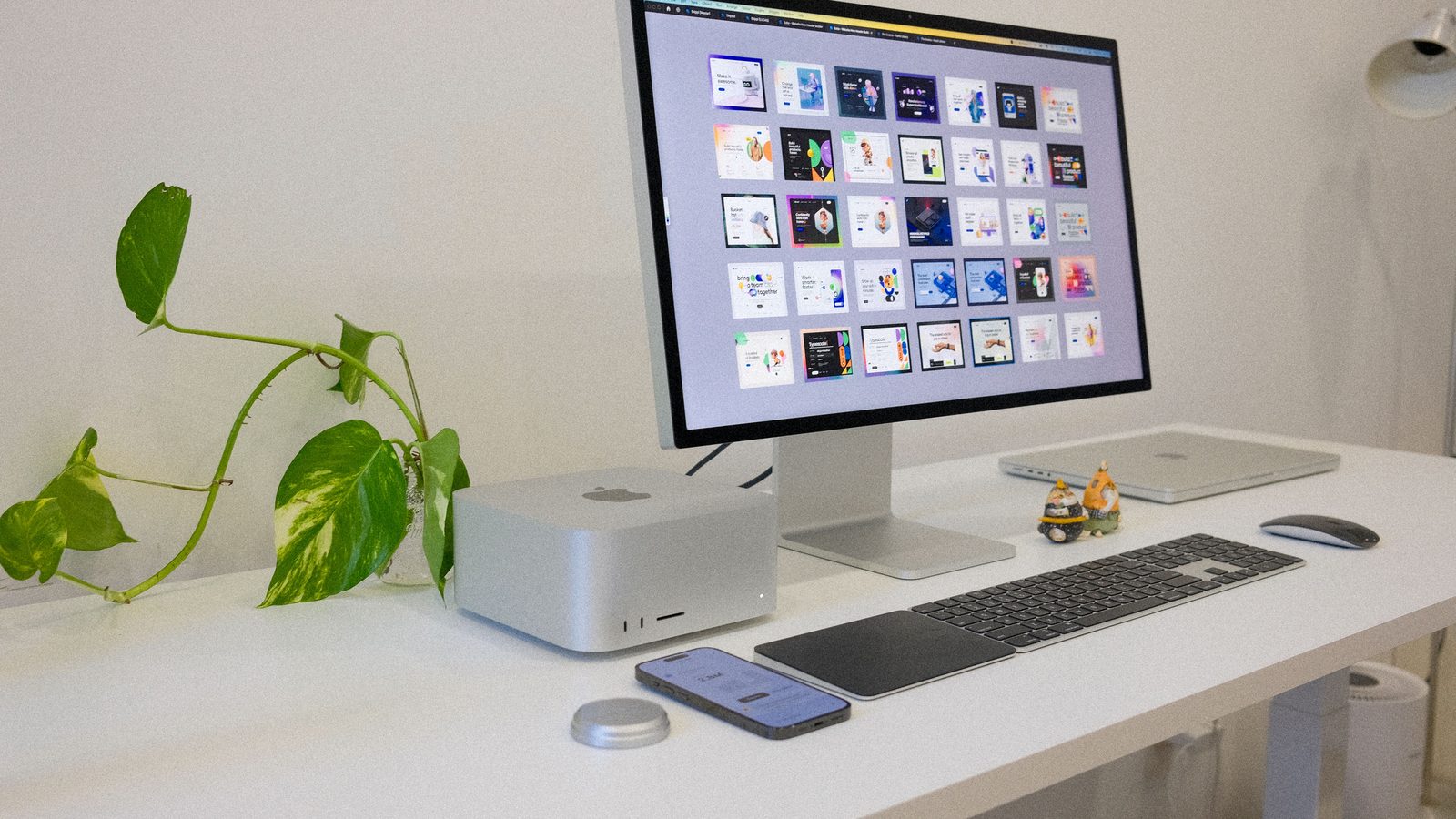
- Meta released the weights of Muse Spark Open, an 816-billion-parameter model that Meta says runs on two Apple M5 Ultra Mac Studios.
- The desktop setup needs a 512GB memory option that VentureBeat says arrives in late October, unpriced. VentureBeat reads Meta's results as strengths, not an overall lead.
- Judge it on task results, licence terms, running cost and where your data is processed, not on the country where it was built.
A model you hold, not a service you rent
For most of the AI era, using a large model meant sending your data to someone else's servers. Meta's release suggests a different arrangement. A model of this size can be a set of files that a small team downloads, tunes and runs on its own machines. That changes who has to answer for the data, the cost and the behaviour of the system.
On October 15, Meta released the weights of Muse Spark Open. It calls the model "the most capable US open-weight model to date." The model has 816 billion parameters and a 1 million-token context window, which is roughly how much text it can consider at once. Meta says it is built for coding and agentic work, meaning tasks where the model takes many steps on its own.
How a very large model fits on a desk
Muse Spark Open uses a mixture-of-experts design, according to its model card as reported by VentureBeat. The model is split into many specialist parts. Only about 42 billion of the 816 billion parameters work on any one token, the small chunk of text the model handles at a time.
That helps speed, but not storage. The whole model still has to sit in memory, ready to be called. Apple's chips share one pool of memory between the processor and the graphics unit. Meta says a Mac Studio with the M5 Ultra can give its graphics unit up to 512 GB of that pool. Two machines together would hold the full model.
Speed matters too. Meta says the chip moves data at 1.2 TB/s, and that this is enough to fetch the small part of the model each token uses.
Meta says it tested agent workflows entirely on the device. In one, the model shipped real changes to an open-source Mastodon client for iOS. In another, it drove video-editing software and chose clips from footage. These are Meta's own tests, and the post gives no results to check. It also describes no independent test of the two-machine setup.
What the desktop pitch leaves out
VentureBeat reports that Apple's 512GB configuration does not arrive until late October, and its price is unannounced. As a reference, Apple lists a 256GB M5 Ultra workstation at $10,799. Four of them would give the same terabyte for $43,196 before tax. VentureBeat stresses this is not a confirmed price for Meta's two-machine setup.
The performance claims also need care. The model card gives Muse Spark Open a score of 39 on the Artificial Analysis Intelligence Index. VentureBeat points out that MiMo-V2.6-Pro has an independently published score of 46.
Meta's comparison table puts the model first among the rivals Meta chose on two tool-use tests, JobBench and MCP-Atlas. Kimi K3 and GLM 5.3 score higher on terminal coding, longer software-engineering work and GDPVal-AA, a test of professional tasks.
VentureBeat adds that the announcement gives no hosted token rates, so it does not show a cost lead. A separate public Artificial Analysis assessment could not be verified at publication.
Origin matters less than control
VentureBeat frames the release against a shift in open models. Hugging Face's March 2026 assessment said Chinese models made up 41% of downloads over the preceding year, ahead of U.S. models. For buyers with procurement rules, a U.S.-built option matters.
But where a model is built does not decide where your data is processed. VentureBeat notes that OpenRouter already lets customers run Chinese models such as DeepSeek V4 Pro and Kimi K3 on U.S. infrastructure.
For a practical buyer, VentureBeat says the questions are whether tasks get done, whether the model is dependable, what the licence allows and what it costs to run. Meta releases the weights under the Muse Model License, which it describes as having "limited commercial terms." Legal teams should read those terms.
The safety question moves in-house
Meta says open weights "carry their own considerations," so it added safety post-training. It says the model met the thresholds of its own framework for release. The full evaluation report is "available soon." Once a team runs the model itself, checking its behaviour and limiting what an agent can touch becomes that team's job, not the vendor's. That follows from how self-hosting works, not from anything Meta states.
Questions to put to your team
First, which of our tasks resemble the tests where this model leads, and which resemble those where it trails? Run our own samples before relying on any published table.
Second, what is the full cost per month, including hardware, staff time and hosted alternatives? Ask for quotes once the 512GB configuration has a price.
Third, if an agent runs on a desktop, what files, accounts and tools can it reach, and who approves its actions? Fourth, has legal read the licence terms against our use?
A model that Meta says fits on two desktops is a real change in what a small team can try. It is not yet proof that doing so is cheaper, better or safer than renting one.
Produced by the WebPulse Newsroom with AI assistance from the original reporting credited below, and checked against that source by our editorial review. How we use AI.
Original reporting: Meta.