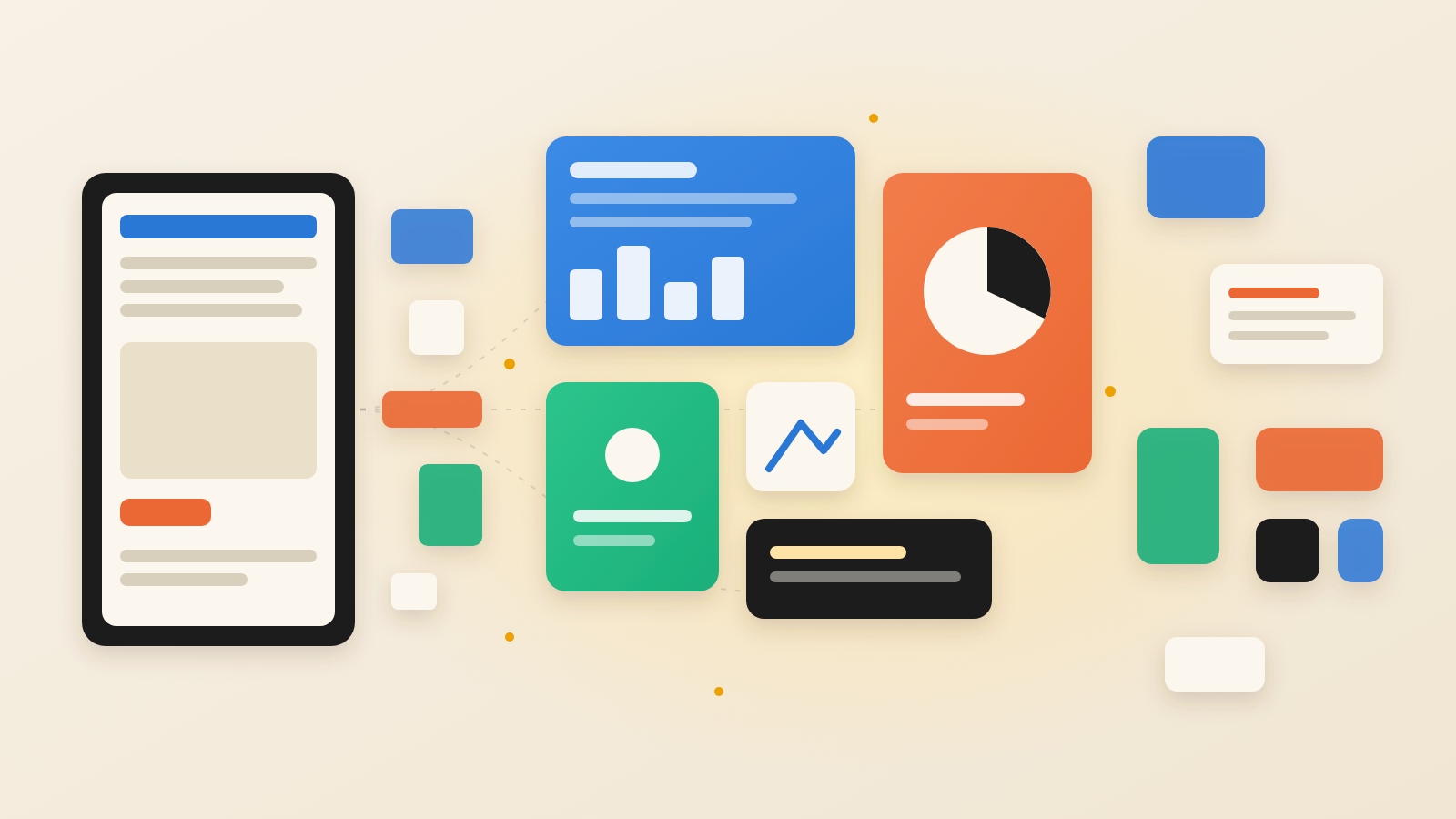
- OpenAI says GPT-6 in ChatGPT's Chat tab can build interactive screens, such as charts, forms and calculators, when they suit the question. It can also start answering while it still thinks.
- Interfaces are starting to be something a model can produce on demand, so a tool a company built once can also be requested inside a chat.
- Leaders should decide who owns accuracy for generated tools, and settle Enterprise admin settings before staff meet the feature.
The screen is turning into an answer
For decades, using software meant learning someone else's screens. OpenAI's GPT-6 announcement, published October 7, 2026, points the other way. In ChatGPT's Chat tab, the model chooses for each question between a built interface and plain text. The feature is only starting to roll out.
The lesson here is that, for some tasks, the interface is shifting from a thing a company designs once to a thing a model can produce on demand. Think of a shop that could rearrange part of its floor plan for each visitor. Whoever controls that moment shapes how the answer looks, and what the user can do next.
What OpenAI announced
OpenAI calls the capability Intelligent UI. A single reply can mix text with visuals, controls a user can tap, and small working tools. OpenAI says the model picks the mix based on the question, and may answer in plain text when that serves the user best. OpenAI's examples include a savings calculator, a dinner bill splitter and a road-trip map.
Rollout began October 7 for Plus, Pro, Business and Enterprise users in the Chat tab. Free and Go tiers follow the next day. Paid tiers run on GPT-6 Sol, and Free and Go run on GPT-6 Luna. Enterprise availability depends on workplace admin settings.
The scope is narrow. The update applies to the Chat experience. OpenAI says the models behind Work and Codex are not changing.
How it works
OpenAI describes two pieces. The first is a library of native components that can be streamed, meaning sent piece by piece. The second is a compiler, a program that turns the model's output into a working screen.
The compiler builds the interface while the model is still writing. Nothing waits for the full response. The library gives each answer a familiar look, and the model chooses how to arrange the pieces.
OpenAI says it trained and scored the model on whether its interfaces were clear, useful and complete. It also says there is "still work ahead" on the model's design judgment. The post does not say whether the model can go beyond the library.
A second change: answering while thinking
Earlier reasoning models made users wait until thinking ended. OpenAI says GPT-6 can now build an answer across several partial responses as it thinks. Its claim is that the stitched result holds together and stays accurate, just as an answer produced in a single pass would.
The 44% figure is OpenAI's own claim. In an internal evaluation of everyday agentic tasks, GPT-6 Extra High began answering as fast as GPT-5.6 Medium and scored higher than GPT-5.6 Extra High. The post gives no outside verification.
What leaders should take from it
Many companies run calculators, comparison tools and forms on their own sites. OpenAI now says a user can simply ask ChatGPT to build one. The post does not say how often users will do this. It does show that the tool a company built once can also be requested inside a chat.
The post also leaves gaps. It gives no measure of how often a generated calculator or form is correct. It sends readers to a system card for safety detail. WebPulse has not reviewed that document.
Questions to put to your teams:
1. Who decides how Intelligent UI is set up for Enterprise users, and has anyone made that decision yet? OpenAI says availability depends on admin settings.
2. When a model builds a calculator or form that staff or customers rely on, who checks the numbers?
3. Which of our public tools answer questions a user could now put to a chat assistant instead?
4. If answers arrive in partial pieces, do staff act on the first piece before the full answer lands?
OpenAI's stated view is that software will adapt to people instead of people adapting to software. That is a company's goal, not a finding. The practical point for leaders is simpler. Some screens are no longer fixed assets, so ownership of accuracy has to be assigned before it is tested.
Produced by the WebPulse Newsroom with AI assistance from the original reporting credited below, and checked against that source by our editorial review. How we use AI.
Original reporting: OpenAI.