- Dragos sent about two million bait prompts and says attackers stole data from inside three AI hosting providers. In two of the three, some stolen requests carried the Zero Data Retention flag.
- The three breaches were detected through bait prompts, which Dragos says ran alongside real customer requests that were almost certainly copied too.
- Leaders should ask which routers and providers carry their prompts, test whether privacy settings change routing, and write those answers into contracts.
A privacy flag is a promise made to one party
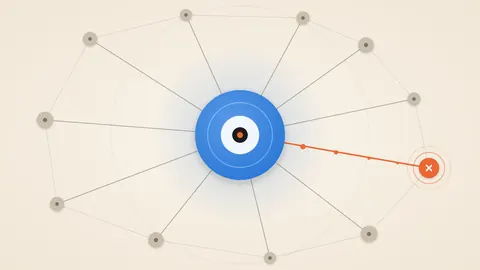
Most companies picture an AI request as a simple exchange. A question goes out and an answer comes back. Dragos, an industrial cybersecurity firm, argues the real path is longer, and every stop on it can read the whole prompt.
That matters because of what people put in prompts. Dragos says they often hold source code, internal messages, strategic plans, customer information and credentials. The lesson here is that a privacy setting is a promise made to the first company in the chain. It is not a property of the data.
What the researchers did
From July through November 2026, Dragos sent about two million prompts to AI services. Each carried unique web links and fake credentials that no legitimate system would use. Any attempt to open a link or use a key would show that someone had read the prompt.
The AWS keys were real but opened only empty accounts that logged every action. Dragos could tie any use of a bait item to the request that carried it. That included the router and whether the no-storage flag was on. A router is a service that forwards requests to a pool of model hosts behind one account and one bill.
Three findings, all seen through bait prompts
Every finding rests on Dragos's bait prompts. Dragos says they were processed alongside real customer requests, which were almost certainly copied too. It has not shown that directly, so the scale of real customer exposure is unmeasured.
First, Dragos says attackers stole data from inside three hosting providers. The earliest incident dates to mid-July. None of the three knew until Dragos told them.
The largest case involved a couple hundred planted AWS keys, each sent once, in a few windows in late October. Dragos says every request in those windows was stolen. Some had been rejected before any model ran, which points to copying at the provider's front door. In the other two breaches, Dragos says some stolen requests carried the Zero Data Retention flag. In its words, a privacy flag does not help when the attacker is already inside.
The attacker tested stolen keys, sometimes within hours. Then they listed storage buckets and searched stored secrets. They also tried to create keys for AWS's hosted-model service and add their own user accounts. Dragos counts tens of thousands of AWS calls against its bait keys. One attacker appeared to have breached two providers at once, working from a single rented server.
Second, marketplace sellers needed no exploit. Dragos says they listed a model at the lowest price, turned on request logging and waited. The sellers Dragos caught looked like individuals on home connections, unlike the provider-breach attacker, who worked from a rented server. One in France typed root login attempts by hand.
Third, Dragos says privacy settings were not honored. This is scraping, not theft by an intruder. Dragos does not name the Chinese AI lab involved. Its systems fetched the bait links from over half of the prompts sent to the lab's models from July to October. For prompts marked Zero Data Retention, the figure was roughly two in three. U.S. hosts that resell the lab's models triggered the same scraper, which Dragos reads as the data flowing back to the lab.
How the hidden hops were found
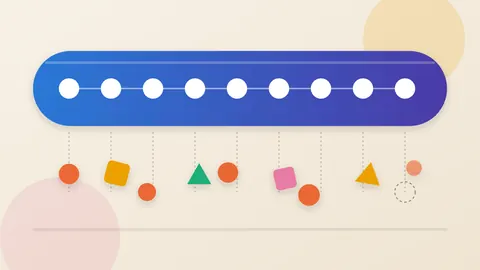
Dragos built what it calls a traceroute for AI inference. Each request includes an image link that points back to Dragos. Every system that fetches it reveals an address and a timestamp. Small, deliberately broken requests also make each router wrap the error from the next one, so one reply can expose several layers.
Across about two thousand traced routes, several hundred included a system Dragos could not identify. One router was quietly passing some traffic to the marketplace. It has told Dragos it stopped. One marketplace seller padded every prompt with roughly a thousand hidden tokens, the units models bill by.
What the vendor response shows
The Hacker News reports that OpenRouter, a gateway of this kind, said it removed three providers and took 125 endpoints out of eligibility for Zero Data Retention. It also said it notified potentially affected customers and found no breach of OpenRouter itself. The Hacker News report does not say whether those three are the same three Dragos describes.
Dragos says it is working with about a dozen providers. It says stolen keys and secret links are still being accessed months later.
What to put in contracts and audits
Dragos does not tell readers to stop using AI services. Its conclusion is that where prompts go is a decision. If you do not make it, the lowest price will.
For procurement, the useful move is to turn that into written terms. This is our analysis, not Dragos's advice. Ask vendors to list every router and upstream host that may touch a request, and to commit to telling you when the list changes. Dragos found hops that no route disclosed. Ask what the vendor must do, and by when, if it learns of a breach. Three providers here did not know until researchers told them. Ask who is liable when a Zero Data Retention promise fails downstream.
A flag-versus-routing audit would send the same marked test prompt, with a fake credential inside, through each setting. It would then check whether the path changes and whether anything touches the bait. Dragos advises picking upstream providers yourself, verifying that settings change routing, and avoiding reseller marketplaces, because some capacity comes from stolen keys.
Dragos also suggests seeding your own fake credentials in the context your agents already send, and treating any use as an incident. A free Canarytoken from Thinkst is one starting point. Secret filtering helps, but Dragos says plenty of sensitive prompt data does not look like an API key.
Security teams can also add two user-agent strings from an AI-driven penetration testing tool the attacker used, ARTEX, to detections: artex-agent and artex-judge-r121. Dragos could find them on no public indicator list. Self-hosting keeps prompts from other readers, but Dragos puts that hardware at $6,950 to $570,000 or more.
The idea to keep: you can outsource the inference, but not the decision about who reads what you send.
Produced by the WebPulse Newsroom with AI assistance from the original reporting credited below, and checked against that source by our editorial review. How we use AI.
Original reporting: Dragos.