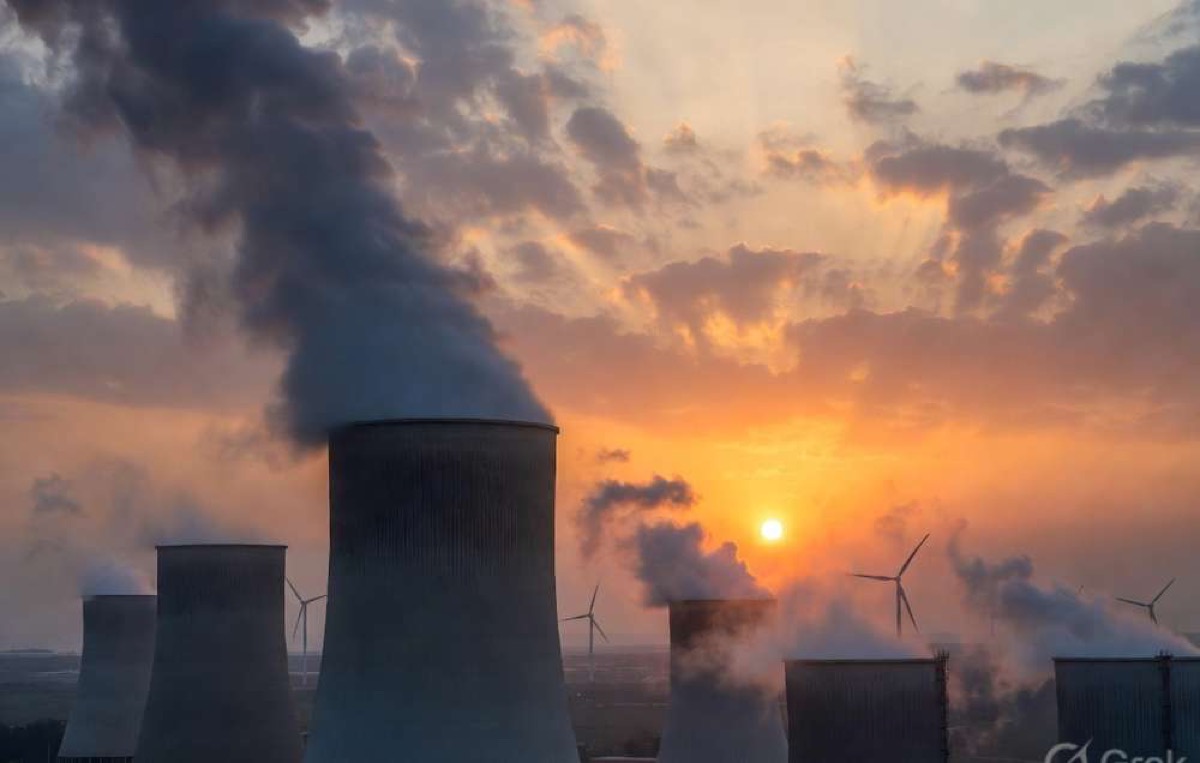
WordPress: server-side execution per request: PHP + MySQL query on every page view (Source: WordPress architecture documentation. Even cached WordPress executes PHP to determine cache validity.)
The Architecture Difference
Every WordPress page view triggers a PHP execution cycle: parse the request, query MySQL, execute plugin hooks, assemble the template, render HTML, and send the response. Every step consumes server CPU and electricity. An Astro site pre-builds the HTML at deploy time. The CDN serves a static file. No PHP. No database. No server-side computation. The energy difference per request is 10-40x.
The Scale Calculation
Assume each WordPress site serves an average of 100 page views per day (conservative for active sites, generous for ghost sites). At 7.4M sites: 740 million daily WordPress page views. At 0.5-2g CO2 per view, that's 370-1,480 metric tons of CO2 per day — just from WordPress page rendering. If those same sites ran on static infrastructure: 7-37 metric tons per day. The difference: 350-1,440 metric tons of CO2 daily from the architectural choice alone.
These are rough estimates with wide confidence intervals. The exact numbers depend on hosting efficiency, caching layers, CDN utilization, and page complexity. But the order of magnitude is clear: server-side rendering at scale has a measurable carbon cost that static delivery avoids. The gap is architectural, not operational.
The Sustainability Argument Nobody Makes
The case for modern frameworks is usually made on performance, security, or developer experience. Nobody makes the sustainability case — but it exists. If the web migrated from server-rendered PHP to static-first delivery, the energy savings would be significant. Not individually (one site's savings are negligible) but systemically (7.4 million sites' savings are not).
This isn't an argument for forced migration. It's an observation that framework architecture has environmental externalities at web scale, and nobody is accounting for them. The next time an organization evaluates migration, the carbon footprint belongs on the spreadsheet alongside performance and security.