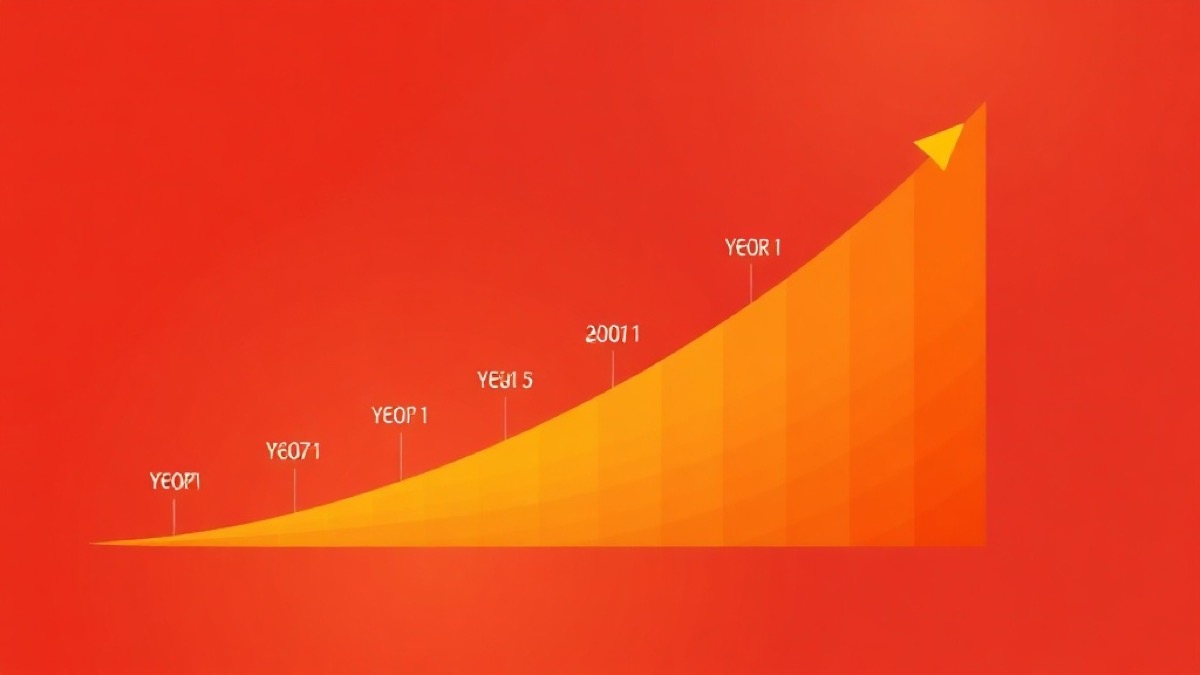
Year 1 WordPress TCO: ~$4,200 (Hosting ($1,200) + plugins ($500) + theme ($200) + basic maintenance ($2,300). Source: WebPulse cost analysis.)
The Compounding Effect
Organizations often evaluate framework costs based on year-one estimates. WordPress hosting: $100/month. A theme: $200. Some plugins: $500/year. Total: ~$4,200/year. That's accurate for year one. By year five, the real number is dramatically different — and the difference is compounding technical debt.
Why Costs Compound
Three forces drive cost acceleration. First: plugin accumulation. Year one has 15 plugins. Year five has 35. Each plugin adds update overhead and compatibility risk. Second: security patch velocity. WordPress CVEs increased 42% year-over-year in 2025. The number of patches to evaluate, test, and deploy grows every year. Third: compatibility breaks. Major WordPress updates increasingly break existing plugins and themes, requiring emergency remediation at premium rates.
Modern frameworks don't compound this way. Astro year-one cost: $200. Astro year-five cost: $200. There's no plugin ecosystem accumulating dependencies. Security patches are infrequent (3 total CVEs in Astro's history). Major version upgrades are backwards-compatible by design. The cost curve is flat, not exponential.
The 5-Year Calculation Executives Need
When evaluating framework choice, the correct comparison isn't Year 1 WordPress vs. Year 1 Astro. It's 5-year total cost. WordPress: $4,200 + $7,000 + $10,500 + $14,000 + $18,000 = $53,700 cumulative. Astro: $200 × 5 = $1,000 cumulative. Migration cost of $8,000-15,000 pays for itself before the end of year two. By year five, the organization that migrated has saved $37,700-$44,700. Per site.