- Girish Konda of Microsoft argued that sub-agents reading one shared context are not independent, so their agreement is one source counted three times.
- He said nothing in a shared context marks a guess as unchecked, so one inference can end up looking like three agreeing documents.
When three AI sub-agents read the same shared notes, counting how many agree gives false comfort, Girish Konda of Microsoft argued. He spoke on the AI Engineer podcast, in an episode published on 10 November 2026. His reason: agents drawing on one pool of notes are not independent witnesses.
What was said
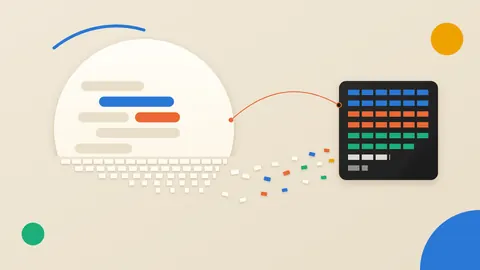
Konda used a made-up example. One sub-agent writes into the shared notes that an error rate fell by 80%. It had not measured this; it inferred it.
Two other sub-agents read those notes. One drafts a note repeating the claim. The other writes a runbook, a set of operating steps, and treats the claim as grounds to proceed. The orchestrator, the program that merges the work, sees three documents in agreement.
Konda compared this to a dirty read in databases: reading a value before its writer has confirmed it. In shared notes, he said, a guess is readable the moment it is written, and nothing marks it as unchecked.
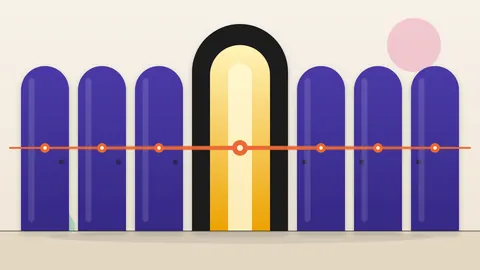
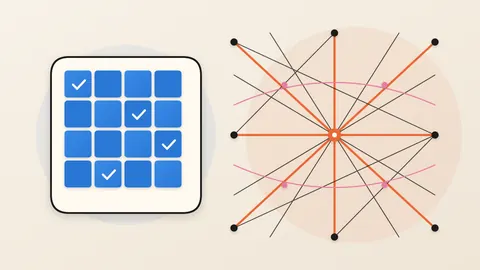
Voting works in databases for a reason, he said. When the copies consulted for a read plus those for a write outnumber the total, every read overlaps the latest write. That overlap is the guarantee. Three sub-agents reading one context get no overlap, because they are not independent copies. They read the same guess. In his words: "Their agreement is one source counted three different times."
Why it matters
Our reading: a vote among agents that share one store tests the store, not the claim. If the store holds a wrong inference, every voter repeats it, and the result looks unanimous. Agents make it cheap to copy an unchecked assumption into many documents. Agreement would only mean something if it came from separate sources or separate checks.
Konda said a shared context offers none of the standard consistency guarantees, such as causal or session guarantees. Nothing promises a reader what it will see.
His own remedy, safe handoffs, starts with labelling. Every fact a worker passes along is tagged with its origin, version, timestamp and revision, and decisions should rely only on fresh, tagged facts. The transcript is garbled where he spells out the name, so we skip the acronym.
The other side
Konda's example was made up, not a reported incident, and the excerpts give no data on how often this happens in real systems. The show notes say he also covers what safe handoffs cost and where they do not fit. The excerpts do not give those details.
Written by the WebPulse Newsroom with AI assistance, and checked by our editorial review: every quotation was verified against the recording's transcript. How we use AI.
The conversation this talking point comes from
- AI Engineer: Your Sub-Agents Are a Distributed System. Treat Them Like One. - Girish Konda, Microsoft (2026-11-10)