- Savi, a consumer security startup, raised a $7 million seed round and launched a phone app to catch AI-cloned voice calls that fake a kidnapped relative demanding ransom, per TechCrunch.
- WordPress has 4 entries in CISA's Known Exploited Vulnerabilities list, while Next.js, Astro, Hugo, SvelteKit and other modern frameworks in WebPulse's sample have none, though older platforms have had longer to collect flaws.
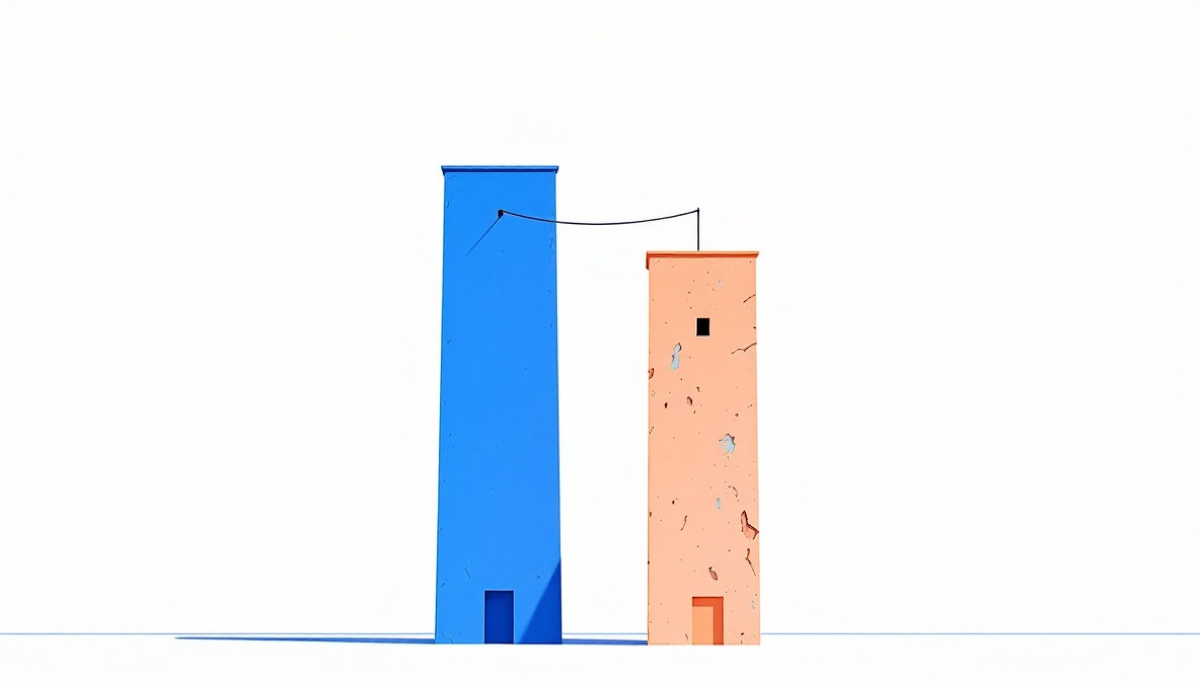
- The article says this contrast is illustrative, not a measured comparison. For budget-signers, it says money reaches the layer people see first, not necessarily the layer with the most exploitable weaknesses.
A Seed Round for the Human Layer
Savi, a consumer security startup, closed a $7 million seed round and launched an iPhone and Android app this week built to catch a specific 2026 problem: AI-generated voice calls convincing enough to simulate a kidnapped family member demanding ransom. The funding is small by enterprise security standards. The problem it addresses is not. Generative voice models have made real-time impersonation cheap enough that consumer-facing defense now has a founded, funded market category of its own. A year ago, this kind of protection did not exist as a purchasable product.
The Infrastructure Underneath
A cloned voice on a phone call is the visible layer of a scam. Underneath it, most schemes still depend on ordinary web infrastructure: a landing page to harvest payment details, a form to capture identity documents, a redirect chain to launder traffic. That infrastructure layer has not moved at the same pace as the AI models built on top of it. Among the vulnerabilities disclosed against WordPress and its plugin ecosystem, the highest individual EPSS score — the probability that a specific disclosed CVE will see exploitation attempts — currently sits at 0.98. EPSS scores attach to individual vulnerabilities, not to platforms as a whole, but that peak figure reflects the reality that certain unpatched WordPress plugin flaws are treated by scoring models as near-certain exploitation targets.
Where the Exploited-Vulnerability List Concentrates
WordPress currently carries 4 entries in the CISA Known Exploited Vulnerabilities catalog, spanning authentication-bypass and file-upload flaws in plugins and companion hosting tools. Among the other web frameworks WebPulse tracks, every modern framework in the detected sample — Next.js, Astro, Hugo, SvelteKit, and others — currently carries zero KEV entries. That gap is not purely a measure of code quality: older, more widely deployed platforms accumulate more CVEs and more attacker attention over time, while younger frameworks have not existed long enough to build a comparable exploitation history. What the gap does reflect is a concentration of confirmed, actively exploited vulnerabilities in a small number of legacy platforms.
An Illustrative Contrast, Not a Measured Comparison
A consumer startup's funding velocity and a web framework's vulnerability profile are not the same kind of metric, and pairing them risks false equivalence. What the two data points illustrate, side by side, is an asymmetry in where defense investment is arriving. Generative AI increases the return on both sides of an attack simultaneously: it raises the realism scammers can produce for a human target, and it raises the pace at which automated tools can probe a legacy site for a known, unpatched entry point. Defense funding is starting to reach the first side. The infrastructure side is still largely waiting.
WebPulse's scan sample covers 466,000-plus sites across 100-plus TLDs, detected via HTML and HTTP signature matching. That detection method captures roughly 35% of scanned sites, and WordPress's strong HTML signature means it is structurally over-represented among detected sites relative to its true share of the live web. These numbers describe the general web framework landscape, not scam-hosting infrastructure specifically — but the platforms scam operations commonly build on are the same ones that appear most frequently in the detected sample with the oldest unpatched exposure.
For budget-signers, the read is straightforward: the layer that gets funded first is the layer visible to the person holding the phone, not necessarily the layer carrying the most exploitable surface area.
Written by the WebPulse Newsroom with AI assistance, and checked by our editorial review: every quotation was verified against the recording's transcript. How we use AI.
Conversations this essay draws on