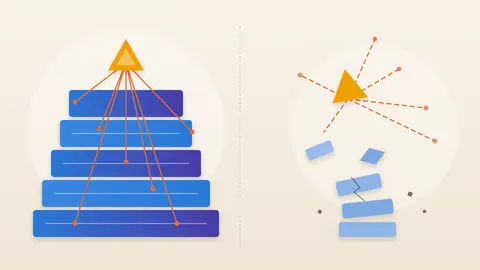
- Google open-sourced TorchTPU, a PyTorch backend for its TPU chips. Google says PyTorch workloads move to TPUs with minimal code changes.
- The claim matters because rewriting software can be a real cost of changing AI hardware. Meta says it already runs production workloads this way.
- Before relying on it, ask your team to test your own models on TPUs and measure cost, speed and gaps.
The lock-in was in the code, not the chip
When you change phone carriers, the hard part used to be losing your number. Number portability removed that barrier. The carriers did not change. The cost of leaving did.
Google's release of TorchTPU aims at a similar barrier in AI hardware. PyTorch is a framework for building models. Help Net Security notes that teams who write in PyTorch and run on GPUs by default stand to gain the most. Moving to another chip can mean reworking software first. Google now says those workloads move to its Tensor Processing Units, or TPUs, with minimal code changes.
That is Google's claim. It has not been tested here. But it points at the real question for anyone who signs an AI hardware contract. How much of your price power depends on how hard it is to leave?
What Google released
Google's GitHub project describes TorchTPU as a PyTorch backend for TPUs. It includes custom ATen kernels, which are the low-level building blocks PyTorch uses for each basic operation. It also has a compilation cache, so work done to prepare a model is not repeated. The license is Apache 2.0, and the code is free.
The project lists support for data parallelism and tensor parallelism, two ways of splitting training across many chips. It includes examples for Llama, Qwen, ResNet, DLRM, minGPT and UNet models. It works with torch.compile, PyTorch's tool for turning a model into an optimized graph.
Beyond the backend, Help Net Security lists the tools Google says now support TPUs. Serving is covered by vLLM and SGLang. Training is covered by TorchTitan. Ray and Hugging Face's libraries are on the list too. In Hugging Face's Transformers v5, passing device_map="tpu" sends a model to a TPU. Google says its nightly runs of the Transformers test suite use TPUs.
How the switch is meant to work
TorchTPU keeps the usual PyTorch routine. Developers first test code step by step, with every command executing at once. This is called eager mode. For production they move to torch.compile. Per the repository, the compiled graph runs through a shared XLA and MLIR backend. These are compiler layers that translate the model into instructions the chip can run.
The point is that developers keep their habits. They do not learn a new framework. The translation to TPU instructions happens underneath.
What the evidence shows so far
Help Net Security reports a claim from Meta. TorchTPU already carries parts of Meta's language model, advertising and recommendation work in key production uses. Jana van Greunen, Meta's director of PyTorch engineering, said: "We cannot be constrained by a single hardware architecture."
The same report cites a peak of 52% model FLOPs utilization when training Qwen 3 8B with TorchTitan on TorchTPU. That figure means about half of a chip's theoretical math capacity went into useful training work. It also says throughput rose almost in step with chip count, at up to 8,192 Ironwood TPUs.
One more result concerns serving models rather than training them. The tool involved is llm-d, an open-source router that spreads incoming requests across clusters. The report says version 1.0 was a joint release by Google, Red Hat and IBM. Zenteiq.ai reports that on Google Kubernetes Engine, daily output per 1,000 TPU v6e chips climbed from 1.47 billion tokens to 5.97 billion. That is about four times as much. Zenteiq credits the gain to sending each request to a replica that already holds the relevant context. This is a routing result, not a TorchTPU result.
Limits to keep in view
These results come from Google, Meta and Zenteiq. None was independently verified in the sources reviewed. The peak figures were reported on Ironwood TPUs, and the 52% figure on one model, Qwen 3 8B.
The project's latest public release is 0.2.0 on PyPI. Two pieces remain in preview: the TPU backend for the VeRL reinforcement-learning framework, and a TPU agent suite for AI coding tools. The repository text reviewed does not say how many PyTorch operations are covered. It also gives no cost comparison with GPUs.
The documentation also flags a setup detail. Installing without the CPU index flag pulls the CUDA build of torch. Small details like this can slow a pilot.
What leaders should ask
First, ask your ML team to run one real model on a TPU VM and report the code changes needed. The repository says a v6e instance is the easiest starting point. Second, ask for cost per unit of work on your own models, not vendor benchmarks. Third, ask which parts of your stack are tied to one vendor's tools. Fourth, ask whether a credible second option strengthens your next hardware negotiation, even if you never move.
A portable codebase does not make a chip cheaper. It makes the alternative real. TorchTPU's promise is that testing needs minimal code changes rather than a rewrite. Whether that holds for your models is a question only a pilot can answer.
Produced by the WebPulse Newsroom with AI assistance from the original reporting credited below, and checked against that source by our editorial review. How we use AI.
Original reporting: Google.