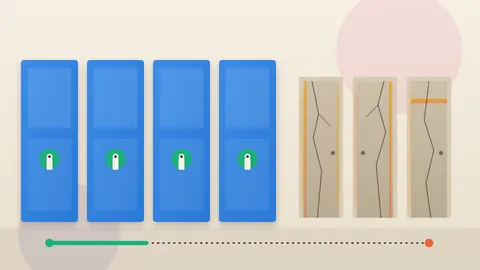
- Theo argued that each new layer of tooling turns the layer below into a detail, and AI now does this to frameworks and languages.
- Our reading, not his, is that framework-specific training may age fast, while judging what to build is harder to hand to a model.
Theo, host of the t3.gg show, argued in the episode "Are Harnesses Dead?" that each new layer of tooling turns the one below it into a detail. AI, he said, is now doing this to frameworks and languages. He did not argue that people keep the judging role. That is WebPulse's inference, set out below.
What was said
Theo began with history. Early engineers cared about the instruction sets of each processor. He said C did not shrink the number of programmers. It let ordinary developers stop thinking about processor instructions and work one layer higher. Formatting tools did the same for tabs versus spaces. AI autocomplete did it for algorithms: he could name one and press tab.
Now, he argued, the shift reaches frameworks. Recent Next.js releases drew less attention on Twitter than his posts about T3 Code. As models improved, he said, "the frameworks have fallen." Languages come next. He said he rewrote his TypeScript projects in Rust, and even TypeScript itself. "Languages are an implementation detail." He said a model can swap them out in a loop, in not much time.
He also explained the harness. A model alone only produces text. The harness is what lets it act, and an agent is a model plus a harness.
His Cloudflare story shows the same drift. He noticed failures in his logs that should not have happened. Claude then set up alerting, monitoring and tracing in his backend to find where, when and in which regions they occurred. It wrote a report, which he sent to Cloudflare. Cloudflare thanked him, because it had not known. He concluded that Claude is, in some cases, better at architecture than companies like Cloudflare.
Why it matters
Our reading: if a model writes code from a description, syntax and framework habits count for less. The same product can be regenerated in another language. That makes training tied to one framework a risk. It also makes the question of what to build, and whether the output is right, more central. Theo did not say this.
His own example cuts against it, though. In the Cloudflare case the model did the finding. Managers can still ask three questions. Which of our training is tied to one tool? Who checks what an agent produces? How will junior staff learn to judge work they no longer write?
The other side
Theo's examples show models moving into design and diagnosis. Judging may not stay a human job either. He conceded that models still do not do architecture close to perfectly, or at his own bar. The Cloudflare case is one story, told by him, and Cloudflare's side is not in the excerpts. His claim that people will lose their jobs in three months came without evidence. The show notes say Vercel sponsored the video. The excerpts also do not say how people build judgment if they stop making things themselves.
Written by the WebPulse Newsroom with AI assistance, and checked by our editorial review: every quotation was verified against the recording's transcript. How we use AI.
The conversation this talking point comes from
- Theo - t3.gg: Are Harnesses Dead? (2026-10-30)