- Previdian saw exploitation attempts on N-central about two hours after the 4EverAble2Shell flaws were disclosed. Huntback separately reports a miner on 21 servers.
- The servers manage customers' devices, so Huntback advises treating any hit as a full compromise rather than a cleanup.
- Leaders should ask whether their N-central host is exposed, whether Legacy API access is off, and whether anyone has checked it for compromise.
The most trusted machine on the network
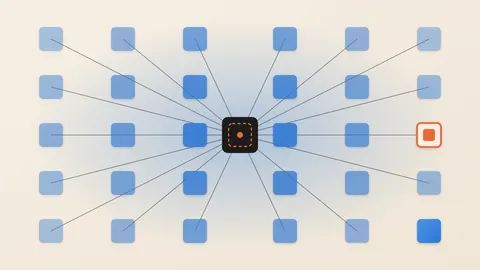
A remote management server is built to be trusted. It holds the keys to every laptop and server a service provider looks after. That makes it a rare kind of target. One break-in does not give an attacker one company. It can give them the endpoints of many.
That is the idea behind this week's N-able N-central story. The product is software that managed service providers and IT teams use to run their customers' devices. A set of flaws disclosed this week shows how quickly such a server can turn from a tool into a doorway.
What was disclosed and how fast it was probed
Independent researcher Sean Bales disclosed two sets of flaws, called 4EverAble2Shell and Agent2Shell, according to The Hacker News. The outlet says they affect the newest N-central release. They can let attackers run code as root. Under specific conditions they can also give SYSTEM-level access to Windows systems.
Previdian, a threat-intelligence firm tracking the first chain as VULN-2026-0009, published a timeline. The flaw was disclosed publicly at 06:12 UTC on November 12. Public proof-of-concept code followed at 07:13. Previdian's sensors saw exploitation attempts at 08:24, about two hours after disclosure.
The scale of that first sighting is small. Previdian counted two attempts, from one attacker IP address in one country. It is a signal about speed, not about breadth.
How the attack works
The chain has two stages. The first uses CVE-2026-90436, an Apache Axis flaw with a CVSS severity score of 9.8, according to The Hacker News. Axis is a component bundled inside N-central that handles SOAP, an older web-messaging format.
Previdian explains that the flaw lies in how Axis processes SOAP error messages. It creates a software object without checking what kind it is. A crafted request makes the server run a class of code the attacker chose, which executes commands as the low-privilege "nable" service account.
The second stage fixes the attacker's limited position. Previdian says the public proof of concept abuses separate weaknesses in N-central's privileged helper functions to reach root. Root is full control of the machine.
The design lesson is that the chain pairs a bundled third-party component with weaknesses in N-central's own code. Neither stage alone gives the attacker what the two do together.
What Huntback found on the servers
Cybersecurity company Huntback reports that one attacker IP address, 157.20.241[.]16, delivered a shell script to 21 N-central servers. The script installs XMRig, a program that mines the Monero cryptocurrency. Huntback says the miner uses only half the available CPU cores, likely to avoid notice.
According to The Hacker News, those servers are concentrated in seven countries across North America, Europe and Africa. The sources do not say when they were compromised. Huntback also says the miner is the only payload it has seen.
That caveat matters. In Huntback's words, the attacker now holds root on a machine that manages customers' endpoints. Its guidance is blunt: a hit means full compromise, and cleaning up the miner is not enough.
Patched is not the same as clean
The researcher's successful test ran against one build, N-central Appliance 2026.4.1.26 (HF2), Previdian reports. Previdian has not verified the full range of affected versions, or which build fixes this chain. A hotfix label alone therefore does not tell a customer they are protected.
N-able says it is restricting certain N-central features and integrations in hosted environments while remediation is completed. It warns that this may affect some functionality. For on-premises customers it urges upgrading Agents and Probes. It also asks them to ensure Legacy API access is disabled if it was ever turned on.
The lesson here is about order of operations. With probing starting within hours, the question for many owners is no longer only whether they are patched. It is whether someone arrived first.
Questions to put to your team or provider
Start with exposure. Is any N-central server reachable from the internet, and does it need to be? Is Legacy API access off? Have Agents and Probes been upgraded as N-able advises?
Then ask about compromise. Has anyone looked on the server for the indicators Huntback and Previdian published, including the "jup.sh" script and traffic to the attacker address? Who would notice a miner using half the processor?
If you buy remote management from a provider, ask them the same questions in writing. Their server holds access to your devices. Ask also what they would do if the answer is that the host was compromised.
Because Previdian has not verified a fixed build, ask N-able in writing which build closes both stages: the bundled Axis flaw and the weaknesses in N-central's own helper functions.
Produced by the WebPulse Newsroom with AI assistance from the original reporting credited below, and checked against that source by our editorial review. How we use AI.
Original reporting: Previdian.