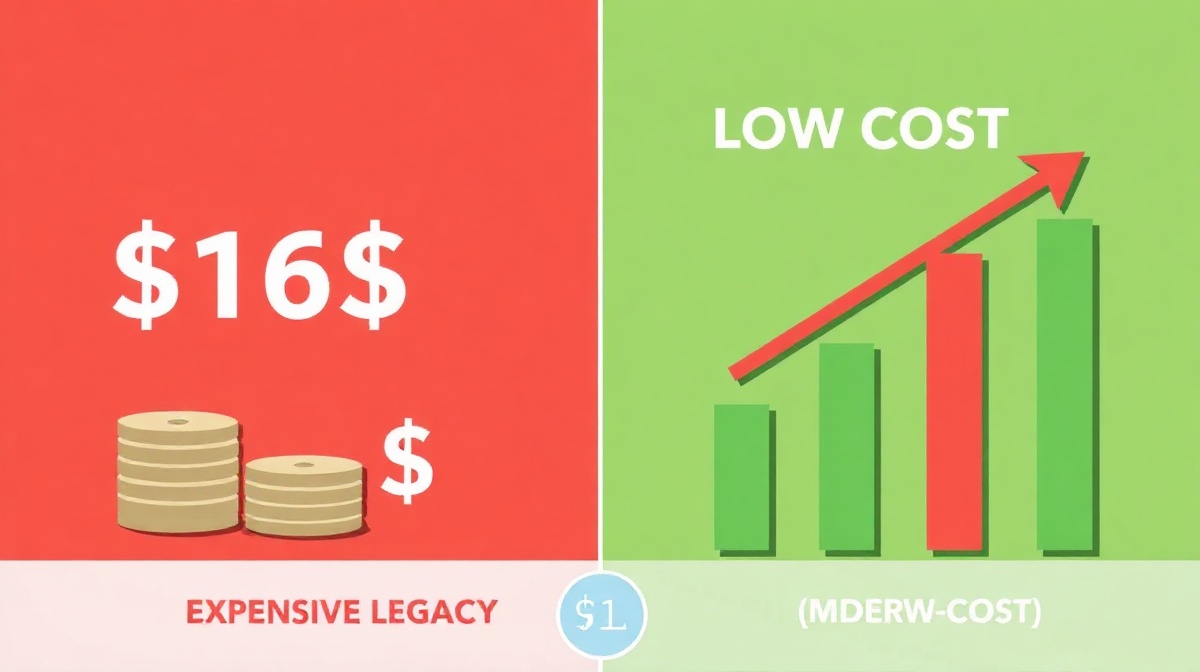
- The article argues that WordPress costs more to own than static site generators like Hugo or Astro, because plugins and a steady stream of known security flaws add maintenance work.
- It says moving off a large CMS can pay for itself within the first year, once three years of patching and upkeep are counted. It gives no figures.
- Its advice is that organizations should treat security and maintenance as core financial costs, and weigh them against the one-time cost of moving to a static site.
Total Cost of Ownership (TCO) Analysis
For enterprise digital assets, the Total Cost of Ownership calculation must extend far beyond initial build costs. Traditional Content Management Systems (CMSs), while user-friendly, introduce escalating maintenance liabilities that challenge long-term financial planning.
The Technical Debt of Bloatware
A key variable in the TCO equation is plugin dependency. Each added feature layer increases the attack surface and requires specialized remediation time, rapidly inflating operational expenditures (OpEx). This technical debt becomes a critical drag on profitability.
Security Vulnerability Exposure
The sheer volume of known vulnerabilities presents the most immediate financial risk. A large, active CMS like WordPress accumulates CVEs rapidly, necessitating dedicated security teams and costly patch management cycles—a significant drain on resources.
The Static Generator Advantage
Conversely, modern static site generators (SSGs) like Hugo or Astro offer a dramatically different risk profile. By separating content from presentation and eliminating complex backend dependencies, they drastically reduce the attack surface area, minimizing security overhead to near zero. This structural advantage is paramount for cost-sensitive organizations planning for 2026 growth.
The initial investment in migrating off monolithic CMS platforms can seem substantial, particularly factoring in developer time. However, when amortized against the cumulative costs of patching and maintaining a vulnerable system over three years, the migration pays for itself within the first fiscal year alone.
This shift is not merely technical; it represents a fundamental re-evaluation of digital infrastructure spending. Organizations must treat security and maintenance costs as core financial inputs, rather than externalities.
The cumulative savings derived from avoiding remediation efforts—the time spent fixing vulnerabilities found among detected frameworks—far outweigh the cost of adopting a modern SSG architecture. This financial arbitrage is highly favorable to enterprise efficiency.
Produced by the WebPulse Newsroom with AI assistance and checked against our data by our editorial review. How we use AI.