- Searchlight Cyber found that overloading a database can make Drupal's installer treat a live site as new, leading to remote code execution. Drupal 8.9 through 11 are affected.
- CISA added CVE-2026-132165 (CVSS 9.8) to its exploited-vulnerabilities list. Drupal's security team received a report that exploitation began as early as November 19.
- Patches shipped on November 18 under SA-CORE-2026-017. Teams should confirm the patch, and check that the installer is unreachable on live sites.
When "cannot check" is read as "nothing here"
A door that unlocks when the power fails is a design choice. Engineers call it failing open. A Drupal website made a similar choice about its own installer, and attackers are now reported to be using it.
The lesson is broader than Drupal. When a system cannot check its own state, it has to decide what to believe. Drupal believed the worst possible answer: that no site exists here yet.
What has been reported
Searchlight Cyber researchers Kevin Gervot and Adam Kues set out to learn whether ordinary server limits, which usually just slow an application down, could be used to break its security. Drupal was where it worked. Their research describes a pre-authentication remote code execution flaw in Drupal 8.9, 9, 10 and 11. That means an outsider with no login can run code on the server.
The flaw is tracked as CVE-2026-132165 and nicknamed Fail2Install. The Hacker News reports a CVSS score of 9.8. CISA added it to its Known Exploited Vulnerabilities catalog on Tuesday. Federal agencies must apply fixes by November 27, 2026. That deadline binds federal agencies under CISA's directive, not private companies.
Drupal's security team received a report that attackers used the flaw against live sites starting at 19:00 UTC on November 19, 2026, or earlier, according to The Hacker News. Searchlight Cyber says Drupal published advisory SA-CORE-2026-017 and patched versions on November 18, with commit a15a19b. Drupal 7 and Drupal 8 before 8.9 are not affected.
How the attack works
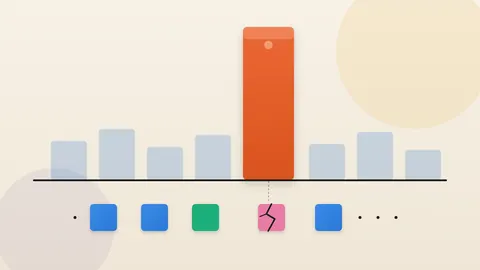
Drupal's installer, install.php, checks the database to see whether the site is already set up. Searchlight Cyber found that this check can fail in a harmful way. The researchers describe a sequence of FAIL, FAIL, then SUCCESS.
The first database check fails, but the installer carries on. The second check fails too, and Drupal still does not treat the site as installed. The third check succeeds, so Drupal starts a fresh installation over the existing site. The attacker can then create their own administrator account.
The failures come from exhausting limits. On Apache with PostgreSQL, the researchers fill the database's connection slots. Apache allows 150 workers by default, and PostgreSQL defaults to 100 connections. On Apache with MySQL, they use a logging quirk that makes each request hold two connections.
PHP-FPM, a common alternative PHP server, is harder. It runs five workers by default, too few to fill the database's slots. So the researchers exhaust Linux's supply of network ports instead. Closed connections linger for about 60 seconds, and the researchers calculate about 471 new database connections per second would fill the 28,232 ports available.
The researchers then found a shortcut to running code. The installer lets the person choose where a SQLite database file is stored. They pointed it at a path ending in .php and entered PHP code as the site name. Drupal wrote that code into the file.
Drupal's default .htaccess rules block direct access to such a file. The researchers say the exception for core files checks only how the web address ends, not how it begins. A crafted address passes that check, and Apache runs the file.
What limits the risk
The researchers are open about the limits. They say the PHP-FPM route needed a server with at least 8 vCPUs using one endpoint. A faster endpoint, authorize.php, brought that down to 4 vCPUs. They believe remote exploitation is plausible at 4 vCPUs. On 2 vCPUs, they say success depends more on the deployment.
Load balancers can make the race harder. With three PHP-FPM replicas, roughly three times more requests are needed. Settings such as the number of PHP workers also change the picture.
These are results from Searchlight Cyber's lab. They do not say how many live sites are exposed. The reported exploitation from November 19 is a separate matter, and the sources give no detail on its scale.
Drupal in WebPulse's sample
WebPulse scanned the Tranco top 10,000 domains in September 2026. A platform was detected on 2,491 sites, and Drupal was detected on 188 of them, or 7.5%. The scan cannot see Drupal versions, databases or server settings. It does not show how many of those sites are affected.
Questions for your team
Ask whether every Drupal site you run is on the patched release from SA-CORE-2026-017. Ask who owns sites that nobody has touched in years, such as campaign sites and agency builds.
Ask whether install.php can be reached from the public internet on a live site. Ask whether anyone has checked the logs since November 19 for installer requests or new administrator accounts. Ask which of your systems treat a failed check as permission to continue.
Drupal 7 shows the safer habit. If it cannot verify the database but finds stored connection settings, it refuses to install. The lesson here is that a system under strain should trust what it already knows. A failure to check is not evidence that nothing is there.
Produced by the WebPulse Newsroom with AI assistance from the original reporting credited below, and checked against that source by our editorial review. How we use AI.
Original reporting: Searchlight Cyber.