- Zero Day Initiative reports that a container with default privileges could send arguments to a process Docker Model Runner starts on the host, tracked as CVE-2026-28400.
- ZDI says that under non-default configurations the flaw led to arbitrary code execution on macOS and Windows. The two sandboxes differ in how much of the filesystem they leave reachable.
- Check which Docker Desktop versions your developers run, whether Model Runner is in use, and what the vendor says about CVE-2026-28400.
A boundary that sat in the wrong place
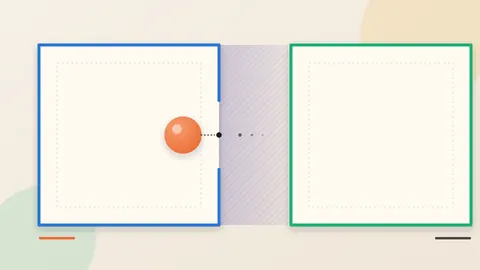
Containers are sold as a wall between workloads and the machine that hosts them. Docker Model Runner, a Docker Desktop feature that downloads and serves AI models locally, put an important process on the other side of that wall. The lesson from new Zero Day Initiative (ZDI) research is that local AI tooling brings new trusted processes onto developer laptops, and each one needs its own boundary review.
What ZDI found
ZDI reported ZDI-26-150, also tracked as CVE-2026-28400, in November 2025 and published its write-up about a year later. It describes an unauthenticated argument-injection flaw in Docker Model Runner (DMR). That means a caller can slip extra instructions into the command that starts another program.
On macOS, ZDI says a container with default privileges could write over the data disk of the Docker Desktop virtual machine. The result was a corrupted disk and a denial of service.
ZDI says deeper analysis found more. Under non-default configurations, the same flaw led to arbitrary code execution on macOS and Windows. The two sandboxes differ in how much of the filesystem they leave reachable. ZDI also describes two related escapes it found along the way.
How the flaw works
On macOS and Windows, Docker Desktop runs Linux containers inside a virtual machine. The model-serving process stays outside it. ZDI says that process, llama.cpp's llama-server, starts on the host under the Docker Backend and carries the rights of the person running Docker Desktop.
ZDI describes the DMR REST API as unauthenticated. At the time of its research, any container could reach it at the name model-runner.docker.internal. One endpoint, _configure, accepts settings that DMR adds to llama-server's command line. A container could therefore pick the arguments for a host process.
ZDI notes that llama-server has no flag that runs code. Three flags touch files, though. One reads a grammar file and logs its contents on a parsing error. One reads a chat template file. One writes logs to a path the caller chooses.
Two operating systems, two different walls
The model process is sandboxed because models are untrusted input. How tight that sandbox is decides what a caller can reach. ZDI ties the macOS sandbox to Docker Desktop 4.46.0 onward. Its profile limits reads and writes to a few locations, including Docker Desktop's data directory. That directory holds logs, the VM's data disk and extension files.
That left room for two results. The read flags can reach Docker Desktop logs, which ZDI says have repeatedly been found to contain credentials. The log flag can overwrite the data disk, which holds every container, image and volume for that user.
Windows is looser. ZDI says the Job Object sandbox blocks the clipboard and outgoing network traffic, but sets no filesystem limits beyond the user's own permissions. The file flags then give read and write access to whatever that user can reach.
From a bounded write to code execution
A write needs a destination, and on Windows that includes the username. ZDI describes two ways a container can learn it without user interaction. One uses a network share path that makes the host disclose the name. The other triggers an error message that prints host paths.
Control of content is the next gap. The log flag writes llama-server's own output, not chosen bytes. ZDI found that model metadata and chat templates reach the logs unsanitized. Two further flags let an attacker inject metadata or log prompts without a crafted model.
ZDI names Docker Extensions as the last step, the plug-in system for third-party tools in Docker Desktop. The part of the post available for this article stops before that step, so we do not describe it here. That means the code-execution claim is ZDI's and rests on a step this article cannot independently describe. Read ZDI's full post for those details.
Questions for your team
This describes ZDI's findings at the time of its research. This article could not confirm which Docker Desktop versions are fixed, so treat the status as something to check.
First, which Docker Desktop versions do developers run, and is Model Runner enabled? Check Docker's own guidance on CVE-2026-28400 for fixed versions. Second, do developer machines hold credentials that a log file could expose? Third, do your controls treat a local model server as a trusted process, or as a service that takes outside input?
The same logic applies to any local AI tool that runs beside the browser, the editor and the credential store. The container wall protects only what stays behind it.
Produced by the WebPulse Newsroom with AI assistance from the original reporting credited below, and checked against that source by our editorial review. How we use AI.
Original reporting: Zero Day Initiative.