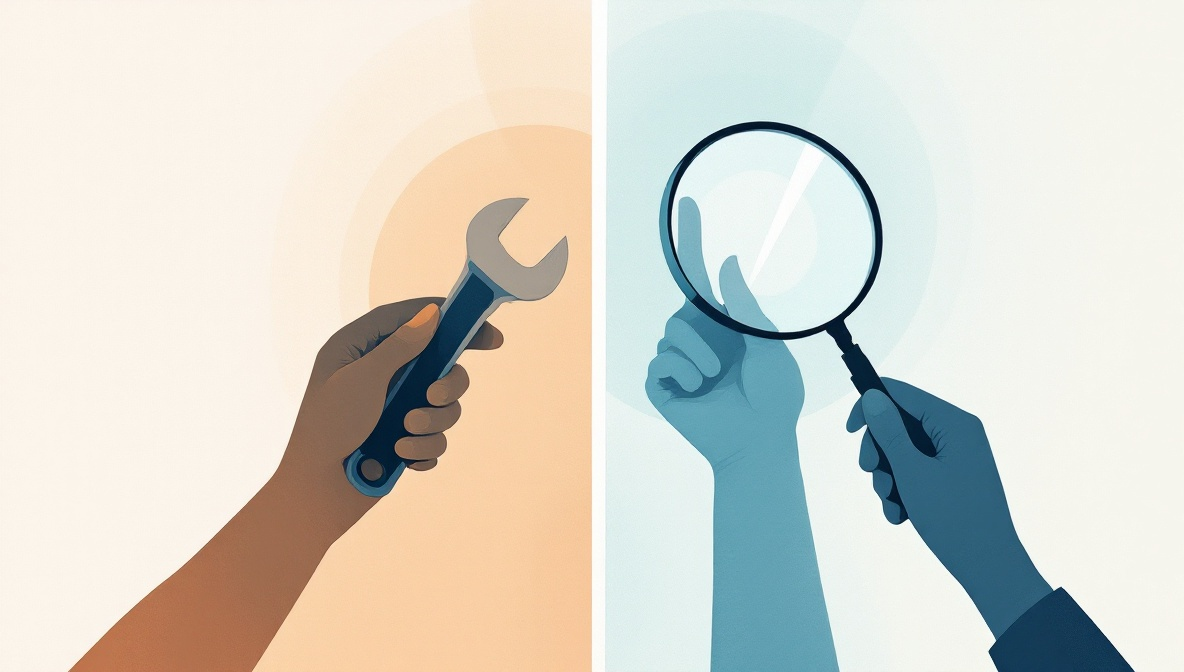
There are two ways to hand work to a machine, and the entire future of software teams may hinge on knowing the difference.
The first is offloading: you delegate a discrete task to a tool — the linter checks style, the type checker catches mismatches, the assistant drafts the boilerplate — while you retain the judgment about what the output means and whether it's right. Offloading is rational, ancient, and good; it's why we have compilers instead of hand-assembled binaries.
The second is surrender: you adopt the machine's output with minimal scrutiny — no intuition check, no deliberate reasoning, neither your fast thinking nor your slow thinking ever actually engaging. The suggestion appears plausible; you accept; you move on. Behavioral researchers studying AI-assisted work have given this pattern a name — cognitive surrender — and identified its most treacherous property: it inflates confidence even when the AI is wrong. You don't just skip the understanding; you feel as though you have it. The feeling of comprehension detaches from the fact of it.
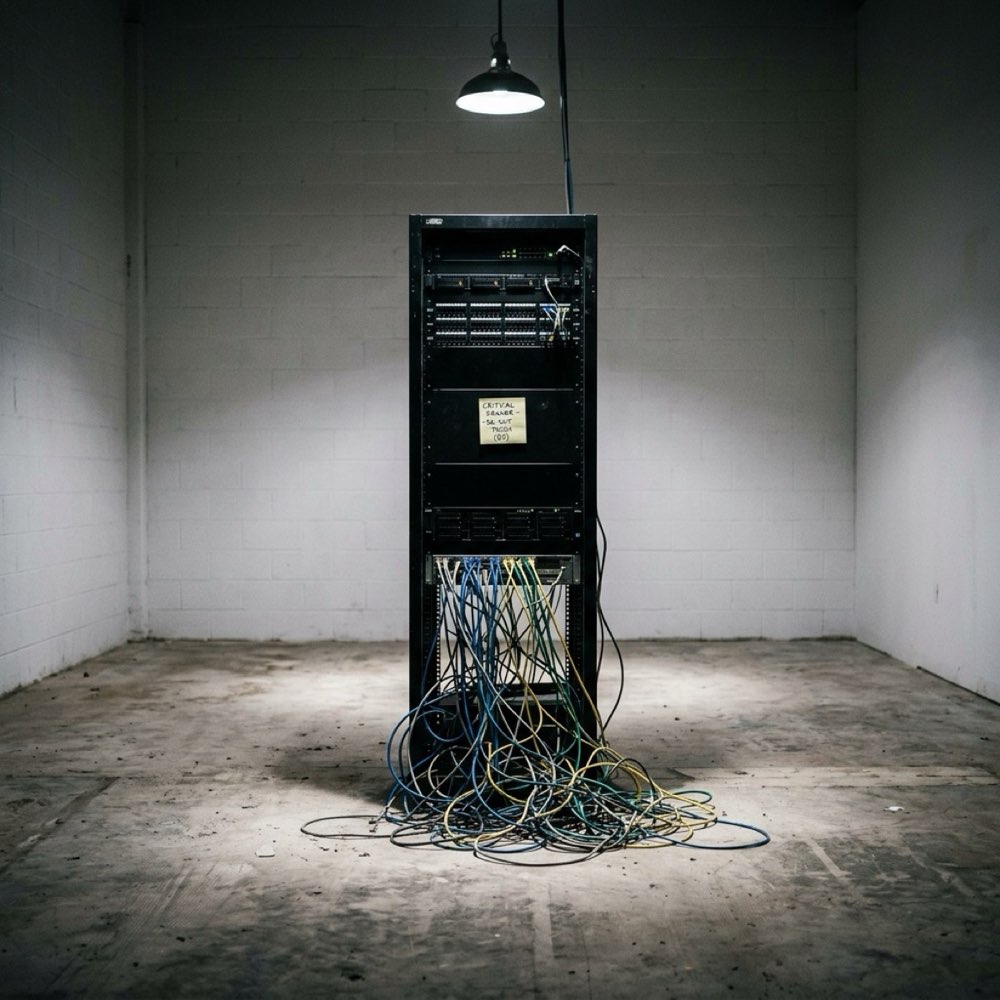
One developer surrendering once is trivial. A team surrendering routinely, for months, is how an organization wakes up owning a system that nobody — literally nobody — can explain.
The debt is a team property
Here's the framing shift that took me longest to internalize: the resulting damage isn't primarily individual. What erodes is the shared understanding — the distributed, collective model of how the system works that lets a team coordinate, change things safely, and know who to ask. Cognition in real engineering organizations was never inside one skull; it lives in the system of people, artifacts, and interactions. That's where this debt accumulates: in the widening gaps of the collective map, in the quiet decay of the team's sense of who knows what.
Software has always run on partial understanding — nobody ever comprehended a large system entirely, and teams functioned anyway, because sufficient understanding was distributed across enough heads. What's new isn't the incompleteness. It's the rate at which the incompleteness grows when code arrives faster than comprehension, and the difficulty of noticing — because the traditional signal of not-understanding was struggle, and generated code eliminates the struggle without supplying the understanding. Writing even bad code by hand forced a partial mental model into existence; that was friction's hidden gift. Accepting generated code builds nothing, and each acceptance is invisible at the moment it happens. There's a second casualty, too: problem-solving normally runs on a live feedback loop between your model of the problem and your model of the solution, each correcting the other. When the machine builds every solution, that loop severs — and your grasp of the problem itself goes static.
How to see an invisible debt
You can't lint for lost understanding, but it leaves fingerprints. The ones worth watching:
Reluctance to change. The team hesitates to touch working parts of the system — not from prudence but from low confidence about consequences. Fear of one's own codebase is a balance-sheet item.
Surprise. Someone makes a change expecting one outcome and gets another. Every "wait, why did that happen?" is the gap between the team's model and the actual system, announcing itself.
Onboarding that doesn't converge. New members can't get up to speed despite documentation — because the docs describe what the code does, not why — and, tellingly, the existing team can't help them much either.
Broken who-knows-what. People stop knowing whom to ask. Each developer increasingly consults their AI rather than colleagues, so the team's collective memory — the routing table of expertise — quietly stops being maintained.
The shrinking circle. Only one or two people truly understand the system, and everyone privately worries about what happens if they leave.
Any one of these is a data point. Three together are a diagnosis.
Paying it down: make the implicit explicit
The practices that work share a single mechanism: they force implicit knowledge into the open as part of development, not as an afterthought. Code review and pairing already do this — their most underrated function was always spreading understanding, not just catching bugs; keep them precisely because code is now machine-written. Add walkthroughs where developers explain code they didn't write — the goal is theory-building in the explainer's head, not documentation. Mine retrospectives and postmortems deliberately: a failure is the one moment when everyone's model gets stress-tested at once, so use it to rebuild collectively. Design for diagnostic legibility — structure systems so someone unfamiliar can troubleshoot them, because "someone unfamiliar" is now the default future maintainer. And here's the strangest new tool in the kit: reimplementation as repair — when generation is nearly free, having an agent rebuild a feature differently, with the team steering and comparing, is a surprisingly cheap way to reconstruct understanding you've lost.
Two governing principles above the tactics. First: treat understanding as a deliverable — a first-class output of development, with time allocated to it explicitly, not a vapor that condenses on its own. It used to condense on its own; that era ended with hand-written code. Second, and I'd call this the trap of the decade: resist automating the understanding itself. The temptation is exquisite — the AI wrote the code, let the AI write the explanation, and now you have beautiful documentation nobody's head ever contained. That's not understanding; it's the artifact of understanding with the substance removed, and it makes the debt harder to detect by dressing the gap in prose. Some frictions are load-bearing. The effort of comprehension is one.
None of this argues against the tools — the velocity is real and worth keeping. It argues for honesty about the ledger. Speed borrowed against understanding is still borrowing, the interest compounds socially rather than technically, and the collection notice arrives on the worst possible day: mid-incident, at 2 A.M., when the system misbehaves and the team discovers that what it surrendered wasn't scrutiny of one suggestion, but the collective ability to reason about what it built.