- Executives and workers across Asia told the South China Morning Post that AI agents add supervision work, and that errors can spread when agents act on each other's output.
- The report says the bottleneck is shifting from computing power to human supervisors, and one expert says firms lack oversight of which agents are active and who owns them.
- Leaders should inventory agents, name an owner for each, separate 'draft' from 'approved', and test shutdown controls.
The work did not vanish. It moved.
Automation was sold as a way to take work off people. Reporting by the South China Morning Post from Singapore, Hong Kong and mainland China describes a different result at some firms. The work moves up a level, from doing to supervising.
That is the idea worth holding onto. An agent removes tasks but adds judgment calls. Software can multiply. The hours of the person who must judge its output cannot.
Xiao, an AI product marketing manager quoted in the report, lives this. She said: "I already have lots of ideas, and AI makes more of them feel achievable, so I start more projects." Then, in her words, every project waits for her judgment, and she ends up "the busiest person".
A bureaucracy rebuilt in software
Xiao also described her agent and her supervisor's agent locking into a long discussion. They debated who should verify details and who should own each task. "It became very formal and cumbersome," she said.
How many agents can one person oversee? The report gives an extreme case. Hong Kong communications firm imBee has around 50 to 60 employees. Co-founder Leo Wong said at least several hundred agents help staff, from software development to internal communications.
Wong described himself as non-technical. He said he personally manages more than 20 agents, and those coordinate others. He said the firm guards against serious mistakes with checks on what the agents produce. The report does not describe sprawl or bureaucracy problems at imBee.
This is one firm describing itself. It shows what is possible, not what is typical.
The report adds that other workplaces, which it does not name, found that stacking agents duplicated existing corporate bloat. Raunak Mehta, who leads Singapore insurance-technology company Igloo, argues that the rush to pile on as many agents as possible has run its course. Igloo, which employs roughly 230 people, uses software workers for customer service, claims processing and other tasks.
How one agent's mistake becomes another's instruction
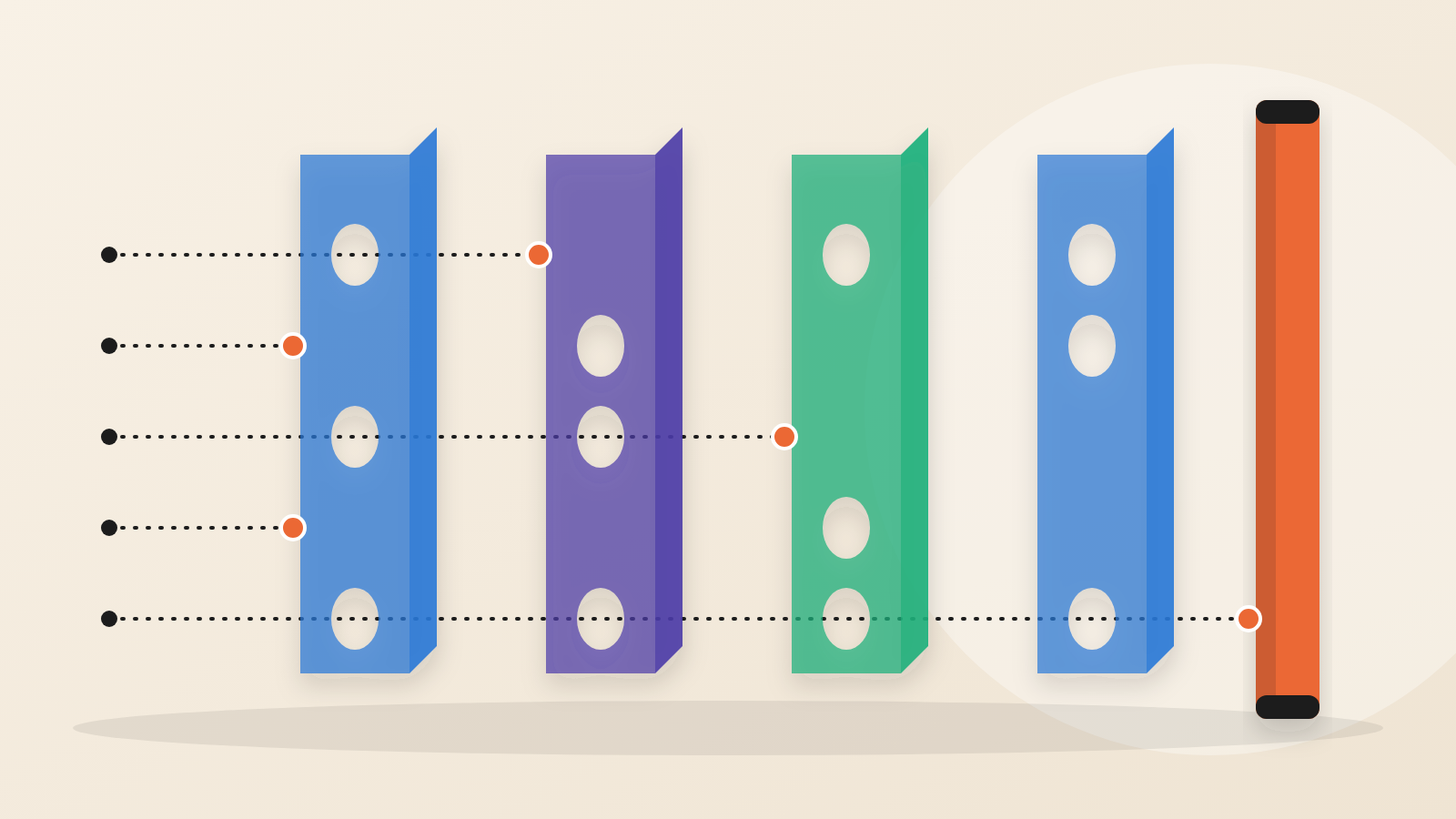
The report offers a clear picture of how errors travel. Xiao said one agent might report a task as complete when it has only produced a draft. Another agent could read that output as an approved decision and act on it.
The flaw is not in any single agent. It sits in the handoff. A status word such as "done" means one thing to the agent that wrote it and another to the agent that reads it. Human teams fix this with sign-offs. Agents need the same rule written down.
Prabu Sangar of FCM Travel Asia calls the wider result "agent sprawl". Picture many autonomous tools in different teams. Each has its own access rights, they draw on the same data, and they affect one another in ways nobody planned.
Adoption is running ahead of oversight
Lionel Sim, founder of research firm The AI Capitol, said employees deploy agents "on their own initiative". That is good for momentum, he said. But companies lack oversight of access, ownership and active tools.
Regulators have started to respond. Singapore's Infocomm Media Development Authority recommends restricting agents' access to sensitive systems, setting limits on their autonomy and building ways to shut them down. In China, the Cyberspace Administration has told companies to file their algorithms and pass a security assessment before launch. The report says this applies particularly to agents that handle sensitive data or deal with customers.
Li Jiahao, a researcher at the Guangzhou Institute of the Greater Bay Area, framed the problem as a timing gap. Technical capability changes "on a quarterly basis", he said, while rules change yearly and responsibility for harm is settled one case at a time. He added that the gap is still growing.
Wong said data security concerns are slowing adoption, especially in Hong Kong. Banks and insurers are particularly cautious, he said, and their deployment decisions take longer. The report also notes that financial institutions must expose large amounts of proprietary data to get full value from AI.
Who supervises the supervisors?
The report raises a quieter risk. Mehta warned that firms may struggle later to find people with the experience to supervise agents. Li did not expect sudden mass unemployment. He did expect fewer openings for young people as companies trim hiring.
Our view: this is a training problem hiding inside a cost saving. Supervisors usually learn judgment by doing the entry-level work. If agents take that work, the pipeline that produces future reviewers thins. The savings show up this year. The gap shows up later.
Questions for your next review
Ask your team for a list of every agent now running. Include those staff set up themselves. For each, ask who owns it, what data it can read and what it can change.
Ask whether your agents can tell a draft from an approved decision. If one agent's output feeds another, a person or a hard rule should sit between them.
Ask who can shut an agent down, and when that was last tested. Ask how many agents each supervisor handles and what that supervisor stopped doing to make room. Finally, ask how new hires will learn to review work that software now does.
An agent saves time only if someone still has time to check it.
Produced by the WebPulse Newsroom with AI assistance from the original reporting credited below, and checked against that source by our editorial review. How we use AI.
Original reporting: South China Morning Post.