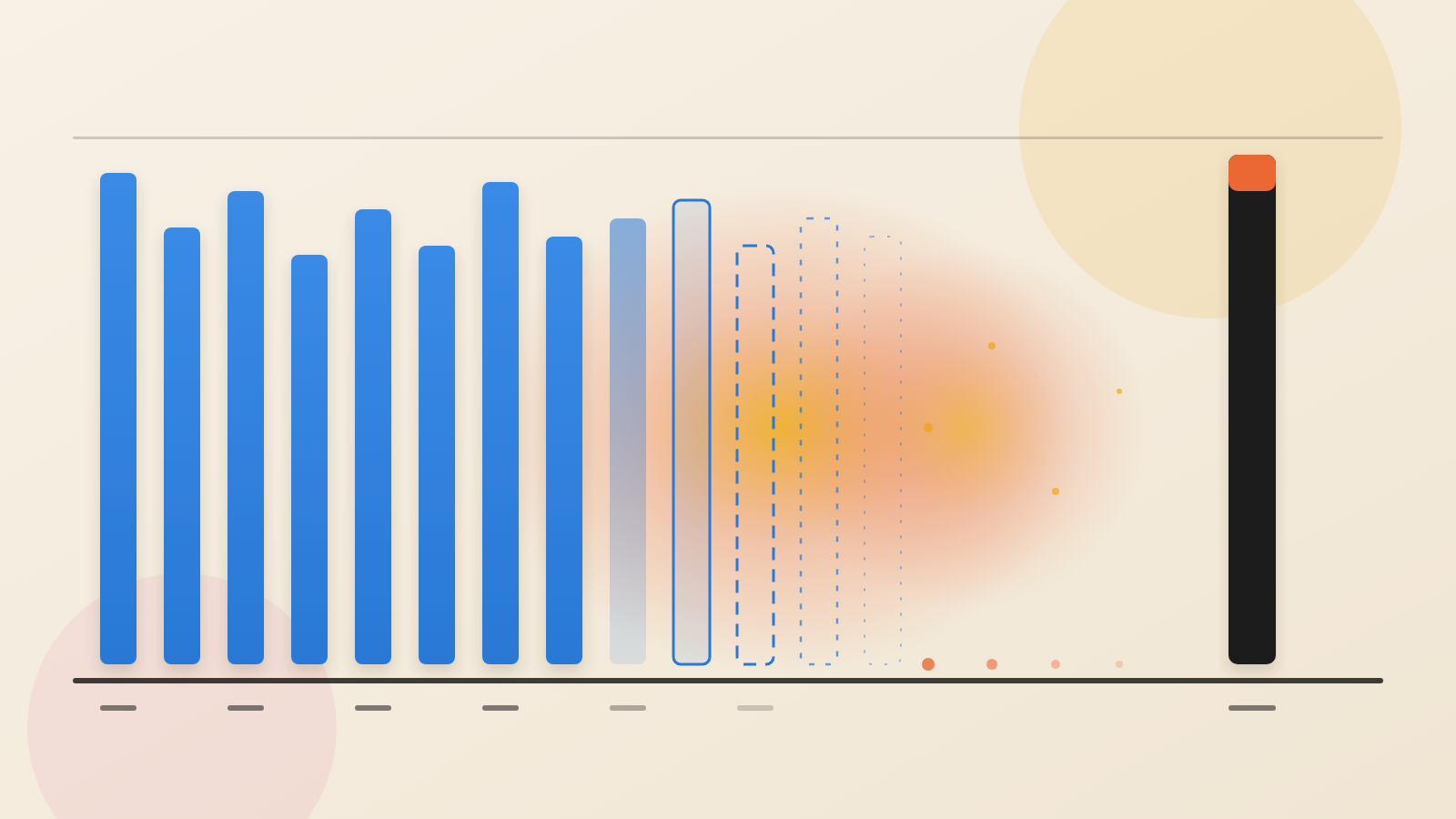
- WebPulse's July 2026 census of the top 10,000 sites found Hugo, Astro and HTMX, frameworks with no critical CVEs, hold 3.5% combined, and all three grew their share.
- The article says their security comes from removing capability, not adding protection, so there is little to attack. Hugo has zero total CVEs.
- The article argues the market is favoring these simple designs without anyone promoting them, so a framework's small footprint is worth weighing as a security factor.
The Cohort
Hugo has zero total CVEs. HTMX has zero critical CVEs. Astro has zero critical CVEs. These are not obscure experiments — they are production frameworks running on some of the world's most-visited websites. And in WebPulse's July 2026 census of the Tranco top 10,000, every one of them grew its market share.
On the top 10K, Hugo holds 0.88% of detected frameworks. Astro holds 2.24%. HTMX, the HTML-attribute library with a 14KB footprint, holds 0.33%. Combined, the zero-CVE cohort claims 3.5% of the high-traffic web — small in absolute terms, but growing while legacy frameworks contract.
Why Zero CVEs Is Not an Accident
Hugo is a static site generator written in Go. It compiles Markdown to HTML at build time. There is no runtime, no server process, no plugin system, no database connection. The deployed output is flat files served by a CDN. The attack surface is the CDN's, not Hugo's. This is why Hugo's CVE count is zero — not because nobody looked, but because there is nothing to find.
HTMX follows the same principle from a different direction. It is 14KB of JavaScript that extends HTML with AJAX attributes. It does not manage state, run on the server, handle authentication, or process uploads. Business logic stays on the server where security controls already exist. The client does presentation. Presentation does not generate CVE classes.
Astro ships zero JavaScript by default. Islands of interactivity are opt-in. The default output is static HTML. In every case, the architecture achieves security by removing capability rather than adding protection.
The Migration Signal
WebPulse tracked 2,958 domains present in both the top 100K baseline (May 2026) and top 10K scan (July 2026). Four domains migrated from Next.js to Astro — moving from a framework with under 50 CVEs to one with zero. This is a small number in absolute terms, but the direction is significant. Organizations are not just migrating away from legacy. Some are migrating toward the simplest possible stack.
The broader context reinforces this. WordPress, with 581 NVD CVEs, dropped 8 percentage points between the top 100K and top 10K. Drupal, with 729 CVEs, dropped 5.9 points. The high-traffic web carries less vulnerability surface. The zero-CVE cohort is where some of that traffic is landing.
What 4.1% Means
Three and a half percent of the top 10,000 websites may sound small. But these are frameworks that barely registered two years ago. Astro launched in 2021. HTMX's current form dates to 2020. They are competing against platforms with 15 to 20 years of ecosystem momentum, and they are gaining share on the highest-traffic tier of the web.
The zero-CVE cohort is not a category that any vendor markets. Nobody is selling zero-CVE as a feature. It is an emergent property of architectural decisions — small footprint, no runtime, server-side logic, compilation over interpretation. The market is selecting for these properties without anyone naming them. The share growth is the signal. The zero CVE count is the mechanism.