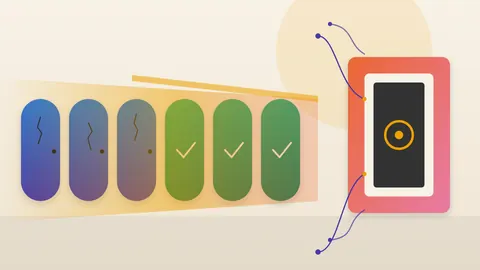
- Truffle Security says 81% of the 21,981 live keys it reported on GitLab and Bitbucket last year still worked six months later. Notifying developers did not remove them.
- Truffle's data shows far fewer Google Cloud keys still working after Google began disabling leaked ones by default on June 16, 2024.
- Companies that issue API keys can join Truffle's free program. Customers should ask providers whether they revoke leaked keys or only send notices.
A warning is not a fix
Most companies handle a leaked key as a communication task. Someone finds it and sends an email. The developer reads it, or does not. Truffle Security has now measured what happens next.
Last year the firm reported 21,981 live keys it found on GitLab and Bitbucket. Six months later, 81% still worked. The lesson is that a notice helps only if someone acts on it. A key stays usable until the company that issued it disables it.
What Truffle is launching
Truffle Security has started the Secrets Revocation Program. Its aim is to get 1.4 million secrets switched off. Truffle says it has confirmed that each one works and is publicly exposed. The locations include GitHub, Docker Hub, npm and Hugging Face.
The program is free to companies that issue API keys. Truffle says joining takes a two-page agreement.
How the program works
Truffle's TruffleHog tool tests every key it finds. Only keys that work at that moment go to the issuer. The idea is that the issuer receives only live keys, so it can kill them.
BleepingComputer reports two routes. The issuer can give Truffle a revocation endpoint, which is a web address that switches a key off. Or Truffle can pass verified keys to the issuer by webhook, an automatic message, and revoke them itself within 14 days.
According to Truffle, 16 issuers have joined. BleepingComputer's list of members includes Twilio, Notion and Hugging Face. Truffle says its pipeline holds 43,699 more verified keys for issuers that have not signed up.
One caveat applies. Truffle makes TruffleHog and runs the program. The figures here are Truffle's own, and neither source reports independent verification.
Google's natural experiment
Google offers a useful natural experiment. For a time it only warned customers about Google Cloud service-account keys exposed on GitHub. On June 16, 2024, it began disabling such keys by default.
The data came from The Stack v3, a public archive of GitHub code. Truffle split the Google Cloud keys in it by commit date, before and after the change, and retested them in July 2026. Of the 69,041 that still work, 96% leaked before the switch.
BleepingComputer adds a second view of the same finding. While Google only notified owners, Truffle found 72% of exposed secrets still active. After automatic disabling, the figure was 11%.
The rate did not reach zero. Customers can opt out, and Google disables only the leaks it detects. The cohorts are split by date in one snapshot, so the comparison is suggestive rather than a controlled test.
Other issuers show a similar split. Hugging Face, GitHub, Anthropic, OpenAI and Slack revoke keys that are reported to them. Truffle says at most 2.2% of their keys in The Stack still work. Telegram offers outsiders no way to report a leaked bot token. Truffle found 53% of those tokens still work.
Truffle's case that AI makes it worse
Truffle argues that AI is adding to the volume. It quotes GitHub as saying that over 40% of September's pull requests began as an agent's first draft. The figure was 17% in March.
Truffle reports that until mid-2025, no commit exposing a working key carried an AI agent's signature. By May 2026 the share was 6.8%.
Agents also leave keys in new places. In one case, a publicly published Docker image held a working GitLab token in an AI coding tool's local settings file. Since January 2025 Truffle has found 2,655 working keys in the config files of such tools. It found none in 2024.
Truffle also points to OpenAI's July cyber evaluation. In a public dataset, the test agents located 14 Hugging Face tokens that worked and allowed writing. Within a day they had reached Hugging Face's production secrets.
This is Truffle's argument, not a measured trend. But it raises a real question. If tools can find and test keys quickly, how long should an exposed key stay valid?
Where keys leak from
GitHub is not the only source. Truffle says Docker images were the origin of three in four Resend keys it delivered. Hugging Face datasets supplied the majority of the Vercel keys it studied.
GitHub runs a secret-scanning partner program for issuers. It covers only public GitHub repositories and npm, so Docker images and Hugging Face datasets sit outside it. An issuer that relies on GitHub alone may therefore miss many of its customers' keys. Truffle's October scanning turned up a fresh working key roughly every 150 seconds.
What to ask your teams
If your company issues API keys, ask whether leaked keys are revoked or only reported. Ask how many customer keys sit in Docker images, packages and datasets. Truffle invites issuers to ask how many of their customers' keys it found this month.
If your company uses other providers' keys, ask which providers revoke on report. Ask which keys sit in AI coding tool config files and container images. Rotate those first.
In Truffle's reading of its data, the difference came from who acts. Notices left the decision with the key's owner. Revocation moved it to the issuer.
Produced by the WebPulse Newsroom with AI assistance from the original reporting credited below, and checked against that source by our editorial review. How we use AI.
Original reporting: Truffle Security.