Packages compromised: 160+ (Source: Orca Security, Tenable. Including TanStack (React Query), Mistral AI SDKs, UiPath, and packages across npm and PyPI.)
The Worm That Eats the Ecosystem
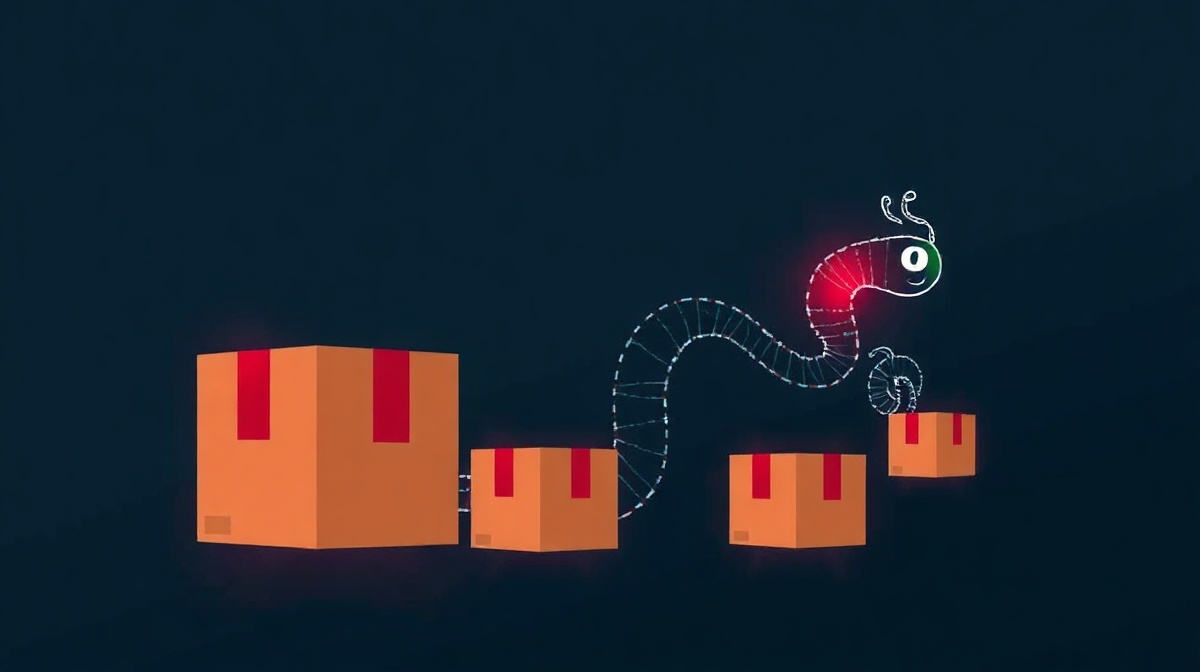
On May 12, 2026, security researchers disclosed Mini Shai-Hulud — a self-propagating supply chain worm that compromised TanStack (React Query), Mistral AI SDKs, UiPath packages, and over 160 additional npm and PyPI packages. Unlike traditional supply chain attacks that poison one package and wait, this worm propagates: it steals developer npm tokens from compromised machines, then uses those tokens to publish poisoned versions of every package the developer maintains.
The attack chain: compromised package installs → steals npm/PyPI tokens, AWS/GCP/Azure credentials, GitHub secrets, SSH keys → publishes malicious versions of the developer's other packages → those packages infect more developers → the worm spreads exponentially. It also includes a destructive payload — a persistent daemon that can wipe developer home directories.
OpenAI Confirmed the Blast Radius
OpenAI disclosed on May 15 that two employee devices were compromised after ingesting a malicious TanStack package. The company mandated all macOS users update their applications before June 12, 2026. When the company building GPT gets hit by a supply chain worm through a React utility library, it demonstrates something WebPulse has been measuring: the JavaScript dependency tree is a systemic risk, not an individual package problem.
Why TanStack Matters for Framework Rankings
TanStack React Query is not a niche library. It's the standard data-fetching layer for React and Next.js applications — used by enterprises, startups, and open-source projects. When TanStack gets compromised, every Next.js application that depends on it is in the blast radius. Not because Next.js has a vulnerability, but because the ecosystem around it does.
This is the supply chain dimension WebPulse tracks. A framework's security score isn't just its own CVE count — it's the health of the entire dependency graph. Next.js scores 82/100 on security for its own codebase. But its npm dependency tree contains thousands of transitive packages, each one a potential entry point for a worm like Shai-Hulud.
The Pattern Is Accelerating
The timeline tells the story. September 2025: Shai-Hulud first appears. May 2026: Mini Shai-Hulud hits TanStack and 160+ packages. June 1, 2026: Miasma hits 32 Red Hat packages. June 8, 2026: Hades variant targets PyPI MCP developer packages. Each wave is larger, faster, and more targeted. The worm learned to jump ecosystems — npm to PyPI to Crates.io.
Frameworks with smaller dependency footprints are structurally less exposed. Astro, Hugo, and Eleventy pull fewer npm packages than Next.js or Nuxt. Python frameworks like Django and FastAPI are outside the npm blast radius entirely. The framework choice doesn't just determine your server's attack surface — it determines which supply chain ecosystem's risks you inherit.