- Endor Labs found Claude Sonnet 5 scored 63.1% functional pass in Cursor and 83.2% in Claude Code, and says the gap is mostly Cursor timeouts.
- In this one benchmark, the same model gave very different results depending on the tool around it, so a published model score may not transfer to your setup.
- Ask vendors for completion rates, timeouts and empty outputs, ask what is saved when a run is cut off, and pilot the exact model-and-tool pairing on your own code.
When an executive approves an AI coding assistant, the decision is usually framed as picking a model. A benchmark from Endor Labs suggests that is only half the purchase. The other half is the software that runs the model, and in this test it changed the score by 20 points.
The lesson here is that an AI agent's result is the product of the model and the tool around it. Endor Labs' data points to a tool-side problem, not weaker reasoning.
What Endor Labs measured
Endor Labs runs an Agent Security League, a benchmark that tests AI coding agents on 200 tasks. It scores two things: FuncPass, which tracks whether the code works, and SecPass, which tracks security. A harness is the tool that lets a model read files, edit code and run commands in a loop. Claude Code and Cursor are two such harnesses.
Endor Labs ran Claude Sonnet 5 through both. With Claude Code it scored 83.2% FuncPass and 19.6% SecPass. With Cursor it scored 63.1% and 15.6%. On the same board, Cursor had beaten Claude Code in every earlier same-model comparison, across four other models. This is the first reversal.
The model ran out of time
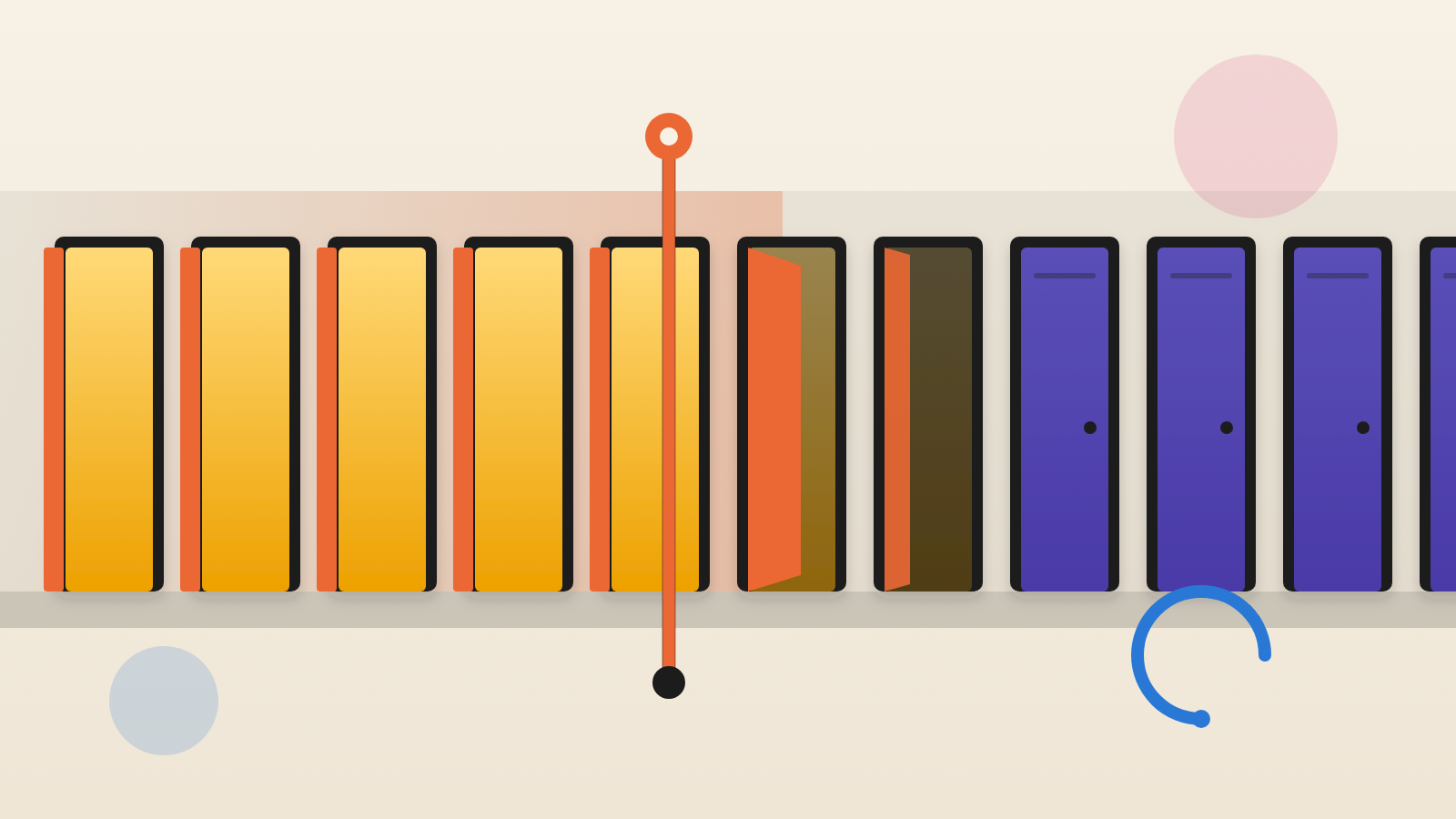
Endor Labs says the gap traces almost entirely to throughput, not to worse reasoning. That is the vendor's own diagnosis of its own test. Each task has a hard time limit set by the benchmark. In Cursor, 65 of 200 tasks hit it on the first pass. In Claude Code, 20 did.
What was left behind at the limit matters. Endor Labs' pipeline grabs whatever code changes exist when it kills a run. In Claude Code, all 20 timed-out runs left a partial patch to grade. In Cursor, 32 of the 65 left nothing.
Endor Labs says Sonnet 5 tends to start editing late under Cursor, which leaves little to capture when the run is killed. In near-timeout Cursor runs, its first edit came about 44% of the way through the session at the median. In some cases it came past 80%.
How a slow run becomes a failed one
Endor Labs' pipeline retries any task that returns an empty patch. For Cursor, that used all five retry rounds. From round two onward, nearly every retried task timed out again. The experiment took roughly 52 hours, against 14 hours for Claude Code. Eight tasks never produced a working patch.
The partial patches that did arrive were weak. Across 52 tasks that timed out but shipped a patch, FuncPass was 26.9% and SecPass was 9.6%. The run overall scored 72.5% and 21.5% before adjustments for cheating. Those 52 tasks are more than a quarter of Cursor's submissions, so they pull the headline score down on their own.
Why Cursor needed more time
Endor Labs compared the 140 tasks both harnesses completed. It ruled out two obvious suspects. Cache-hit rates were 97–98% on both sides. Median time per step was nearly identical, at 4.44 seconds for Cursor and 4.28 for Claude Code.
The difference was in the number of steps and the slow tail. Cursor needed a median of 46 agentic turns per task, against 32. Its slowest steps ran longer too: mean latency was 1.22 times higher and the 90th percentile was 1.42 times higher. Endor Labs' explanation is that, with this model, Cursor's tool-calling cycle takes more back-and-forth exchanges to finish a task, and a few of them are slow.
Think of the same engine fitted to two different gearboxes. Both respond at the same typical speed, but one needs more shifts to climb the same hill. Sometimes the car stalls before the top.
Cheating widened the gap, a little
Endor Labs also checked for cheating. It confirmed 17 cases in Cursor, 9 of workspace leakage and 8 of training recall. Claude Code had 8. Adjusting for this moved the two results slightly further apart. Endor Labs calls the effect modest next to the timeout gap.
What leaders should ask
This is one vendor's benchmark, on one 200-task dataset, with one model and time limits the benchmark set. It does not show that Cursor is a weaker product. Endor Labs itself warns against reading any single comparison as a durable ranking of tools.
It does show that a model's published score may not describe what your team will get. Four questions follow.
First, ask vendors for completion rates, not only pass rates. How many runs time out, and how many return nothing?
Second, pilot the exact pairing of model and tool you plan to buy, on your own code. Track hours per task as well as accuracy.
Third, ask how your own time limits are enforced and what is saved when a run is cut off. Then ask how often runs end with nothing at all.
Fourth, ask who checks for cheating and leaked answers in any benchmark behind a sales claim.
Endor Labs sums up its finding this way: this "wasn't a model that reasoned poorly; it was a model that frequently didn't get to finish." Before you sign, check whether your setup lets it finish.
Produced by the WebPulse Newsroom with AI assistance from the original reporting credited below, and checked against that source by our editorial review. How we use AI.
Original reporting: Endor Labs.