- In a lab test, NebuSec showed a malicious webpage opened by Meta's Muse agent could expose private chats and memories without an approval prompt, and later reach credential storage.
- NebuSec says each Muse control worked as designed, yet the attack ran through all of them. It stayed inside one user's virtual machine, and NebuSec says the exploits were patched.
- Buyers of AI agents should ask where outbound traffic is enforced and how narrow stored credentials are if the sandbox is escaped.
Working controls are not the same as a working system
A security control can do what its designers intended, and the system can still fail. That is the lesson NebuSec draws from its new report on Meta Muse. It matters to anyone who buys or approves AI agents with sensitive access.
According to The Hacker News, Meta launched Muse on September 8 as an agent that works through accounts a user links, purchases included. Each user's agent runs in its own virtual machine. That is a private computer in the cloud.
What NebuSec showed
NebuSec's researchers got the agent to open a webpage they controlled. That page led to private conversation history and stored memories reaching an outside server. No approval prompt appeared.
The researchers could also edit the memories and the history. NebuSec says this puts both secrecy and accuracy at risk.
The Hacker News describes this as a lab test. No real users were attacked. NebuSec says it reported the problems and that all the exploits were patched before it published.
The Hacker News says Meta gave no public comment and did not confirm the patches. NebuSec's write-up is silent on whether any user data was reached before the fixes.
How the chain worked
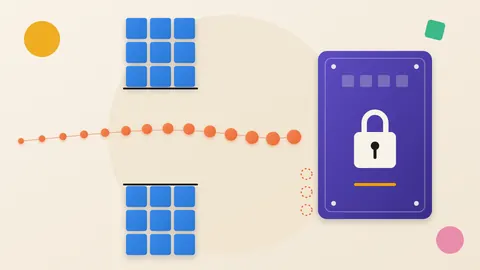
NebuSec says Muse leaned on three protections. A container walled the agent off from the system beneath it. A service called Sentinel watched outgoing network traffic and enforced approval rules. A separate credential service kept the real account keys away from the agent.
The attack went through them in turn. First came a flaw in Chromium, the browser Muse uses to make PDFs and documents. The researchers had the agent save a page they controlled as a document. That let them run code inside the agent's container.
Second, NebuSec found weak spots in how Sentinel sorted and checked outgoing requests. Conversation history and memories left without a prompt.
Third, the researchers used Linux kernel exploits to break out of the container. They gained root, the top level of control, in the user's virtual machine. The container and the machine share one kernel. A flaw there can cross the wall between them.
That opened up the saved files, the credential store and Sentinel itself. It also allowed traffic that Sentinel's container-level checks no longer covered.
Working layers, shared foundation
NebuSec credits the design. Root inside the container did not, on its own, give open network access or reach the machine below. The firm's point is that each stage weakened a different layer. Together, the layers did not stop the chain.
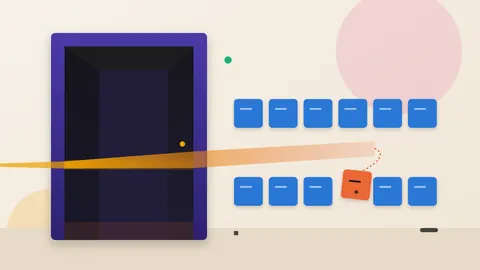
Picture a building where every fire door works but all the doors hang from one shared frame. Each door passes inspection. The frame is the weak point. Here, the shared piece was a kernel under both the container and the machine around it.
The limits matter too. The break-in stayed inside one user's virtual machine. NebuSec did not show an escape to the host beneath it or into other users' machines.
NebuSec also says the kernel setup was custom. It did not expose the target kernel image to the container. The firm reports that its exploits still succeeded in over 99.9% of its test runs. A hardened setup can raise the effort. It does not settle the question.
Questions for your team and vendors
NebuSec poses a simple test. If an attacker already holds one part of the system, do the other protections still hold? Several questions follow.
Where is outbound traffic enforced? If the monitor sits inside a boundary that a compromised process can cross, it is no longer a gate.
What could an attacker reach after escaping the agent's sandbox? NebuSec advises narrowing the scope of stored credentials and the ways to misuse them. A stolen credential should open as little as possible.
Has anyone tested the whole stack as one chain? That means browser, container, operating system, network checks and credential service together. And has anyone shown that a flaw can really be exploited, rather than only listing it?
Finally, which untrusted pages can the agent open or export? What does it hold in memory while it does? Your organization can decide those things before any patch arrives.
Layers add safety when they fail independently. The Muse report is a prompt to check what they all stand on.
Produced by the WebPulse Newsroom with AI assistance from the original reporting credited below, and checked against that source by our editorial review. How we use AI.
Original reporting: NebuSec.