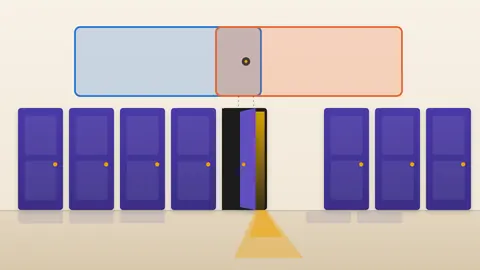
- Meta says its GenRecs Tokenization describes ads by meaning-based tokens instead of per-item IDs, so new products can borrow what the model already knows.
- Meta reports a +0.35% lift in conversions, measured with two other Meta models. The baseline and method are not given.
- Advertisers should ask how product descriptions and images feed ad matching, and what evidence supports performance claims.
A new product has no history. Meta wants that to stop mattering.
Every launch faces the same problem. A new product has no clicks, no sales and no track record. Ad systems built on item IDs treat it as a stranger.
Meta Engineering published a post on October 19 about how it is changing that. The system is called GenRecs, short for Generative Recommenders. Its data layer is GenRecs Tokenization. It describes each ad, product, page and pixel by what it is, not by a unique ID.
An ID says nothing about its item. A description carries meaning. Meta frames this as a move from ephemeral IDs to stable semantic representations.
How the tokens work
Meta says its AI models look at every ad, product and page, including the text and images. These models were trained beforehand on broad data. Each item becomes an embedding, which is a list of numbers that carries general knowledge about it.
The tokenizer then adds what Meta has learned from how people engage with the item. The result is squeezed into a short run of discrete tokens. Meta describes a three-stage pipeline.
First, the item becomes a point in a map of meanings. Second, that point is split into separate parts. Third, each part is matched to an entry in a fixed list that Meta calls a codebook.
The outcome is a short code made of shared building blocks. Alike items get overlapping codes, like words built on the same stem. Meta gives an example. This season's running shoe campaign overlaps with last season's, so it inherits what the model learned about the earlier one.
Meta says the exact recipe varies by item type. For many ad representations, it mixes several techniques, including a trained encoder and trained codebooks.
What Meta measured, and what it did not say
Meta says advertisers saw conversions rise 0.35% across surfaces. That result came from using the new tokens together with two other Meta models: the Generative Ads Model (GEM) and the Adaptive Ranking Model. Meta labels it internal data, measured in February 2026.
That is one company's figure. The post does not give the baseline or the mix of advertisers. It also does not say how much of the lift came from the tokens alone.
Meta also tested eight versions of its tokenizer. Versions that scored better on quality checks also predicted click-through rates more accurately. The checks include whether items in a code share a category, whether items spread evenly across codes, and how many codes are used.
Meta says this lets it improve the tokenizer without waiting for a full training cycle.
Where the gains are said to land
Meta says tail ads are where the tokens help most. Tail ads are those with few impressions. Shared content structure lets the model carry lessons across them, which Meta says recovers cold-start performance.
Meta also describes a feedback loop. Better predictions for tail ads give the model better training data. Meta says that in turn improves predictions for all ads.
What this means for the people paying for ads
This section is WebPulse's interpretation, not a claim from Meta. If a model reads an item's text and images to place it among similar items, the quality of that description may affect performance. Vague product copy or weak imagery might place a product poorly. Meta does not say this, so treat it as a question.
A second point is visibility. Advertisers see results, not tokens. A shared vocabulary that improves ranking is also one they cannot inspect. A controlled test on your own campaigns is the most direct way to check any gain.
Meta also names a limit. Spelling out an ad in full words gives the model the most detail. But that text is too long to process at the scale of ads. Meta says it is shortening the wording and mixing it with the shared codes, so responses stay fast enough.
Questions to put to your team
Ask your media agency or in-house team whether new launches now perform differently, and how they would know. Ask whether you can run a controlled test. Then any lift is measured against your own results, not Meta's overall figure.
Ask who owns product titles, descriptions and images in your catalog. Ask whether anyone checks them for clarity. If the model reads them, they are no longer only for shoppers.
The lesson is modest but useful. When a system represents items by meaning rather than by ID, Meta says a launch need not start from zero. What you publish about your product may matter more.
Produced by the WebPulse Newsroom with AI assistance from the original reporting credited below, and checked against that source by our editorial review. How we use AI.
Original reporting: Meta Engineering.