- Matt Pocock said AI handles short-term coding but is weak at long-term design, so people must judge structure and care how the codebase ages.
- He argued care is the differentiator and told beginners to prove it through projects, while conceding agents may improve and he cannot predict the future.
Matt Pocock, creator of Total TypeScript, argued on the NetworkChuck show that AI now handles the short-term half of programming. The long-term half, shaping code so it stays easy to change, still falls to people. In his view, the human job is now judging that design and caring about it.
What was said
Pocock borrowed a split from a book on software design. Tactical work is the soldier on the ground, handling today's fight. Strategic work is the general planning for the whole war. Before AI, he said, developers mixed both all day.
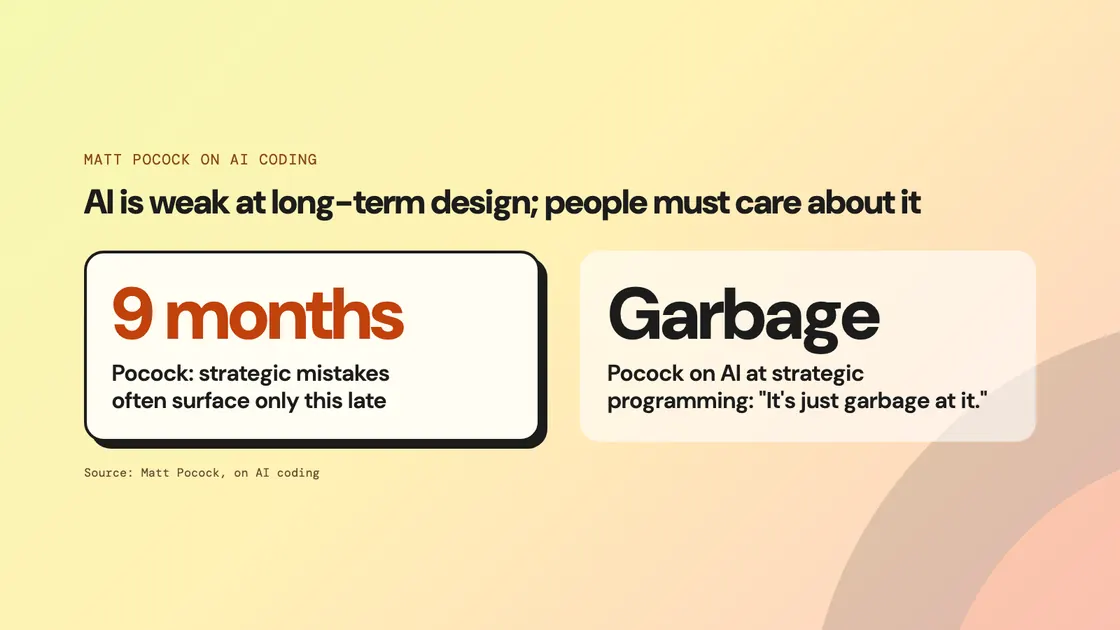
He said AI is weak at the second kind. Models are trained and scored on one task at a time, so their focus is tactical. Strategic mistakes, he said, often show up only months later, which makes them hard to grade. On strategy he was blunt: "It's just garbage at it."
The cost builds quietly, he argued. An agent left alone keeps fixing whatever is in front of it, and the code it works in slowly gets worse. Someone must tend that code, and for now he said that someone is you.
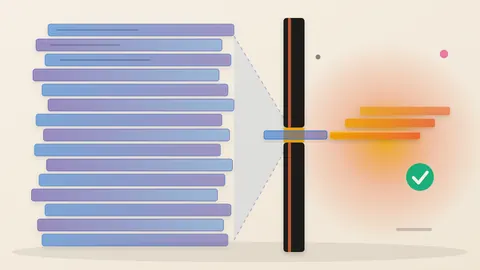
He offered a test for good structure. When you change one piece of code, how likely is it that every edit lands in the same place? He also said agents can churn out tests easily without necessarily thinking about how the codebase is laid out.
He kept returning to one word. "so much of strategic programming is just caring a bit more than the person next to you," he said. To new developers he suggested showing that care through projects they build and polish, rather than mastering one programming language.
Why it matters
Our reading is that this changes what a manager should look for. If agents write most first drafts, typing speed tells you little. The scarce skill is noticing when a change that should touch one place starts touching many, because every later change then gets slower and riskier.
Training changes too. Pocock said people need to show evidence that they can program strategically, such as building a clean repository or improving the environment their agents work in. Buyers can ask any team using agents a plain question: who watches the long-term shape of the code, and how?
The other side
Pocock set his own limits. He said agents may get better at this, and that some harness, meaning the rules and tools wrapped around a model, could make them think strategically. He added: "you can get the agents to care. It's just you need to care yourself." He also said he is not a pundit and cannot predict the future.
Stakes matter as well. He said he is not working on a medical or finance application. In those fields, he said, he would spend many tokens on verification before trusting agents. He also runs AI coding courses, so he has a stake in the skill he describes.
The conversation left one question open: how a manager can measure care before the damage shows up months later.
Written by the WebPulse Newsroom with AI assistance, and checked by our editorial review: every quotation was verified against the recording's transcript. How we use AI.
The conversation this talking point comes from
- NetworkChuck: How to Actually Code with AI (ft. Matt Pocock) (2026-11-20)