- A new Packagist package, CarvePHP, finds service boundaries inside Laravel monoliths. The article argues its existence suggests some production codebases are now too large for their teams to understand unaided.
- The article says unclear boundaries make a Laravel app harder for AI agents and other machines to use, and that cost grows with each new integration request.
- Executives should treat mapping boundaries as a budget item. The article says the discovery work must be done before any decomposition or API project, and tooling makes that cost measurable.
The Legibility Gap
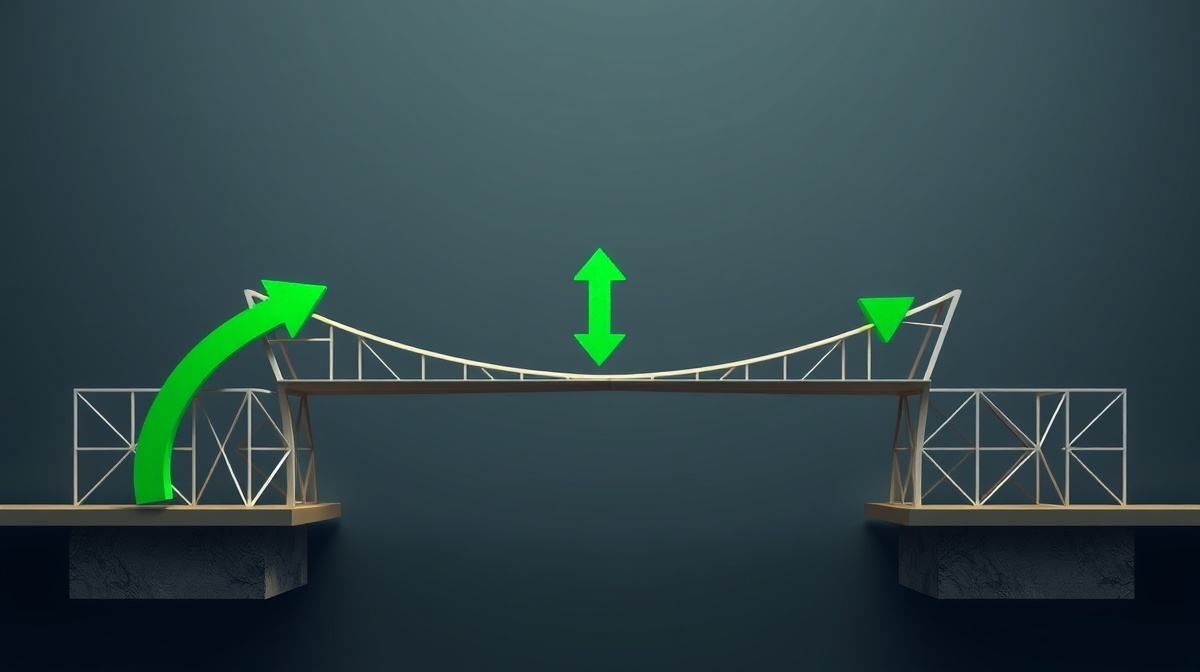
The appearance of CarvePHP — a Packagist package that automates discovery of service boundaries inside Laravel monoliths — is worth examining not because a single library release constitutes a trend, but because of what its existence implies: production Laravel codebases have grown large enough that their own architecture is no longer self-evident to the teams maintaining them. When a codebase requires external tooling to locate its own internal divisions, the architecture has crossed a threshold that documentation and institutional memory can no longer close. For executives overseeing organizations with significant PHP-backed web properties, understanding what that threshold costs to cross back over is a budget question, not a technical one.
PHP's Scale Is the Context
PHP's continued dominance across server-side web infrastructure shapes the conditions in which this tooling emerges. Among detected frameworks in WebPulse's 466,000-site scan dataset — spanning 25 frameworks across 100+ top-level domains — PHP-backed deployments appear consistently across mid-market and enterprise segments. Laravel, specifically, absorbed the bulk of PHP's post-legacy developer migration: teams moving off CodeIgniter, Zend Framework, or bare procedural PHP found Laravel's Eloquent ORM and Artisan toolchain familiar enough to adopt at scale. That adoption, accumulated over more than a decade, produced a generation of monolithic applications now operating at sizes their original architects did not anticipate. The monolith was not a design failure; it was a design that outlived its original scope.
The Machine Consumption Penalty
The shift toward machine-to-machine web traffic introduces a specific penalty for architectures with undefined service boundaries. AI agents — whether LLM-powered tool-calling pipelines, browser automation layers, or commercial web crawlers — interact with web infrastructure through defined API surfaces and structured response schemas. A Laravel monolith without explicit service boundaries presents an ambiguous surface: endpoints exist, but their ownership, scope, and stability are implicit in the codebase rather than expressed in a discoverable contract. Tooling that maps those boundaries is a prerequisite step before any decomposition, API versioning, or machine-readable integration layer can be introduced. For organizations whose Laravel applications serve as backends for mobile clients, partner integrations, or internal tooling, that ambiguity is an operational cost that compounds with each new integration request. The AI-first web does not eliminate this problem — it accelerates the timeline for when it becomes visible on an income statement.
What Executives Should Measure
The decision to decompose a Laravel monolith depends on factors specific to each organization: traffic patterns, team structure, integration surface area, and migration risk tolerance. What boundary ambiguity introduces — independent of that decision — is undisclosed discovery cost. Any future decomposition, AI-agent integration, or API modernization project will incur front-loaded mapping work before architectural changes can begin. Automated tooling makes that work measurable; the absence of such tooling does not eliminate the work, it simply defers the cost to the moment a project requires it. WebPulse's framework scoring evaluates ecosystem health, release cadence, and security posture across seven dimensions; Laravel scores within a competitive range on these metrics. What boundary legibility introduces is a dimension that scoring systems do not yet capture — the cost of navigating an architecture that encodes more than it documents, and the compounding liability that carries in a web environment where machines increasingly need to read what humans once navigated by intuition.
Produced by the WebPulse Newsroom with AI assistance from the original reporting credited below, and checked against that source by our editorial review. How we use AI.
Original reporting: packagist.org.