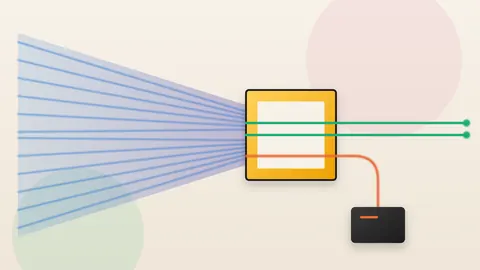
- James Kettle inferred that servers may use shared code to read both requests and responses. It is his inference, and the excerpts do not say how many cases support it.
- Kettle called it a massive attack surface expansion, but he gave no count of affected servers, and one related idea stayed hypothetical.
James Kettle, Director of Research at PortSwigger, inferred that some web servers use one routine to read both incoming requests and outgoing responses. He made the point in a Black Hat USA 2026 talk on the Black Hat channel. If he is right, a request could reach logic that was meant only for responses.
What was said
Kettle built the HTTP Terminator, an autonomous AI research system. The observation arose while it was analysing one of the byte-range discoveries, a family of tricks built around asking a server for part of a file. The web standard rule behind that trick was written for responses only. Yet Kettle said requests were reaching the code that applies it. The excerpts do not say how many cases support this.
From there he reasoned: "So this implies that actually servers are using shared code to parse both requests and responses". He named the idea shared parser confusion and called it "a massive attack surface expansion".
He cited related behaviour. Servers act on a Set-Cookie header, normally sent by servers, when it arrives in a request. He said Node.js contains code that does this today. He also described a researcher the transcript names as Orange Psy, who made Apache fetch something on his behalf by putting a Location header, another response header, inside a request. Kettle saw that as something like an instance of this type.
Why it matters
A parser is the code that reads a message and splits it into parts a server acts on. Our reading is that the risk sits in a quiet assumption: that a message travels one way. If one routine reads both directions, an attacker can send a request carrying a response-only header and may reach logic nobody tested against requests.
That is Kettle's inference, but it explains why one fix per product may not be enough. The pattern would live in shared code, not in a single header.
Questions for engineering and procurement leaders follow from this. Which of our servers, proxies and gateways read both directions with the same routine? Does a vendor's patch cover the pattern, or only the one header? Has anyone tested requests that carry response-only headers?
The other side
Kettle was open about the limits. He called the first two attack classes from this research niche. One cache-poisoning idea did not work on any relevant target, so he called it hypothetical.
The excerpts give no count of affected servers or products. Kettle spoke about servers, not AI agents, so whether machine-facing endpoints share this code is unanswered. He said he was keen to see where others take the concept.
Written by the WebPulse Newsroom with AI assistance, and checked by our editorial review: every quotation was verified against the recording's transcript. How we use AI.
The conversation this talking point comes from
- Black Hat: Black Hat USA 2026 | Can AI Do Novel Security Research? Meet the HTTP Terminator (2026-11-18)