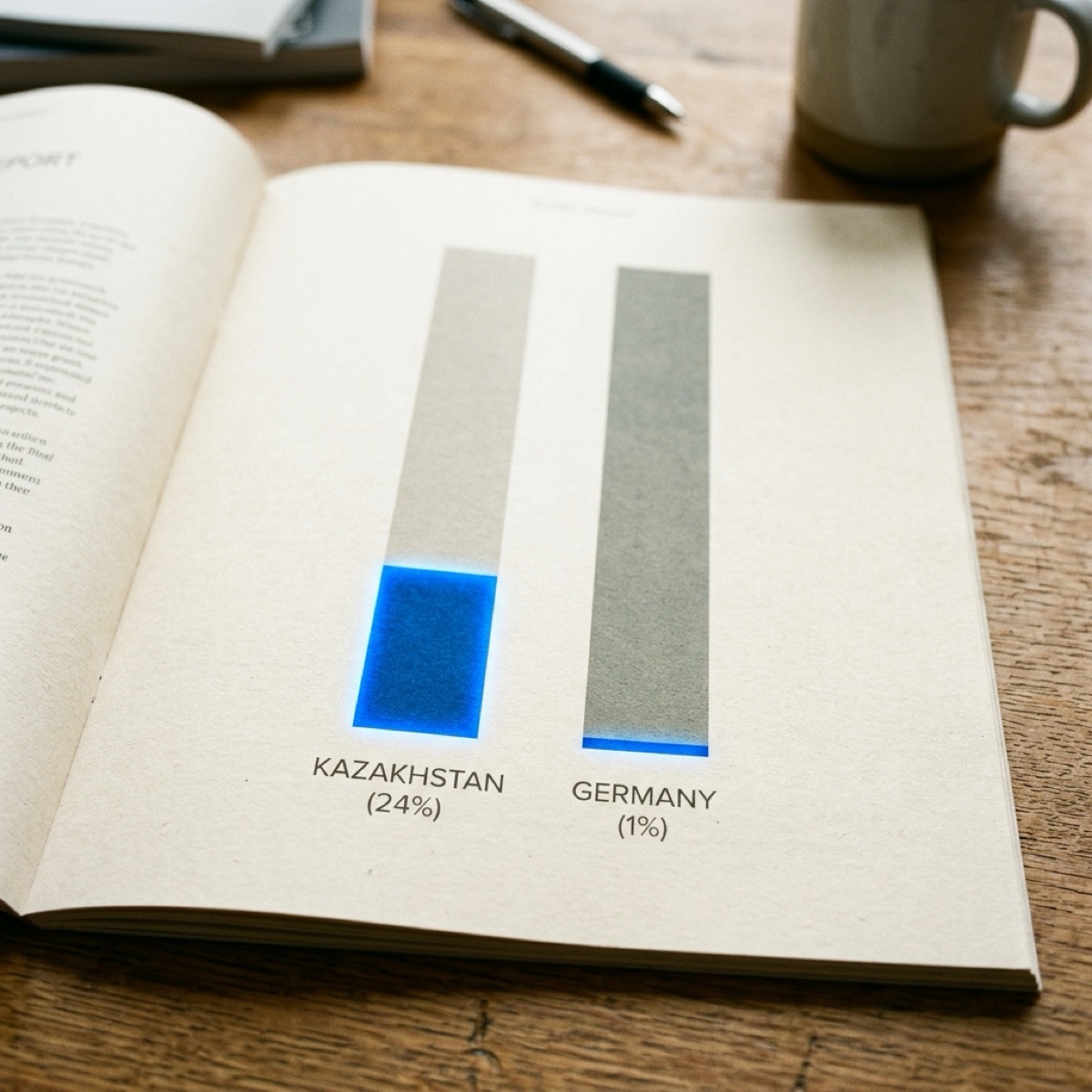
Next.js on .kz domains: 24% (10 of 42 detected) (Source: WebPulse Common Crawl scan.)
The Data
Germany is Europe's largest economy. Its Mittelstand is the backbone of European manufacturing. And on the .de domain, Next.js is essentially invisible — 1% of detected sites. Kazakhstan, with 1/20th the GDP, has 24% Next.js penetration on .kz domains.
Why This Happens
Germany has 20+ years of accumulated web infrastructure. Every WordPress installation from 2008 still runs. Every Joomla site from 2011 still exists. The .de domain space is heavy with legacy because there's so much of it to carry.
Kazakhstan's .kz domain space is lighter. Fewer sites built in the WordPress era. When Kazakh companies and agencies build their first web presence today, they start with what's current — and that's Next.js. Less legacy means less inertia. The leapfrog advantage is real.
The Pattern
This isn't unique to Kazakhstan. Vietnam (.vn) shows 8% Next.js. Mexico (.mx) has 4%. The countries building now aren't defaulting to the frameworks the West built on 15 years ago. They're choosing the frameworks the West is migrating to.