- Anthropic is adding a text watermark to four more Claude models, but on Opus 4.6 and Sonnet 4.6 it applies only when all three sampling settings stay at defaults.
- Anthropic warns that anyone relying on the mark for their own compliance should keep those settings at defaults. A configuration choice can therefore undo the control.
- Companies relying on the mark should audit API settings, record which model versions they use and ask the vendor what the watermark covers.
A safeguard that depends on a setting
A control you cannot see is easy to trust. A control that a routine configuration change can switch off is harder to rely on. Anthropic's expanded text watermark shows the gap between the two.
The lesson here is simple. On two of the models, the mark appears only if your engineers leave all three sampling settings untouched. That is a condition Anthropic set, and your team has to meet it on every request.
What Anthropic announced
According to The Decoder, Anthropic sent API customers an email about widening its text watermark. Four more Claude models are covered: Mythos 5, Opus 4.7, Opus 4.6 and Sonnet 4.6. Opus 5.5 already carries the mark. The Decoder adds that Amazon Bedrock customers may wait a few extra days.
Anthropic describes the watermark as an "imperceptible pattern in word choice". It says the mark adds no characters or tokens and does not change pricing or request and response formats. It also says the mark "contains no information about the user, their organization, or their conversations with Claude."
The Decoder explains that the mark is built into the model itself. Customers on Amazon Web Services, Google Cloud and Microsoft Foundry therefore get it too, and none of them can turn it off.
How the mark works, and where it slips
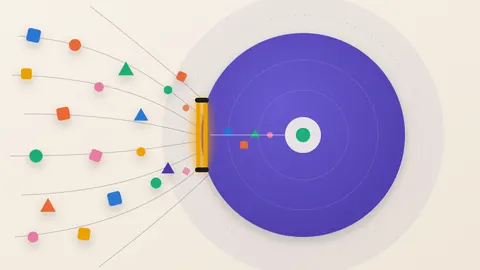
The Decoder describes Anthropic's approach as a variant of SynthID text, a method from Google DeepMind. A language model picks each next word with some controlled randomness. The method tilts that randomness so the output carries a pattern a detector can measure statistically. The text reads normally. The pattern lives in which words were chosen.
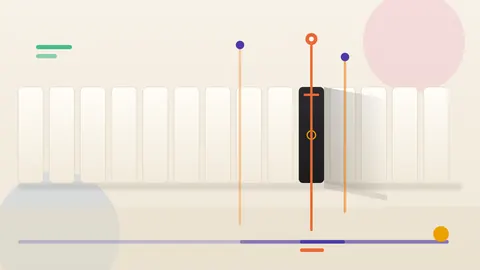
Developers control the randomness with three settings: temperature, top_p and top_k. On Opus 4.6 and Sonnet 4.6, Anthropic says the watermark applies only when all three stay at their default values. Per The Decoder, even a small adjustment to just one of them lets text escape the mark.
The source says only that a change dodges the mark. It does not say why. A plausible inference is that the pattern is applied during word selection, so altering how words are selected interferes with it. That is our inference, not something Anthropic or The Decoder states.
Anthropic's email warns: "If you rely on the watermark for your own compliance, keep these settings at their defaults."
The Decoder notes that the email gives no such caveat for Mythos 5 or Opus 4.7. It takes that to mean the mark applies on those models whatever the settings. That is the outlet's reading, not an Anthropic statement.
Why Anthropic is doing this now
Anthropic points to a December deadline under the EU AI Act as its motive for covering older models, according to The Decoder. Models released after August 2, 2026 have carried the watermark since launch. Older models are being brought in step by step.
Whether the Act's duties fall on your organization, and whether the watermark counts toward them, is a question for your lawyers. Neither Anthropic's email nor The Decoder settles it.
OpenAI has taken another route, per The Decoder. Its textGrain system launched in October 2026. It switches on automatically only for ChatGPT and Codex users in the EU. API customers anywhere can enable or disable it, and it ships switched off. Google DeepMind has released SynthID for text as open source and uses it in Gemini.
Open questions the rollout leaves
Quality is disputed. The Decoder points to blogger John Gruber, who argues that synonyms are never perfectly interchangeable. In his view, picking words by a watermark key rather than by fit costs some precision. Anthropic says meaning, quality and readability are unchanged.
The legal outlet Artificial Lawyer raises a separate concern, per The Decoder. Clients who have banned AI use could find the mark in a law firm's documents. Several watermarks layered in one document could also cause complications.
Verification is another gap. Anthropic's detection API is in private preview. Most organizations cannot yet check the mark themselves.
What leaders should ask their teams
Start with an inventory. Which products call Opus 4.6 or Sonnet 4.6, and with what temperature, top_p and top_k values? Anything that sets one of them to a non-default value on those two models produces text that Anthropic says may not carry the mark.
Next, decide who owns the setting. If a compliance claim rests on defaults, a developer tuning output style can undo it without knowing. Put the settings under change control, as you would any other control.
Then ask what you are actually promising. Anthropic's watermark is a vendor feature. Ask your counsel whether it counts toward any obligation you have, and what you plan to show if asked.
Finally, ask the vendor. Request written confirmation of which models mark regardless of settings, and when detection will leave private preview.
A label that disappears when someone adjusts a dial is a convenience. Treat it as a control only when your own team keeps the dial where it belongs.
Produced by the WebPulse Newsroom with AI assistance from the original reporting credited below, and checked against that source by our editorial review. How we use AI.
Original reporting: The Decoder.