- Qualys, citing Datadog Security Labs' whoAMI research, says pipelines that pick AWS images by name without checking the owner can launch a lookalike malicious image.
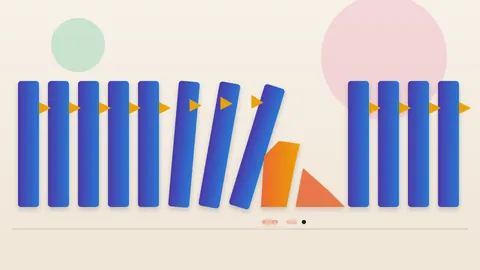
- One bad image can spread. Qualys says every server built from a compromised or outdated Golden AMI inherits the same weaknesses.
- Qualys recommends naming the owner ID in every image lookup, using AWS's Allowed AMIs feature, and rebuilding approved images on a schedule.
A label is a claim, not proof
Picture a deployment script that needs a server image. It asks AWS for one by name, gets a match and launches it. Nobody reads the label. The script cannot tell a vendor's image from a lookalike.
Security vendor Qualys describes this risk in a November 17, 2026 post. It builds on whoAMI research from Datadog Security Labs. The lesson for leaders is simple. Automation often treats a name as proof of who made something. A name is only a claim.
How the whoAMI attack works
An Amazon Machine Image, or AMI, is a saved template for a ready-to-run cloud server. It bundles the system software, the programs on it, its settings and its disk layout. Amazon EC2 uses it to start new servers.
Some images are shared publicly. Customers in the region where an image is shared can use it. Qualys says anyone can publish one. So trust should rest on the owner ID and publisher. The name and description prove nothing.
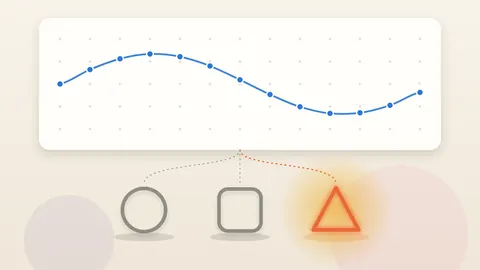
Qualys describes the whoAMI attack this way. Attackers publish malicious images with names close to trusted vendor images. A pipeline that searches by name alone may pick the wrong one.
Qualys adds that the infrastructure code can stay the same. Only the image details change. That makes the problem easy to miss in a code review.
Why one bad image reaches so far
Many organisations keep a Golden AMI. This is an approved, standard image that teams reuse. Qualys points out the catch. If the source image is compromised, every image built from it inherits the same weaknesses.
The result is one flaw in many places. Qualys says it can reach several AWS accounts, regions and live environments. Each server started from that image carries it.
Age is a second problem. Qualys says teams often patch running servers but keep launching new ones from an older image. Those new servers start with flaws that were already fixed elsewhere.
Scale is a third. Qualys says large firms often hold hundreds of images across accounts and regions. Without one central list and a record of each image's parentage, teams struggle. They may not know where an image began or where it now runs.
What a bad image can carry
Qualys lists several possibilities. An image can hold malware that runs as soon as the server starts. Qualys says this can let attackers stay in place, contact their own control servers, deploy ransomware or mine cryptocurrency.
An image can also hold old software with known flaws, exposed secrets or weak settings. None of this needs an attacker's intent. A careless internal image can do the same harm.
One caveat matters. The post describes scenarios. It gives no count of malicious images found or organisations affected. Read it as a description of a weakness, not a measure of how often it is exploited.
What Qualys recommends, and what it sells
The core advice uses controls AWS already provides and needs no product purchase. Name the AMI owner ID in every image lookup. Keep AMIs private unless there is a reason to share them. Turn on AWS's Allowed AMIs feature, which limits launches to approved image sources. Rebuild Golden AMIs through CI/CD pipelines, the automated build steps, and retire old ones.
Qualys also promotes its TotalCloud product. Its AMI Scan checks an image for flaws and missing patches before deployment, without starting a server. Qualys is a vendor, so treat that part as a sales pitch.
Qualys is open about a limit. It says a vulnerability scan does not show who published an image. It also cannot promise the image is free of malicious code. Owner checks must come from AWS controls.
Questions to put to your cloud team
Does every image lookup in our pipelines name an owner, or do some search by name alone? Have we turned on Allowed AMIs in our AWS accounts?
How old is our oldest Golden AMI, and when was it last rebuilt? Can we trace each running server back to the image it came from?
A name tells you what someone wants you to believe about an image. The owner ID tells you who made it. Automation should check the second.
Produced by the WebPulse Newsroom with AI assistance from the original reporting credited below, and checked against that source by our editorial review. How we use AI.
Original reporting: Qualys.