- Katelyn Lesse of Anthropic recalled a rewrite of its serving API in five to six months, with the new system using about a third of the original's CPU.
- The team checked the new system against the old one and forced both to be built together. The excerpt does not say exactly what was thrown out.
Katelyn Lesse, who leads platform engineering at Anthropic, said on The Pragmatic Engineer that her team threw out a system and rebuilt it in about five to six months. Treat this as one company's recollection. It concerns Anthropic's own serving API, not a decades-old estate, and Anthropic builds AI models itself.
What was said
The project moved the API that serves Claude from Python to Rust. Lesse said the new system ran on around a third of the CPU the original used. She added: "we threw the whole thing out and we rebuilt it." The excerpt does not say exactly what was discarded, or at what stage.
A line from the show, not clearly attributed in the transcript, said restarting midway would once have been crazy, but planning and building now take far less effort. Lesse still called the choice "definitely a big decision." She recalled the timeline from memory, with a relatively small core team.
She also described how Anthropic judges seniority. A Python-to-Rust migration led in five to six months would once have been read as a two-year effort. The complexity bar has shifted, she said, so the company leans on impact, such as CPU saved and latency improved.
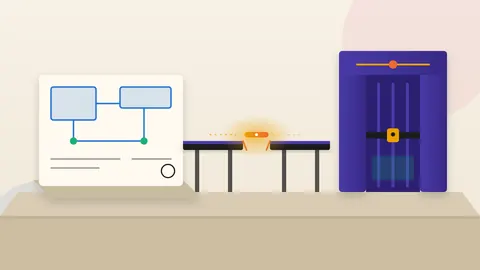
Checking mattered. A shadow traffic system, which in plain terms compares new and old systems on the same requests, showed many differences and errors when a feature reached general release on the Python side unexpectedly. The team then added lint and static-analysis checks, which are automatic code scans. Teams could no longer build a new feature in Python alone. They had to build the Rust version too. The first target was only the core path she called the token hot path.
Why it matters
Our reading: the usual case for keeping old software is that rebuilding takes years and may be rolled back. Where a team can compare a new system against the old one automatically, that case may weaken. Lesse said elsewhere that work made verifiable puts a team in a strong position. Leaders weighing a legacy system could ask two things. What does the old one cost to run, and could we test a replacement against it?
The other side
The limits are real. This is one company's account, told from memory, about a system it built with its own models. The excerpt does not say whether the one-third CPU figure refers to the first build or the final one. Lesse stressed that coordination across teams stayed hard, and said that alignment work has changed little since before AI. The conversation does not answer whether a firm with weak tests and tangled old systems could verify a rewrite this way.
Written by the WebPulse Newsroom with AI assistance, and checked by our editorial review: every quotation was verified against the recording's transcript. How we use AI.
The conversation this talking point comes from
- The Pragmatic Engineer: How Anthropic builds software in 2026 with Katelyn Lesse (2026-11-25)