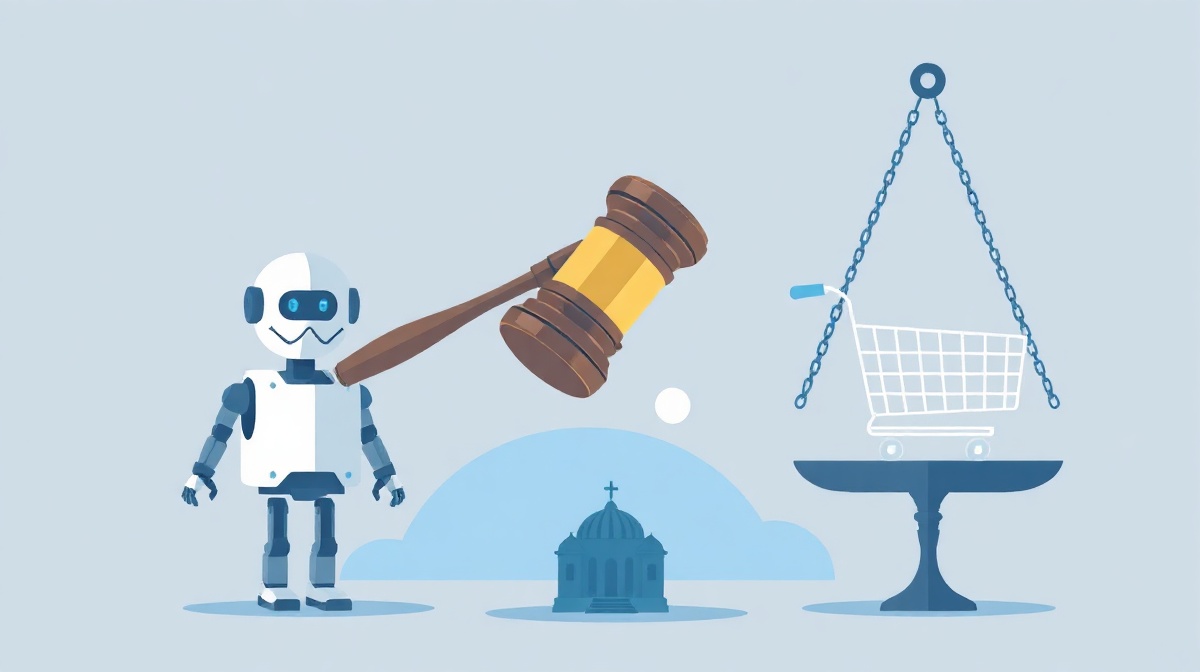
CFAA maximum penalty: 10 years imprisonment (Source: 18 U.S.C. § 1030. The Computer Fraud and Abuse Act was written in 1986 to prosecute hackers. Amazon is using it against an AI shopping assistant.)
The Case
Perplexity built Comet — an AI-powered browser that logs into a user's Amazon account, browses products, and completes purchases, all on the user's explicit instruction. Amazon sued under the Computer Fraud and Abuse Act (CFAA), arguing that Comet's automated access to Amazon.com constitutes unauthorized computer access, regardless of user consent. On March 9, 2026, a federal judge blocked Comet with a preliminary injunction. Perplexity appealed. The Ninth Circuit heard oral arguments on June 11 in Seattle.
The core question: when a human explicitly delegates a task to an AI agent — 'buy me this camera on Amazon' — does the agent inherit the human's authorization? Or can Amazon's Terms of Service override the human's delegation and make the agent's access a federal crime under the CFAA?
Why Framework Builders Should Care
If Amazon wins, robots.txt and Terms of Service become enforceable barriers against AI agents — even agents acting on explicit user authorization. Every website owner could block every AI agent with a legal threat. The 57.5% of web traffic that comes from bots becomes legally contestable. Frameworks optimized for AI consumption (structured APIs, WebMCP support, agent-friendly architecture) lose their advantage if agents can be legally blocked from visiting.
If Perplexity wins, the opposite: AI agents with user authorization have the same legal right to access websites as the users themselves. This accelerates the agentic web. Sites that block agents lose users — because the users' agents will shop, browse, and transact elsewhere. Framework AI-readiness becomes a competitive advantage backed by legal precedent.
The ACLU Filed an Amicus Brief
The American Civil Liberties Union filed an amicus brief in support of Perplexity, arguing that Amazon's CFAA interpretation threatens internet freedom. The ACLU's position: if ToS violations become CFAA violations, every website's terms become federal law. Researchers, journalists, accessibility tools, and price comparison services all scrape websites in ways that technically violate ToS. Amazon's theory would criminalize all of them.
The ruling is expected in the coming months. There will be no bench decision. But the Ninth Circuit's opinion will set the first federal appellate precedent on AI agent access rights — and every framework's AI-readiness strategy depends on which way it goes.