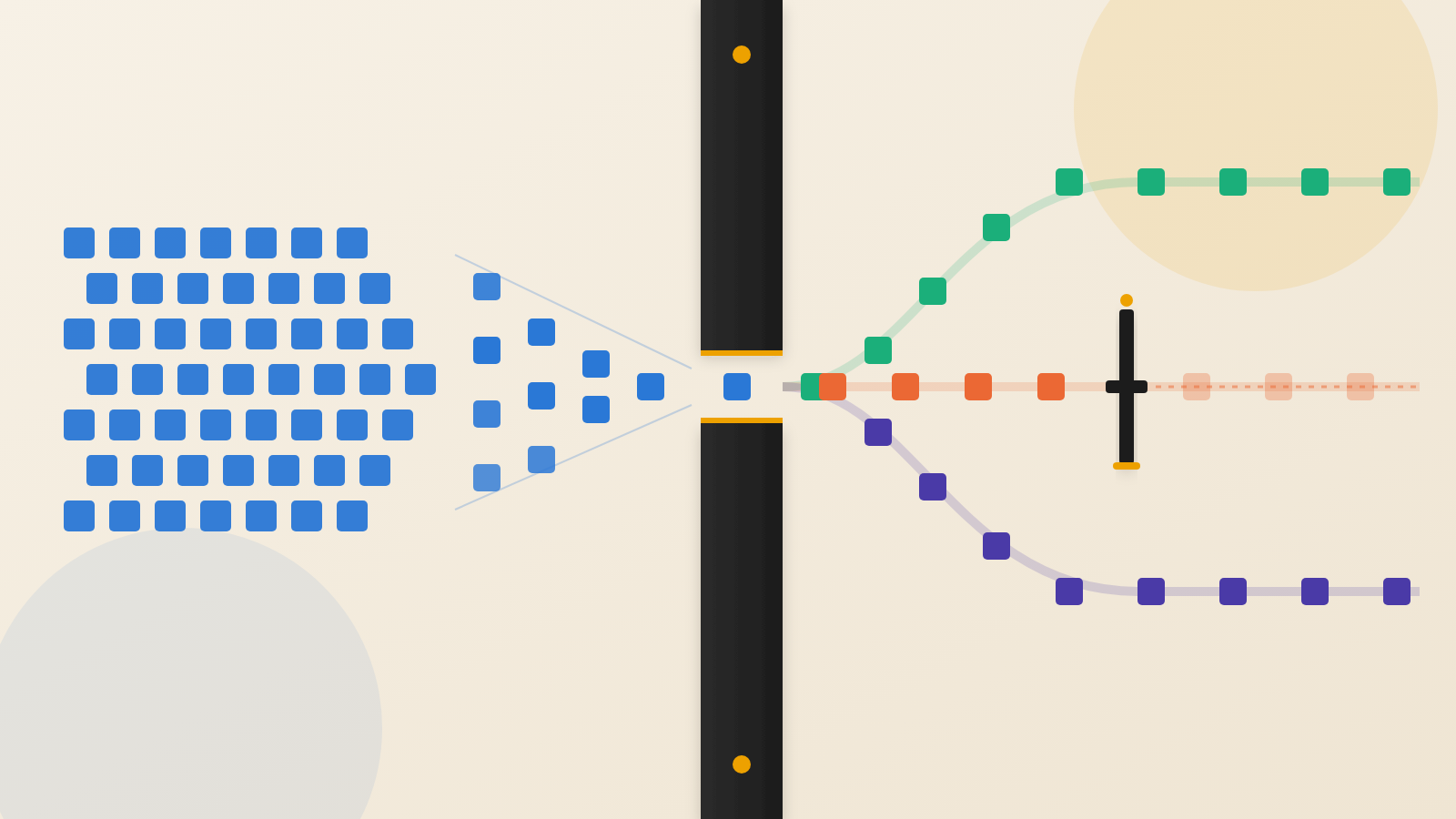
- Stack Overflow's Part 4 guide argues that AI systems making real decisions need layered checks that fail closed, scrubbed data, a tamper-evident audit ledger, and scoped memory.
- The test is whether the system can later show why it decided what it did, not only whether it blocked bad output.
- Leaders can ask their teams five concrete questions about failures, history, signing keys, customer separation and reset.
The question that arrives in March
Sooner or later, someone will ask why an AI system decided what it did for one specific case, months ago. Stack Overflow's blog says that moment shows whether you built an audit trail or only have logs. Logs rotate and are unstructured, the guide says. A ledger is the canonical record of every decision and why.
This is the idea worth taking from the guide. We would put it this way: the real test of an AI system is not what it blocks today. It is what it can prove later. Safety is largely a question of evidence.
A caveat first. The piece is Part 4 of a series on running LLM systems in production. It is one author's design guidance, not a study or an incident report. Its value is the mechanism it lays out.
Checks that stop the request when they break
Many teams add one moderation filter on the model's output and call it done. The guide compares that to a single firewall rule. It recommends several independent layers instead, so a miss at one is caught by the next.
Each layer catches a different kind of problem. Per the guide, input scrubbing catches attacks, verification catches logic errors, a judge catches answers that sound right but are wrong, and a confidence check catches unknown unknowns.
Two rules hold it together. First, fail closed: if a guardrail errors or is unavailable, the request is blocked or escalated, not waved through. Second, count every block. The guide treats the block counter, split by layer and rule, as a leading health indicator. A sudden jump tells you something changed: hostile traffic, a faulty update, or a release that broke a rule.
One design point matters for leaders. Asking the model in a prompt to avoid something is not a guardrail, the guide says. Constrain the output to a fixed set of allowed values so the forbidden answer cannot be expressed at all.
The price is more parts to build, test and watch. The guide gives no cost figures, so ask your team to estimate this for your own system.
Scrub sensitive data at every door
AI systems want rich context, and they record everything they decide. That collides with the duty not to hoard personal data. The guide's method is to look at each point where data moves between components and ask whether the raw sensitive version has to travel. It names the model, the ledger and logs among those points. Usually the answer is no.
For the ledger, store a fingerprint (a hash) plus a redacted summary. Later you can re-hash the original and compare, which proves what a decision used without keeping the data. The guide adds a warning: a plain hash of a low-variety field, such as a 16-digit number, can be reversed. It recommends a keyed hash with a separate key per customer.
The model is a boundary too, often run by a third party. Models echo input back, so the guide says to scrub their output before saving or returning it.
This discipline means managing keys and agreeing on one exact data format, so that re-hashing gives identical results. That is ongoing work, not a one-time setup.
A ledger that shows when it has been altered
The ledger design borrows from bookkeeping. An accountant corrects an error with a new entry, not an eraser. The guide asks for the same: entries are never edited, and a correction is a new row pointing at the old one. It says to enforce this in the database by removing update and delete rights. A policy of not editing is not the same as a database that cannot edit.
Each entry also carries the fingerprint of the one before it. Change one row and every later fingerprint stops matching. The guide states the limit plainly: this does not stop someone deleting the tail or rewriting the whole chain. For that, a separate party holds a signing key and publishes periodic signed checkpoints to outside storage.
One more rule is easy to miss. Writing the record must be the last step of every decision, and it must never be optional. A system that drops entries when a queue fills will have gaps in its history at the moments that most need explaining.
Expect to fund a second party and outside storage for the signing step. That is the cost of making the record believable to someone who does not trust your own database administrators.
Memory with walls, and a line between shipped and learned
Once a system serves more than one customer, the guide says, memory becomes a data-governance problem. Every piece of data should sit in exactly one named category, with rules for scope, access and sensitivity. Those rules are enforced where the data is stored, so a cross-customer read is a hard error.
The guide singles out conversation history. A decision for user B must not read user A's conversation. That one wall prevents the "why does the AI know that about me?" incident.
The guide also separates what you ship (prompts, rules, test baselines) from what the system earns (the ledger, learned memory, session context). It describes a bug it has seen more than once: a reset that wiped the rules along with the memory, leaving a system that had lost its own instructions. A scoped reset clears runtime data only and keeps the ledger. New behavior enters through a reviewed release, not by the system editing itself.
The author notes one assumption: clearing runtime only restores baseline behavior if earned memory is extra context, not a load-bearing input to decisions.
The trade-off is speed. If learning must pass a review, improvements reach production more slowly. In return, every change in behavior has an owner and a record.
Questions to put to your team
1. If a safety check errors out, does the request stop or pass? Ask to see the test.
2. Can we reconstruct a decision from March, and can anyone with database access quietly change that history?
3. Who holds the signing key for the audit trail, and is it someone other than the application?
4. Is separation between customers enforced where data is stored, and tested there, not just in application code?
5. What exactly does our reset command delete?
The guide ends on a line worth keeping: build these in, and you get a system you can stand behind under audit, not one you can only apologize for.
Produced by the WebPulse Newsroom with AI assistance from the original reporting credited below, and checked against that source by our editorial review. How we use AI.
Original reporting: Stack Overflow.