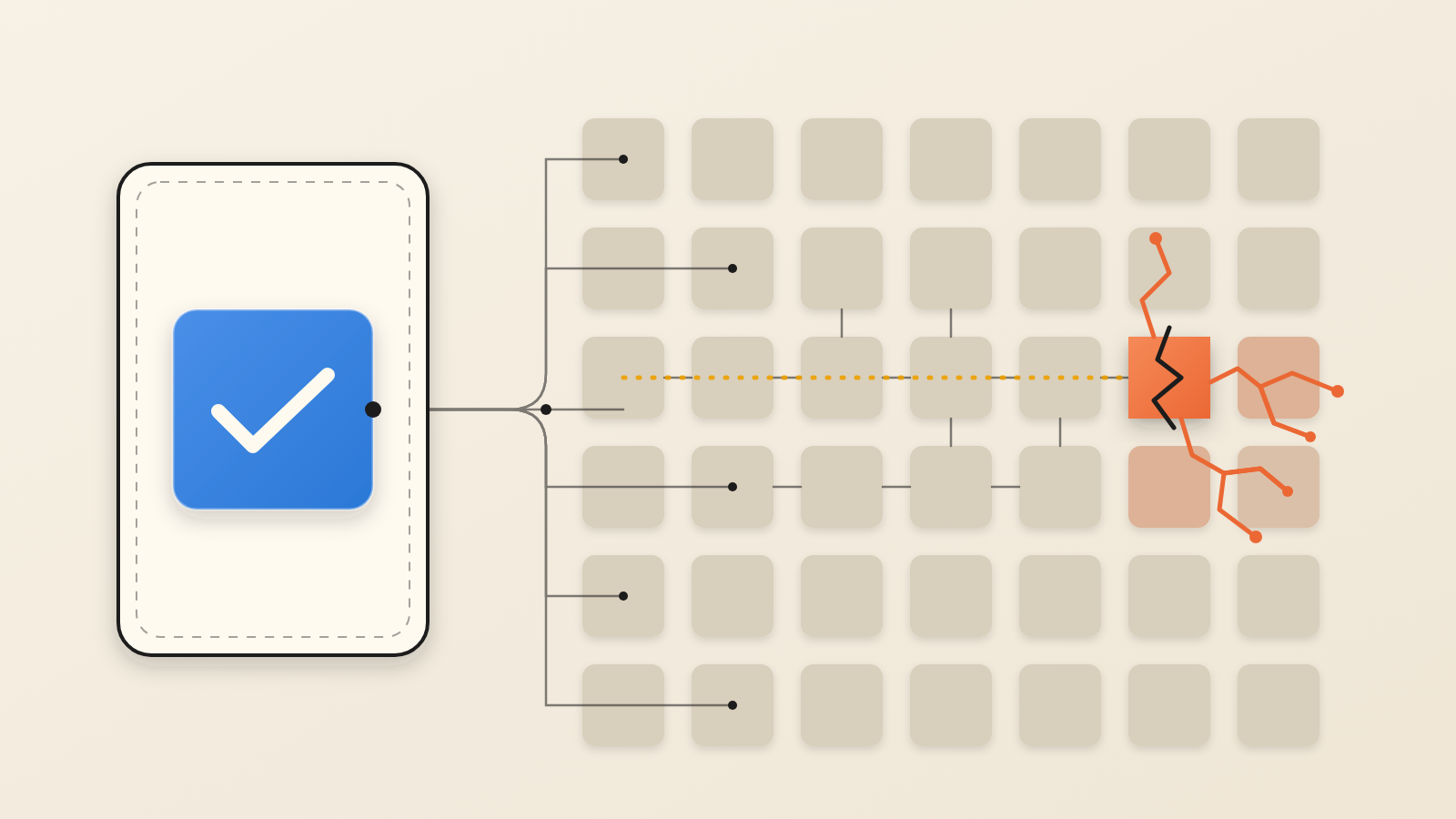
- Qodo argued that code can look right on its own yet cause serious harm in other services. Human reviewers and coding agents both struggle to see it.
- Its examples were a platform with millions of small-business users and a bank with many microservices, where few people know how the parts connect.
A code change can look correct on its own and still damage other parts of a system. A speaker from Qodo, a company that reviews AI-written code, made this point on OpenAI's DevDay 2026 episode "Qodo - The Last Human Code Review". The speaker said such downstream harm is hard for coding agents to find, and hard for human reviewers too.
What was said
The Qodo speaker described a common pattern. Code can look fine, because "it looks locally really good," with no obvious errors. Yet it can create a problem elsewhere once you consider the software as a whole.
The first example was a customer serving millions of small and medium businesses. Those businesses can build almost anything, with close to direct access to databases. So many of the platform's code changes touch databases. A change that looks fine locally can still cause a huge outage through a downstream surface, the speaker said.
The second example was a financial institution built from many microservices, meaning small separate services. Only the few senior developers who remain know what works. Qodo scans years of developer discussions to capture that knowledge. Some links between services run through streaming data, not through the code itself.
The speaker also questioned the unit of review. A pull request is a proposed code change, but a real feature spans several. In the speaker's words: "who cares about that pr what you care about is completing a new capability".
Why it matters
Our reading: approving a diff checks the wrong boundary. A reviewer, human or machine, who sees only the changed lines cannot see who depends on them. The cost of a miss lands on whoever runs the wider system, and on the customers using it.
For buyers and engineering leaders, two questions follow. Does your review process, or any review tool you buy, see across services? And who in your organisation knows how those services connect? In the bank example, that knowledge sat with a shrinking group of senior people.
The other side
Qodo sells review tooling, so it gains if reviewers are seen as blind to downstream effects. The excerpts give no data on how often such failures happen or how well Qodo catches them.
The speaker called connections that run through streaming data hard to trace, since they are not literal in the code, and described mapping them as part of what Qodo is working on. The tool for reviewing linked pull requests together, called work package triage, was only announced for release in the following days. The speaker also expected models to keep improving, which may change how much of this humans must check.
Written by the WebPulse Newsroom with AI assistance, and checked by our editorial review: every quotation was verified against the recording's transcript. How we use AI.
The conversation this talking point comes from
- OpenAI: Qodo - The Last Human Code Review | DevDay 2026 (2026-10-07)